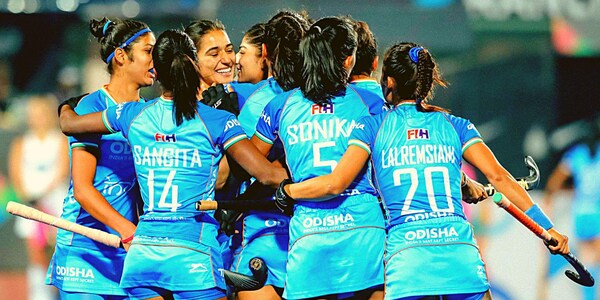
The sports media landscape is a glaring reflection of systemic inequities—a mirror held up to a world that still measures women’s achievements in inches while men’s are celebrated in miles. When 96% of sports coverage is devoted to men, it’s not just a numbers game; it’s a deliberate erasure, a quiet coup where female athletes are relegated to the footnotes of history before their stories even begin. This isn’t just about visibility; it’s about power. Who gets to shape the narrative? Who gets to decide what’s worth watching, worth remembering, worth funding? The answer, for now, is overwhelmingly male. But what happens when we flip the script?
The Invisible Majority: How Women Are Written Out of the Story
Imagine a world where 96% of the books published were about men. Where 96% of the films produced starred male protagonists. Where 96% of the headlines screamed about male achievements. You’d call it a dystopia, a cultural wasteland. Yet in sports media, this isn’t a hypothetical—it’s the reality. Women’s sports, when they do appear, are often reduced to tokenistic highlights or framed through the lens of novelty rather than excellence. A female athlete’s prowess is frequently overshadowed by discussions of her appearance, her personal life, or her role as a “groundbreaker” rather than her skill. This isn’t coverage; it’s condescension dressed in headlines.
The numbers don’t lie, but they do distort. When women’s sports are covered, it’s often in the context of “breaking barriers” or “making history,” as if their existence is an anomaly rather than a norm. The 4% isn’t just a statistic; it’s a damning indictment of an industry that treats female athletes as afterthoughts. And the consequences ripple far beyond the scoreboard. Without visibility, there’s no sponsorship. Without sponsorship, there’s no investment. Without investment, there’s no progress. It’s a vicious cycle, and the media holds the key.


The Male Gaze in Sports Journalism: When Coverage Becomes Censorship
Sports journalism isn’t neutral. It’s a battleground where the male gaze dictates what’s deemed worthy of attention—and what’s not. Female athletes are often subjected to a form of journalistic voyeurism, where their bodies are dissected in ways that male athletes’ never are. A male soccer player’s performance is analyzed through the prism of strategy; a female soccer player’s is reduced to discussions of her “athleticism” as if it’s a surprise she can run, jump, or kick. This isn’t analysis; it’s othering.
The language of sports media is another weapon in this arsenal. Words like “feisty,” “determined,” or “inspiring” are deployed to infantilize female athletes, while male athletes are described with terms like “dominant,” “unstoppable,” or “legendary.” The subtext is clear: women play sports, but they don’t *own* them. They inspire, but they don’t dominate. They break records, but only as exceptions to the rule. This linguistic erasure isn’t accidental; it’s a deliberate narrowing of the narrative, a way to keep women’s sports confined to the margins of public consciousness.
And then there’s the issue of who’s doing the covering. Newsrooms remain stubbornly male-dominated, with women making up less than a third of sports journalists globally. When the storytellers are predominantly men, the stories themselves become monochromatic. The perspectives, the angles, the very framing of what constitutes “important” in sports are filtered through a male lens. It’s not just a coverage gap; it’s a perspective gap, one that reinforces the idea that women’s sports are a niche interest rather than a cornerstone of athletic excellence.
The Ripple Effect: How Media Bias Starves Women’s Sports of Oxygen
The consequences of this bias extend far beyond the pages of a newspaper or the pixels of a screen. When women’s sports are starved of media attention, they’re starved of everything else: funding, opportunities, role models, and cultural relevance. Sponsors follow eyeballs. Broadcasters follow sponsors. Fans follow broadcasters. It’s a self-perpetuating cycle where the absence of coverage becomes the justification for further neglect. And the losers are not just the athletes, but the entire ecosystem of sports—a system that claims to celebrate excellence but systematically excludes half of its potential stars.
Consider the financial disparity. Women’s sports receive a fraction of the investment that men’s sports do, not because they’re less popular, but because they’re less visible. Media coverage is the oxygen of modern sports; without it, the flame of interest flickers and dies. This isn’t just about fairness; it’s about economics. Studies have shown that women’s sports generate higher engagement rates when they’re given the same platform as men’s. Yet the industry clings to the myth that female athletes can’t draw audiences, as if the lack of coverage isn’t the reason for the lack of interest in the first place.
The ripple effect also extends to the next generation. Young girls who dream of becoming athletes need role models, but when the media only shines a spotlight on men, those dreams are quietly extinguished. The message is clear: sports are for boys. The playing field isn’t just uneven; it’s rigged. And the media, by and large, is complicit in maintaining the status quo.

Breaking the Cycle: The Case for Radical Visibility
So how do we dismantle this system? The answer isn’t complicated, but it’s radical: give women’s sports the same coverage, the same respect, the same platform as men’s. Not as a favor, not as a concession, but as a baseline expectation. This means hiring more women in sports journalism, amplifying their voices, and demanding that editors and producers treat women’s sports with the same urgency as men’s. It means calling out the lazy tropes—the “inspirational” framing, the body-centric coverage, the relentless focus on personal lives over athletic achievement. And it means holding the media accountable when they fail to do the bare minimum.
But visibility alone isn’t enough. The coverage has to be meaningful. It has to center the athletes, their stories, their struggles, and their triumphs—not as sidebars to the “real” sports, but as the main event. This requires a shift in mindset, one where women’s sports are not seen as a charity case but as a cornerstone of the industry. It means investing in women’s leagues, broadcasting their games, and giving their stories the same depth and nuance as those of their male counterparts.
The good news? Change is already happening. Social media has given female athletes a platform to bypass traditional gatekeepers. Grassroots movements are demanding better coverage. And younger generations are rejecting the idea that sports are a boys’ club. But the media still lags behind, clinging to outdated norms and lazy assumptions. The question isn’t whether change will come—it’s whether the industry will be dragged into the future kicking and screaming, or whether it will finally wake up to the fact that women’s sports aren’t just worth covering; they’re worth celebrating.
The Future Isn’t Female—It’s Equal
The sports media landscape is at a crossroads. On one side, there’s the status quo: a world where women’s sports are an afterthought, where their achievements are footnotes in a story written by and for men. On the other side, there’s a future where sports are truly inclusive, where female athletes are celebrated for their skill, their dedication, and their relentless pursuit of greatness. The choice isn’t between two competing visions; it’s between progress and stagnation.
We’ve been told for decades that women’s sports are a niche interest, that they don’t draw audiences, that they’re not “marketable.” But these are excuses, not truths. The real marketability of sports lies in their ability to inspire, to challenge, to captivate. And women’s sports do all of that—when they’re given the chance. The 4% isn’t a ceiling; it’s a starting point. The question is whether we’ll settle for scraping the surface or demand a revolution in how we tell the stories of female athletes.
The media has the power to shape culture. It always has. The question is whether it will use that power to reinforce old hierarchies or to build a new, more equitable future. The ball is in their court. And the clock is ticking.





Leave a Comment