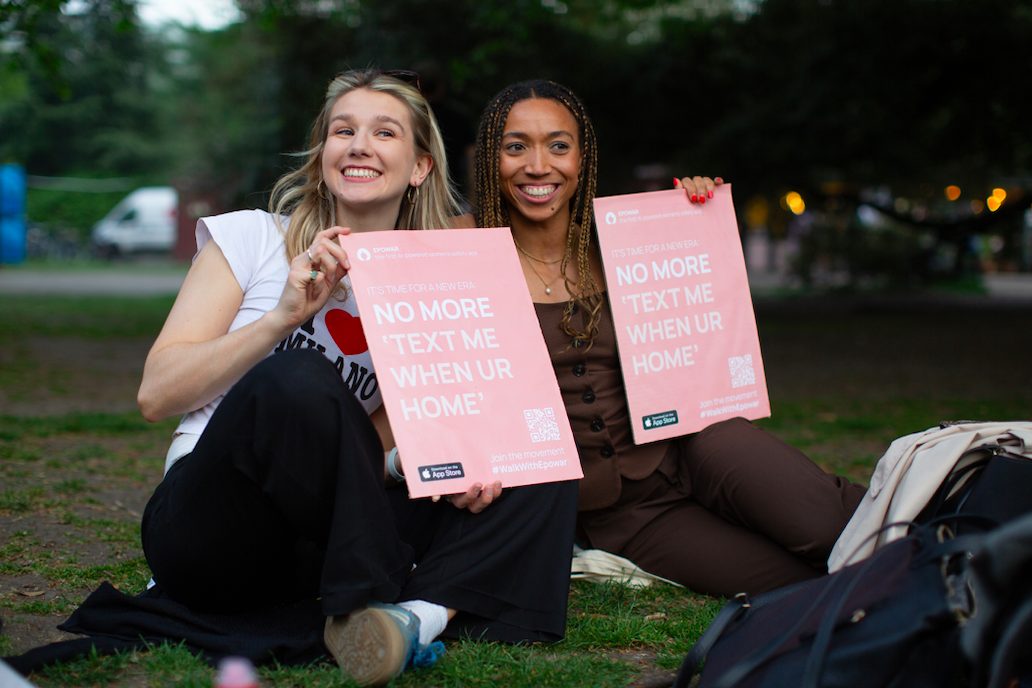
In the shadow of every catcall, every leering glance, every unsolicited touch, there exists a silent revolution—one that is no longer content with being ignored. A revolution built not with fists or fire, but with lines of code and the unyielding determination of women who refused to accept the status quo. This is the story of an app, born from the fury of lived experience, that has now been adopted by governments worldwide. It is a tale of how technology, when wielded by those who understand oppression, can dismantle the scaffolding of systemic indifference.
The Spark That Ignited a Movement
It began with a single question: Why do we accept that streets belong to men? The answer, of course, is that we don’t—we just pretend we do. Street harassment is not an inevitability; it is a calculated assertion of dominance, a daily reminder that public spaces are not truly public. But what if the power to document, to expose, to demand accountability could be placed in the hands of those who endure it most? That was the radical proposition behind the app—a tool not just for reporting, but for reshaping the narrative of who owns the streets.
The creators, a collective of activists and technologists, understood that data is power. Every harassing comment, every groping, every intimidating pursuit could be transformed from an isolated incident into a pattern of systemic failure. By crowdsourcing these experiences, they didn’t just create a database; they forged a weapon. A weapon that could be wielded against the myth of “boys will be boys,” against the dismissive shrugs of law enforcement, against the cultural conditioning that tells women to shrink themselves in public.
What started as a grassroots initiative soon became a movement. Survivors, tired of being gaslit by society, found solidarity in numbers. The app didn’t just record incidents—it validated them. It said, Your experience matters. Your voice will be heard. And governments, whether out of genuine concern or political expediency, began to listen.
The Alchemy of Technology and Feminist Rage
At its core, the app is a paradox—a digital sanctuary in a world that has long treated women’s safety as an afterthought. It is a paradox because it turns the very tools that have historically been used to surveil and control women into instruments of liberation. The GPS tracking, the timestamped reports, the anonymized data—all of it was designed to outmaneuver the systems that have failed survivors for generations.
The interface is deceptively simple: a few taps to log an incident, a map to visualize hotspots of harassment, a way to share experiences without fear of retaliation. But its simplicity belies its potency. This is not just an app; it is a mirror held up to society, reflecting the ubiquity of harassment in stark, undeniable terms. Governments that adopt it are not just adopting a tool—they are acknowledging a crisis that has been systematically erased from public discourse.
Consider the psychological warfare of street harassment: the way it erodes confidence, the way it forces detours, the way it turns a simple walk into a minefield of potential violation. The app doesn’t just document these violations—it quantifies them. It turns anecdotes into evidence. It transforms the intangible weight of fear into a measurable, actionable reality. And when governments integrate this data into urban planning, policing, and policy, they are forced to confront the scale of the problem they have long ignored.
From Crowdsourced Data to Policy Change
The moment governments began adopting the app, the ground shifted. Suddenly, harassment was no longer an abstract concept—it was a dataset. City planners pored over the maps, identifying areas where lighting was inadequate, where transit routes were isolating, where public spaces were effectively off-limits to half the population. Police departments, often the first line of dismissal for survivors, were now presented with undeniable proof of where and when harassment was most rampant.
But the real power lay in the narratives. The app didn’t just collect statistics; it preserved stories. The raw, unfiltered accounts of fear and violation became impossible to ignore. When a city council reviewed the data, they weren’t just looking at numbers—they were hearing voices. The app had given survivors a platform, and governments, whether they liked it or not, were now accountable to those voices.
In some cities, the adoption of the app led to immediate changes: better-lit streets, more frequent transit patrols, public awareness campaigns. In others, it sparked controversy—police departments resistant to the idea that their officers might be part of the problem, politicians scrambling to spin the data into something less damning. But the genie was out of the bottle. Once the app was in use, it could not be un-invented. The data was out there. The stories were out there. And the demand for change was louder than ever.
The Backlash and the Unyielding Resistance
Of course, no revolution comes without resistance. The same forces that have long benefited from the status quo—men who see public spaces as their domain, institutions that prioritize convenience over safety, cultures that treat women’s suffering as a minor inconvenience—now found themselves on the defensive. Critics dismissed the app as “whining,” as “overreacting,” as “making a big deal out of nothing.” Some governments, faced with the damning data, attempted to discredit the app itself, questioning its methodology or suggesting that the reports were exaggerated.
But the backlash only proved how necessary the app had become. If the data were so easily dismissed, it was because the problem it exposed was so deeply entrenched. The app didn’t just record harassment—it exposed the fragility of the systems that had allowed it to flourish. And that fragility terrified those who had long relied on silence to maintain their power.
The real test came when survivors began to use the app not just to report incidents, but to demand justice. When the data was presented in court, when it was used to challenge police inaction, when it forced cities to rethink their urban design—suddenly, the app was no longer just a tool. It was a catalyst. A proof of concept that technology, when wielded by the marginalized, could dismantle the structures of oppression brick by brick.
The Future: A World Where Streets Are Truly Public
The adoption of the app by governments is not the end of the story—it is only the beginning. The real work lies in what comes next: a world where the data doesn’t just exist, but is acted upon. Where every report leads to tangible change. Where the fear of walking alone at night is not a fact of life, but a problem to be solved.
Imagine a city where the app’s heatmaps guide urban planners to install more benches in well-lit areas, where transit authorities reroute buses to avoid isolated stops, where police departments are trained not to dismiss survivors but to investigate their claims. Imagine a world where the simple act of walking down the street is no longer an act of defiance—but a right, unquestioned and unchallenged.
This is the promise of the app: not just to document harassment, but to end it. To shift the burden from survivors to the systems that failed them. To force a reckoning with the idea that streets are not, and never should be, the exclusive domain of men. The adoption of this tool by governments is a seismic shift—but the true revolution will come when the streets themselves are reclaimed.
The app is more than code. It is a declaration. A refusal to accept that harassment is inevitable. A demand for a world where no one has to walk with their keys between their fingers, where no one has to pretend they didn’t hear the catcall, where no one has to shrink themselves to fit into a space that was never meant for them to occupy.
This is how change begins. Not with grand gestures, but with the quiet, relentless work of those who refuse to be silenced. The app is just the first step. The real work is still ahead.











Leave a Comment