The myth of meritocracy in STEM fields is as persistent as it is pernicious. Women enter these disciplines in numbers that would make any diversity advocate nod in cautious approval—only to vanish like morning mist when the tenure track looms or the glass ceiling begins to crack. The attrition isn’t random; it’s systemic, a slow hemorrhage disguised as individual choice. What begins as a trickle of disillusionment at the undergraduate level becomes a torrent by mid-career, leaving behind a landscape where women’s contributions are either tokenized or erased entirely.
The Pipeline Paradox: Where Potential Goes to Die
At the undergraduate level, women are not merely present in STEM programs—they often outperform their male counterparts. Yet this initial enthusiasm curdles into disillusionment with alarming speed. The culprit? A culture that infantilizes women’s competence while fetishizing their bodies. Labs become stages for microaggressions disguised as “banter,” where a female researcher’s calculations are second-guessed not for their validity but for her gender. The message is clear: brilliance is gendered, and hers is an exception, not the rule.
This early attrition is not a failure of aptitude but of environment. Studies show that women who leave STEM cite hostile climates more frequently than men, yet institutions treat these departures as inevitable rather than indictments of their own cultures. The pipeline isn’t leaking—it’s being sabotaged from within, its walls lined with the silent screams of those who dared to persist.
The Myth of the “Leaky Pipeline”: Why Women Don’t Just Drift Away
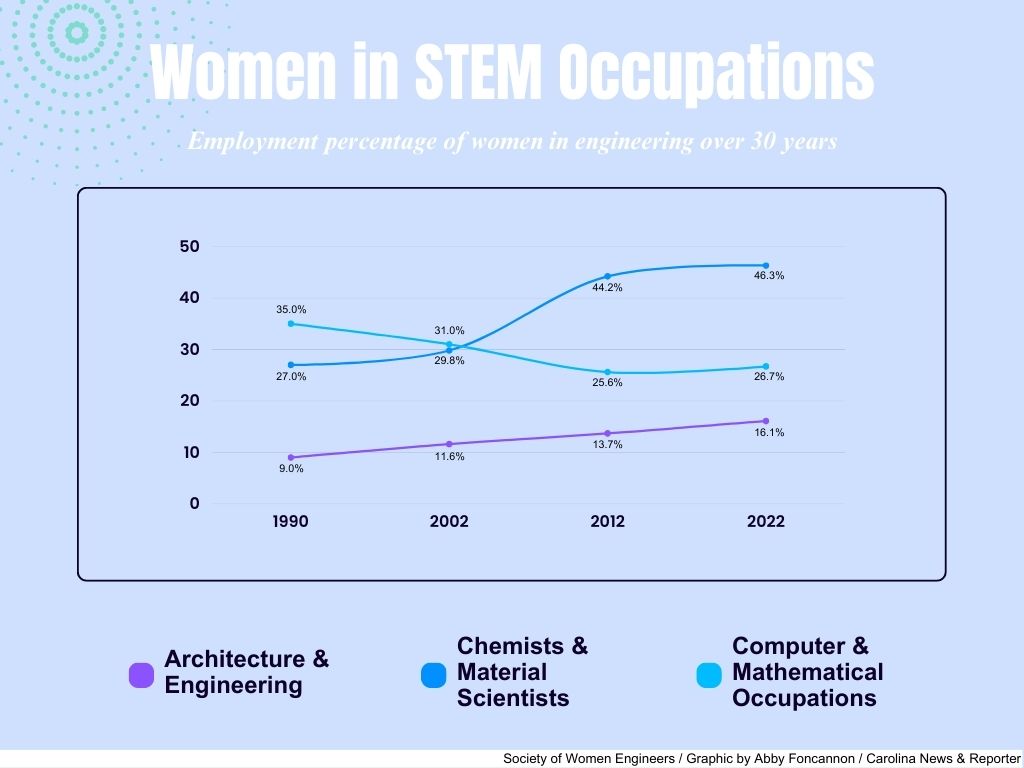
The term “leaky pipeline” implies a natural, almost benign seepage of talent. But what if the pipeline isn’t leaking—what if it’s actively hemorrhaging? Women don’t abandon STEM because they lack passion; they leave because the cost of staying is too high. The calculus is brutal: for every hour spent defending their expertise, they lose an hour advancing their research. For every committee seat they’re reluctantly granted, they’re denied a leadership role they’ve earned.
Consider the tenure track, where the unspoken rules favor those who can afford to gamble on their careers. Women, disproportionately burdened by caregiving responsibilities, face a Sophie’s choice: sacrifice family for ambition or ambition for family. The system doesn’t just tilt; it’s rigged. Men who take paternity leave are praised as “involved fathers”; women who do the same are labeled “less committed.” The double standard isn’t an oversight—it’s a feature of the machinery designed to exclude.
The Invisible Tax: Emotional Labor in a Male-Dominated Field
STEM fields are not just intellectually demanding—they are emotionally exhausting for women. The “invisible tax” of emotional labor falls heaviest on those already marginalized. A female graduate student organizes the lab’s social events not because she enjoys it, but because she’s expected to. A woman of color chairs the diversity committee not out of passion, but because no one else will. These roles are framed as opportunities for “service,” but they are, in reality, traps that divert time and energy from the work that actually advances careers.
The emotional toll is compounded by the isolation of being the “only one.” Women in STEM often describe feeling like anthropologists in their own fields, studying the behaviors of a dominant culture that treats them as perpetual outsiders. The loneliness is not incidental; it’s a feature of a system that thrives on homogeneity. When women speak up, they’re labeled “difficult.” When they stay silent, they’re complicit in their own erasure.

The Funding Gap: Capitalism’s Silent Culling of Talent
Money is power, and in STEM, women are systematically denied both. Research funding is not awarded based on potential but on the perceived “safety” of the applicant. Women, especially those from underrepresented backgrounds, are less likely to receive grants not because their ideas are inferior, but because their track records are scrutinized through a lens clouded by bias. A male scientist’s past failures are dismissed as “learning experiences”; a woman’s are proof she’s “not ready.”
The funding gap extends beyond grants. Women-led startups receive a fraction of the venture capital poured into their male counterparts. The justification? “Women don’t scale.” The reality? Women are never given the chance to prove they can. The system doesn’t just underfund women—it preemptively writes them off, ensuring they never reach the critical mass needed to challenge the status quo.
The Leadership Desert: Where Are the Women at the Top?
By the time women reach senior levels, the attrition is nearly complete. The few who remain are often sidelined into “soft” roles—diversity initiatives, mentorship programs—while their male peers ascend to positions of real influence. The scarcity of women in leadership isn’t a pipeline problem; it’s a power problem. Institutions claim they “can’t find qualified women,” but the truth is they’ve already ensured there are none to find.
The absence of women at the top is not an accident but a strategy. When women are excluded from decision-making, the systems that exclude them remain unchallenged. The cycle perpetuates itself, with each generation of women inheriting a landscape that was never designed for their success. The message is clear: STEM is not for women. It’s a club, and the door is locked from the inside.
The Way Forward: Not Fixing Women, But Fixing the System
Reforming STEM isn’t about “empowering” women to fit into a broken system—it’s about dismantling the system entirely. This requires more than token hires or performative allyship. It demands structural change: transparent promotion processes, equitable funding, and a reckoning with the emotional labor that women are forced to perform. It means confronting the bias that labels women as “too emotional” for leadership while simultaneously demanding they suppress their emotions to be taken seriously.
The future of STEM depends on our willingness to confront uncomfortable truths. Women are not leaving these fields because they lack resilience; they’re leaving because the cost of staying is a betrayal of their own potential. The question isn’t why they leave—it’s why we let them.











Leave a Comment