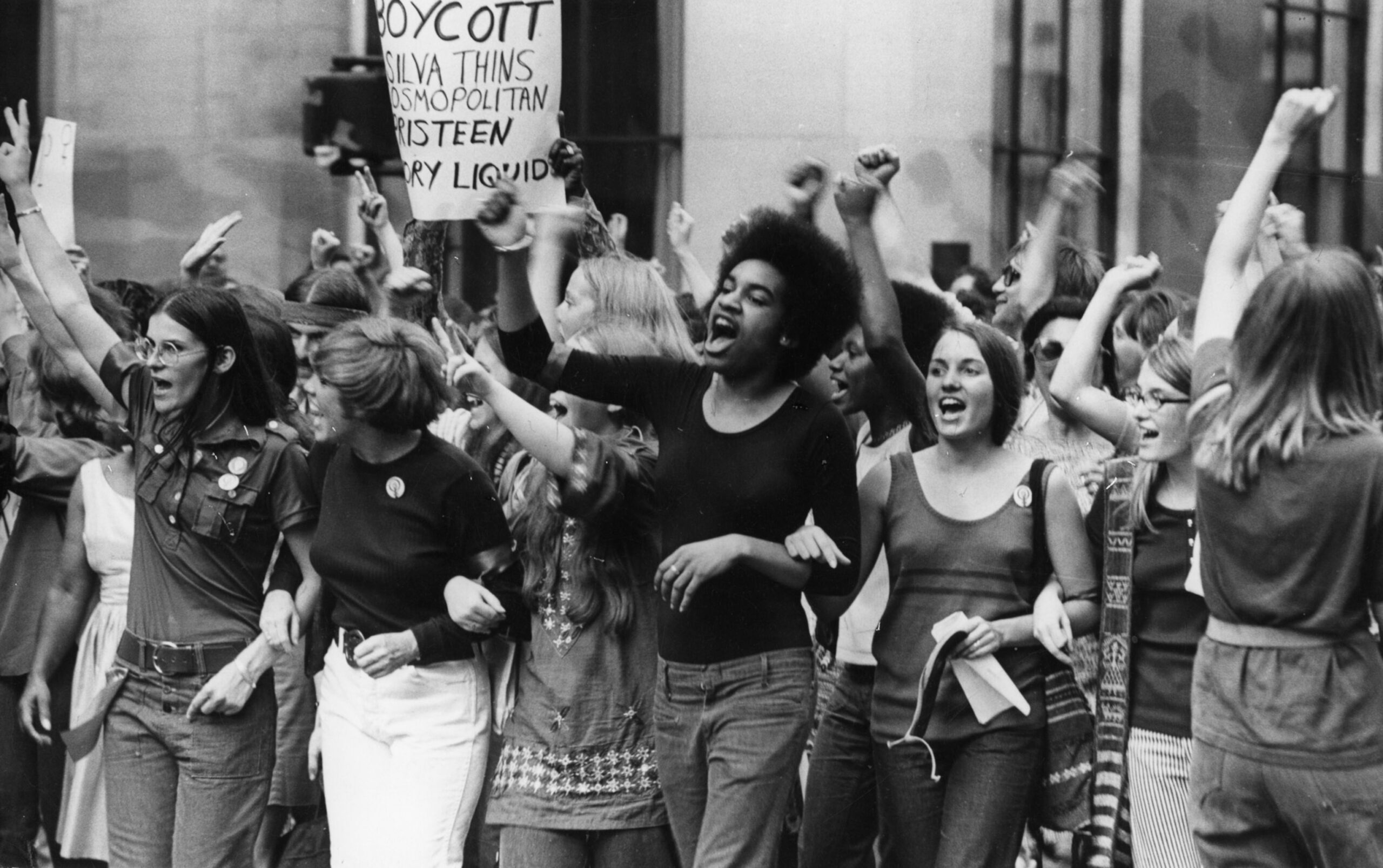
Every March, a familiar tableau unfolds: billboards emblazoned with trailblazing women, school curriculums highlighting suffragettes, and media outlets celebrating women’s contributions across history. Yet beneath this splash of recognition lies a disquieting truth. Women’s History Month, despite its noble aspirations, often perpetuates a sanitized narrative—a selective memory that whitewashes, commodifies, and ultimately distorts the rich, complicated tapestry of women’s pasts. This annual observance promises a shift in perspective, but more often than not, it stops short, leaving the marginalized voices unheard and the radical truths inconveniently tucked away. The promise of Women’s History Month is seductive; its delivery, frequently disappointing.
The Illusion of Inclusivity: Homogenizing Diverse Experiences
At face value, Women’s History Month suggests an embrace of all women’s stories. But delve deeper and a pattern emerges: the same few silhouettes parade across the stage. The narrative is dominated by white, middle-class figures whose experiences are extrapolated as representative of all women. This homogenization undermines the very essence of inclusivity it purports to champion. Black women, Indigenous women, immigrant women, disabled women—these identities are either reduced to footnotes or erased outright.
Historical accolades for figures like Susan B. Anthony or Elizabeth Cady Stanton are deserved but incomplete when separated from the exclusionary racial policies they defended or ignored. Without intersectionality woven into the narrative, Women’s History Month risks sanitizing feminist history into a palatable, depoliticized saga. This not only invisibilizes systemic oppressions but also sustains the myth that equality is a linear, universally attainable goal that has already been realized.

The De-radicalization of Feminist Struggles
Women’s history is replete with fierce resistance to oppressive systems—race, class, capitalism, imperialism. Yet, the celebratory tone of the month often sidelines the insurgent roots of feminist movements in favor of palatable progress tales. This de-radicalization frames feminism as safe, mainstream, and unequivocally positive, ignoring the discomforting antagonism that true change demands.
By repositioning radical figures as merely inspirational role models devoid of their political ferocity, society neutralizes the transformative power inherent in feminist histories. The erasure of militant suffragettes, labor activists, and anti-colonial heroines lays bare the reluctance to confront the deeply entrenched power structures that feminism seeks to dismantle. Women’s History Month, paradoxically, becomes a spectacle of sanitized empowerment, void of the grit and controversy that fuel real progress.
The Commercialization of Memory: From Legacy to Consumerism
Each March, markets overflow with pink merchandise, inspirational slogans, and token gestures promising acknowledgment. But beneath this veneer of celebration lies a commodification of women’s histories, subverting radical legacies into catchy hashtags and sellable narratives. This reductive commercialization transforms complex struggles into feel-good stories that generate profit rather than provoke reflection.
In this consumerist spectacle, the true stakes of women’s liberation—the persistence of gendered violence, wage disparities, reproductive injustice—are glaringly absent. Instead, a superficial engagement with history masquerades as activism, placating guilt without changing systems. The result is a public memory tailored for convenience rather than confrontation.

Erasure of Non-Western Feminine Narratives
Women’s History Month often adheres strictly to Western-centric chronicles, sidelining the revolutionary stories of women from other geographical contexts. The global south, indigenous communities, and diasporic groups frequently remain on the periphery of mainstream narratives.
This Eurocentric lens perpetuates intellectual colonialism that privileges Western feminist paradigms while obscuring alternative frameworks of gender justice. The vibrant, diverse epistemologies and modes of resistance mobilized by women around the world—including the anti-apartheid feminist activists in South Africa, the guerrilla women fighters in Latin America, and the matriarchal leadership in many indigenous societies—rarely receive equitable recognition during this month.
Such omission reinforces the dangerous myth that feminism’s bright lineage is confined to the West, depriving audiences of a truly global understanding of women’s agency and historicity.
A Call for Reckoning: Toward an Honest Feminist Commemoration
The whitewashing present in Women’s History Month is not a flaw to be dismissed; it is a clarion call demanding interrogation and overhaul. Recognizing the limitations of the current framework is the first step toward creating a commemoration that embodies the complexity, conflict, and courage intrinsic to feminist history.
This means amplifying marginalized voices unapologetically, embracing the contradictions within the movement, and refusing the lure of consumerist trivialization. It requires embracing uncomfortable truths—about racial exclusions, capitalist co-optation, and fractured legacies—that complicate rather than simplify narratives.
True transformation lies in an unvarnished recounting of history, one that honors women’s multiplicity and positions struggle as ongoing, not finished. Only then can Women’s History Month evolve from symbolic gesture to a revolutionary reclamation of the past—and a blueprint for the future.








Leave a Comment