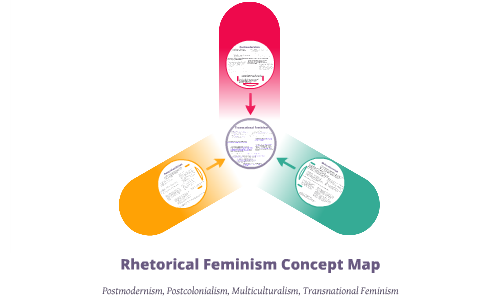
Transnational feminism. The very phrase hums with a contentious energy, a defiant rejection of the comfortable, the complacent. It’s not your grandmother’s feminism, that’s for damn sure. We’re talking about a disruptive force, a critical lens that explodes the myth of a universal female experience and demands we confront the messy, complicated realities of global power dynamics. This isn’t some polite tea party; it’s a revolution simmering beneath the surface, challenging the status quo one act of radical solidarity at a time.
Forget the simplistic narratives of Western saviors rescuing oppressed women in the Global South. Transnational feminism throws that colonialist trope into the trash where it belongs. It’s about recognizing that power operates across borders, shaping the lives of women in vastly different ways, yet always connected by the invisible threads of global capitalism, imperialism, and neocolonialism. It’s about understanding that liberation is not a one-size-fits-all commodity to be exported, but a multifaceted, context-specific struggle rooted in local knowledge and resistance. Are you ready to dismantle your assumptions?
Deconstructing the Single Story: A Mosaic of Oppressions
The first, and perhaps most crucial, tenet of transnational feminism lies in its staunch rejection of what Chimamanda Ngozi Adichie calls “the danger of a single story.” The notion of a monolithic “woman” simply doesn’t exist. To pretend otherwise is to erase the lived experiences of countless individuals, each navigating a complex web of intersecting oppressions. Race, class, sexuality, religion, ability, caste – these are not merely add-ons to some fundamental “womanhood.” They are constitutive elements, shaping the very fabric of each woman’s existence. A wealthy white woman in the West faces entirely different challenges than a Dalit woman in India, or an Indigenous woman in the Amazon. To ignore these differences is not only intellectually lazy, it’s actively harmful.
Consider, for instance, the fight for reproductive rights. In the United States, the battleground often centers on access to abortion. But for women in many parts of the Global South, the struggle is far more complex. Forced sterilization, lack of access to basic healthcare, and pervasive gender-based violence are just some of the obstacles they face. A purely Western-centric approach to reproductive rights would completely miss these crucial nuances, potentially even undermining the efforts of local activists on the ground. Understanding intersectionality is the bedrock upon which transnational solidarity is built.
Beyond Borders: The Cartography of Power
Transnational feminism doesn’t just acknowledge difference; it actively seeks to map the power structures that create and maintain inequality. It recognizes that global capitalism, with its insatiable hunger for profit, disproportionately exploits women in the Global South. Sweatshops churning out fast fashion, factories dumping toxic waste into local waterways, multinational corporations extracting natural resources with reckless abandon – these are all feminist issues. They are issues that directly impact the health, safety, and economic security of women around the world.
Neocolonialism, too, plays a critical role. The legacy of colonialism continues to shape political and economic relations between the West and the Global South. Western governments and institutions often impose their own agendas on developing countries, often under the guise of “development aid.” These policies can have devastating consequences for women, undermining local economies, eroding traditional forms of knowledge, and exacerbating existing inequalities. We need to be critically examining the supposed benevolence of global institutions and the perpetuation of power dynamics they often reinforce.
Think about the impact of structural adjustment programs imposed by the International Monetary Fund (IMF) and the World Bank. These programs often require countries to cut social spending, privatize essential services, and devalue their currencies. The result? Women bear the brunt of these austerity measures, as they are often the primary caregivers and providers in their families. Transnational feminists demand accountability from these powerful institutions and advocate for alternative models of development that prioritize human rights and environmental sustainability.
Solidarity, Not Saviorism: The Ethics of Engagement
Transnational feminism is fundamentally about building solidarity across borders, but it is a solidarity rooted in mutual respect and reciprocal learning. It’s not about Western feminists parachuting in to “save” women in the Global South. That’s a colonial mindset in disguise. Instead, it’s about listening to the voices of women on the ground, amplifying their struggles, and supporting their efforts to create change in their own communities. It’s about recognizing that they are the experts on their own lives.
This requires a profound shift in perspective. Western feminists need to be willing to decenter themselves, to recognize their own privilege and complicity in systems of oppression. They need to be willing to listen more than they speak, to learn more than they teach. And they need to be willing to challenge the power dynamics that exist within their own movements, ensuring that marginalized voices are heard and valued.
Consider the example of fair trade initiatives. While fair trade can be a valuable tool for supporting women artisans in the Global South, it’s crucial to ensure that these initiatives are truly empowering. Are women being paid fair wages? Are they being given control over their own production and marketing? Are they being protected from exploitation? Transnational feminists are actively working to ensure that fair trade is not just another form of consumerism, but a genuine expression of solidarity.
Challenging the Patriarchy, Globally
Ultimately, transnational feminism is about challenging patriarchy in all its forms, whether it manifests as domestic violence, workplace discrimination, or political marginalization. It recognizes that patriarchy is not a monolithic entity, but a complex and adaptable system of power that operates differently in different contexts. But at its core, patriarchy is always about maintaining male dominance and control over women’s bodies, labor, and lives.
Transnational feminists are working to dismantle patriarchy by challenging harmful cultural norms, advocating for legal reforms, and building grassroots movements that empower women to take control of their own destinies. They are working to create a world where all women can live free from violence, discrimination, and exploitation.
Think about the fight against femicide, the gender-related killing of women and girls. Femicide is a global pandemic, affecting women in every country. Transnational feminists are working to raise awareness about this issue, to hold governments accountable for protecting women’s lives, and to support the families of victims. They are working to create a world where femicide is no longer tolerated.
The Future is Transnational: A Call to Action
Transnational feminism is not just an academic theory; it’s a call to action. It’s a call to dismantle systems of oppression, to build solidarity across borders, and to create a more just and equitable world for all women. It’s a call to challenge our own assumptions, to listen to the voices of marginalized communities, and to work together to create a future where all women can thrive.
This requires a radical reimagining of our understanding of feminism. It requires a willingness to move beyond simplistic narratives and embrace the complexities of global power dynamics. It requires a commitment to solidarity, not saviorism, and a recognition that liberation is a collective project, not an individual pursuit.
The work of transnational feminism is not easy. It requires constant vigilance, critical self-reflection, and a willingness to challenge the status quo. But the rewards are immeasurable. By working together, across borders and across differences, we can create a world where all women are free.
Are you ready to join the revolution? Are you ready to embrace the challenge of transnational feminism? The future is waiting.






Leave a Comment