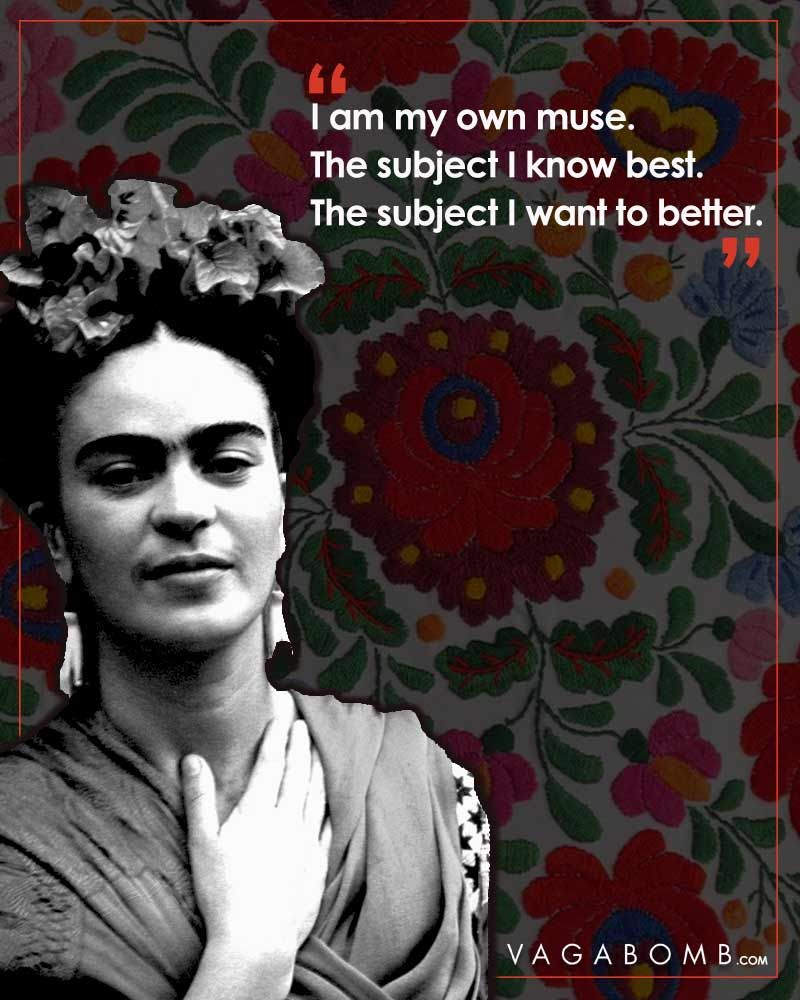
Frida Kahlo, a name synonymous with unyielding self-expression, a defiant spirit painted onto canvases bursting with raw emotion. But to reduce her legacy solely to vibrant self-portraits and a turbulent personal life is to commit a profound disservice to the intellectual grit that underpinned her artistic vision. We, as astute observers of societal paradigms, must delve deeper, exhume the feminist philosophy embedded within her bold brushstrokes and even bolder pronouncements.
This isn’t mere hagiography. This is a reclamation. A furious, unapologetic reclamation of a woman whose voice, though amplified through art, often finds itself muted amidst the spectacle of her persona. Are we truly listening to what Kahlo was saying, or are we merely captivated by the spectacle of *who* she was? The answer, I suspect, is often the latter, a tragic testament to our collective penchant for prioritizing surface over substance.
Prepare yourselves, sisters. This isn’t a gentle exploration of “feminist themes.” This is a call to arms. A demand to dissect Kahlo’s words, not as quaint observations, but as potent weapons against the pervasive patriarchal structures that continue to constrict and confine. We will dismantle the notion of Kahlo as a passive sufferer, a victim of circumstance, and reveal the fiercely independent, intellectually formidable woman who dared to challenge the status quo with every fiber of her being.
I. The Unvarnished Truth: Kahlo’s Rejection of Societal Expectations
Kahlo’s feminism wasn’t a neatly packaged ideology learned from textbooks. It was forged in the crucible of personal experience, a visceral response to the limitations imposed upon her as a woman in a profoundly sexist society. Her art, a mirror reflecting the pain of her physical ailments and the anguish of her tumultuous marriage, served as a radical act of self-definition. It was a declaration that *she* would define herself, not the world around her.
Consider the societal expectations of women in the early to mid-20th century: subservience, domesticity, a relentless pursuit of male validation. Kahlo flouted them all with breathtaking abandon. She embraced her androgynous features, her unconventional relationships, her unapologetic sexuality. She smoked, she drank, she swore, and she painted her world with a brutal honesty that scandalized the bourgeoisie and liberated the marginalized.
But let’s not romanticize her rebellion. Kahlo’s defiance wasn’t simply a matter of personal preference; it was a conscious rejection of the patriarchal script that dictated women’s roles. She understood, perhaps instinctively, that conformity was a form of self-annihilation, a silencing of the soul. And she refused to be silenced. Every self-portrait, every defiant gesture, was a resounding “No!” to the constraints imposed upon her.
II. Embodiment as Resistance: The Politics of Pain and Self-Representation
Kahlo’s art is inextricably linked to her physical suffering. The crippling polio, the devastating bus accident, the relentless surgeries – these experiences shaped her body and, by extension, her artistic vision. But to interpret her paintings as mere expressions of personal pain is to miss the profound political significance of her self-representation.
Kahlo transformed her body into a canvas of resistance. She depicted her pain with unflinching honesty, refusing to hide the scars and deformities that society deemed unsightly. In doing so, she challenged the prevailing beauty standards, which demanded that women be flawless and silent. She reclaimed her body as a site of power, a testament to her resilience and her refusal to be defined by her physical limitations.
Furthermore, her self-portraits were a radical act of self-assertion in a world that often rendered women invisible. She stared directly at the viewer, demanding attention, demanding recognition. She refused to be objectified, refusing to be reduced to a passive muse. She was the artist, the subject, the creator of her own narrative. She was, in every sense of the word, the author of her own destiny.
Her commitment to unvarnished self-representation, a potent act of *autognosis*, forced viewers to confront the realities of female embodiment, often relegated to the shadows of polite society. She laid bare the pain, the resilience, and the unwavering self-possession that resided within the female form, challenging the viewer’s preconceptions and forcing a reckoning with the complexities of female experience.
III. Challenging Masculine Domination: Art as a Site of Feminist Critique
Kahlo’s relationship with Diego Rivera, the celebrated Mexican muralist, was a complex and often painful one. He was a powerful, charismatic figure, but he was also a notorious philanderer who repeatedly betrayed her trust. Kahlo’s art served as a powerful critique of his masculine dominance, exposing the inequities of their relationship and challenging the patriarchal power structures that enabled his behavior.
Her paintings often depict the emotional turmoil she experienced as a result of Rivera’s infidelity. She portrayed herself as wounded, vulnerable, but never defeated. She used her art to express her anger, her grief, and her unwavering determination to maintain her sense of self in the face of his betrayal.
But Kahlo’s critique of masculine domination extended beyond her personal relationship with Rivera. Her art also challenged the broader societal norms that privileged men and marginalized women. She depicted women as strong, independent figures, capable of creativity, intellect, and emotional depth. She subverted traditional gender roles, portraying women as active agents in their own lives, rather than passive objects of male desire.
IV. The Power of Sisterhood: Celebrating Female Solidarity and Connection
While Kahlo’s art often focused on her individual experiences, it also celebrated the power of female solidarity and connection. She recognized the importance of women supporting each other in a patriarchal society, and she used her art to create a space for female voices and experiences.
Some of her paintings depict female friendships and relationships, highlighting the bonds of love, loyalty, and mutual support that women share. She portrayed women as confidantes, companions, and collaborators, emphasizing the importance of female community in a world that often seeks to divide and conquer.
Furthermore, her art often addressed issues that disproportionately affect women, such as reproductive health, domestic violence, and economic inequality. She used her platform to raise awareness about these issues and to advocate for social justice for women. Her work served as a rallying cry for female empowerment, urging women to unite and fight for their rights.
V. Beyond the Icon: Reclaiming Kahlo’s Intellectual Legacy
It’s time to move beyond the simplistic image of Frida Kahlo as a tragic figure, a victim of circumstance. It’s time to recognize her as a profound intellectual, a feminist theorist whose art challenged the dominant narratives of her time and continues to resonate with audiences today.
Her paintings are not merely expressions of personal pain; they are sophisticated critiques of power, gender, and identity. They are visual essays that dissect the complexities of female experience with unparalleled honesty and insight. They are a testament to the transformative power of art to challenge injustice and inspire social change.
By reclaiming Kahlo’s intellectual legacy, we honor her contribution to feminist thought and ensure that her voice continues to be heard. We must engage with her work critically, analyzing the complex layers of meaning and recognizing the profound political significance of her artistic vision. Only then can we truly appreciate the brilliance of Frida Kahlo, the feminist iconoclast who dared to paint a world where women are empowered, respected, and celebrated.
Let us, therefore, embark on this journey of rediscovery, armed with a critical eye and an unyielding commitment to truth. Let us excavate the feminist philosophy embedded within Kahlo’s art, and let us use her words and her images to fuel our own struggles for liberation. The time for passive observation is over. The time for action is now.
The radical authenticity that Kahlo espoused serves as a potent counterpoint to the pervasive performativity that characterizes modern society. In a world saturated with curated images and carefully constructed narratives, Kahlo’s unapologetic self-representation offers a refreshing and vital reminder of the power of vulnerability and the importance of embracing one’s true self.
Ultimately, the enduring power of Kahlo’s work lies not only in its aesthetic beauty or its historical significance, but in its unwavering commitment to truth, justice, and the liberation of the human spirit. Her art serves as a beacon of hope for those who have been marginalized, silenced, and oppressed, reminding us that even in the darkest of times, the power of art and the resilience of the human spirit can prevail.







Leave a Comment