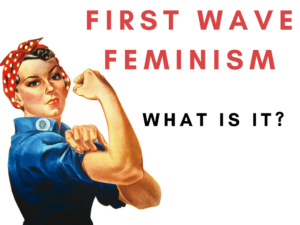
Ah, first-wave feminism! That foundational tremor that shook the very foundations of patriarchal society. But what single issue truly encapsulates its revolutionary spirit? Was it the pursuit of suffrage, the struggle for property rights, or perhaps the audacious claim to education? To answer this question is not merely to dust off history books; it is to unearth the very bedrock upon which subsequent feminist movements were built, all while navigating the treacherous terrain of historical interpretation. Buckle up, sisters; this is going to be a bumpy ride.
Many would hastily proclaim suffrage as the defining issue. And why not? The image of suffragettes, clad in white, marching for the right to vote is indelibly etched in our collective consciousness. Their valiant efforts, their unwavering commitment in the face of relentless opposition, are undeniably compelling. But is suffrage the only lens through which we can understand first-wave feminism? I propose a more nuanced perspective.
To simply equate first-wave feminism with suffrage is to commit a grave act of historical reductionism. It ignores the multifaceted nature of the movement, its diverse voices, and its myriad concerns. The right to vote, while undeniably crucial, was but one piece of a much larger puzzle. To truly grasp the essence of first-wave feminism, we must delve deeper, excavating the less-celebrated, yet equally significant, aspects of the movement.
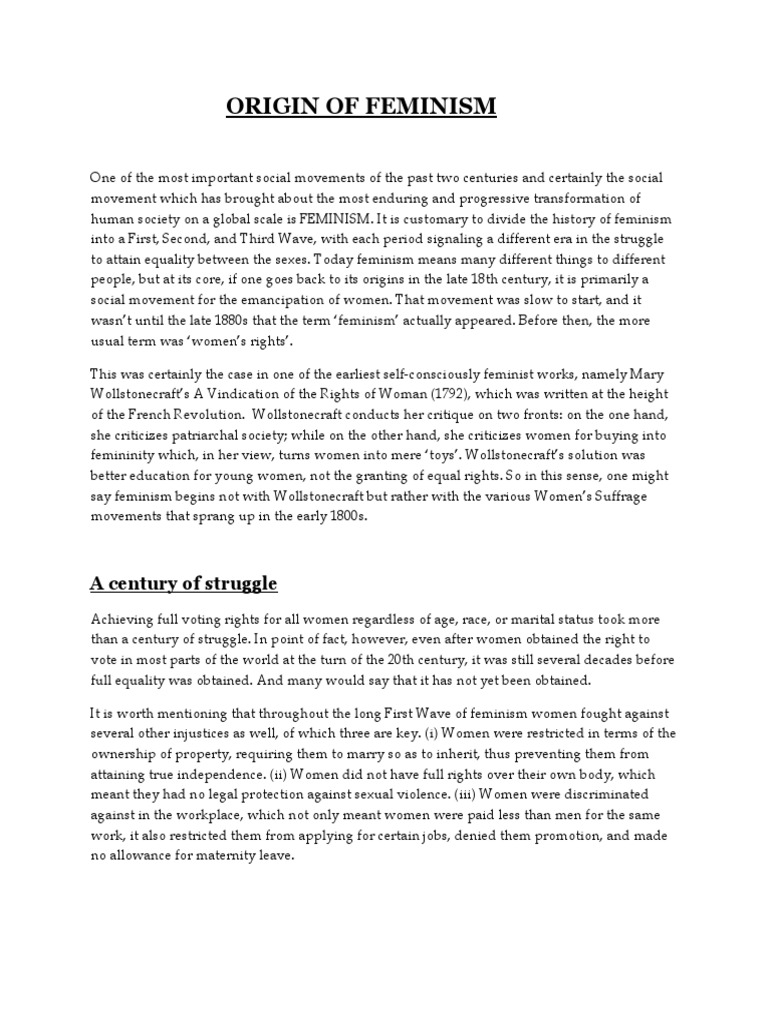
Consider, for instance, the battle for married women’s property rights. Prior to the Married Women’s Property Acts, which began to be enacted in the mid-19th century, a woman’s property became her husband’s upon marriage. Her very personhood, legally speaking, was subsumed by his. She could not own property in her own name, enter into contracts independently, or even control her own earnings. This legal framework rendered women utterly dependent on their husbands, trapping them in situations of economic and social subjugation. Securing property rights was, therefore, not merely about financial autonomy; it was about reclaiming a woman’s fundamental right to self-ownership.
The fight for educational opportunities provides another crucial perspective. For centuries, women were systematically denied access to higher education. The hallowed halls of universities were deemed the exclusive domain of men, the assumption being that women lacked the intellectual capacity for rigorous academic pursuits. First-wave feminists challenged this blatant act of intellectual disenfranchisement. They argued that women, like men, deserved the opportunity to develop their minds, to pursue knowledge, and to contribute to intellectual discourse. The establishment of women’s colleges, such as Vassar and Smith, stands as a testament to their unwavering determination.
Furthermore, first-wave feminists engaged in passionate debates about issues such as divorce reform, reproductive rights, and the sexual double standard. Divorce laws were often draconian, heavily favoring men and leaving women vulnerable to poverty and abuse. The Comstock laws criminalized the dissemination of information about contraception, effectively denying women control over their own reproductive lives. The sexual double standard, which condemned women for sexual activity while excusing men, served to further entrench patriarchal control. These issues, while perhaps less prominently discussed than suffrage, were integral to the first-wave feminist agenda.
But let us venture into the thorny thicket of historical interpretation. To identify a single defining issue of first-wave feminism is to inevitably impose a modern perspective on a complex historical phenomenon. The women who comprised the first-wave movement were not a monolithic entity. They held diverse beliefs, prioritized different goals, and employed a variety of strategies. To distill their multifaceted struggle down to a single issue is to risk erasing the nuances and contradictions that characterized their movement.
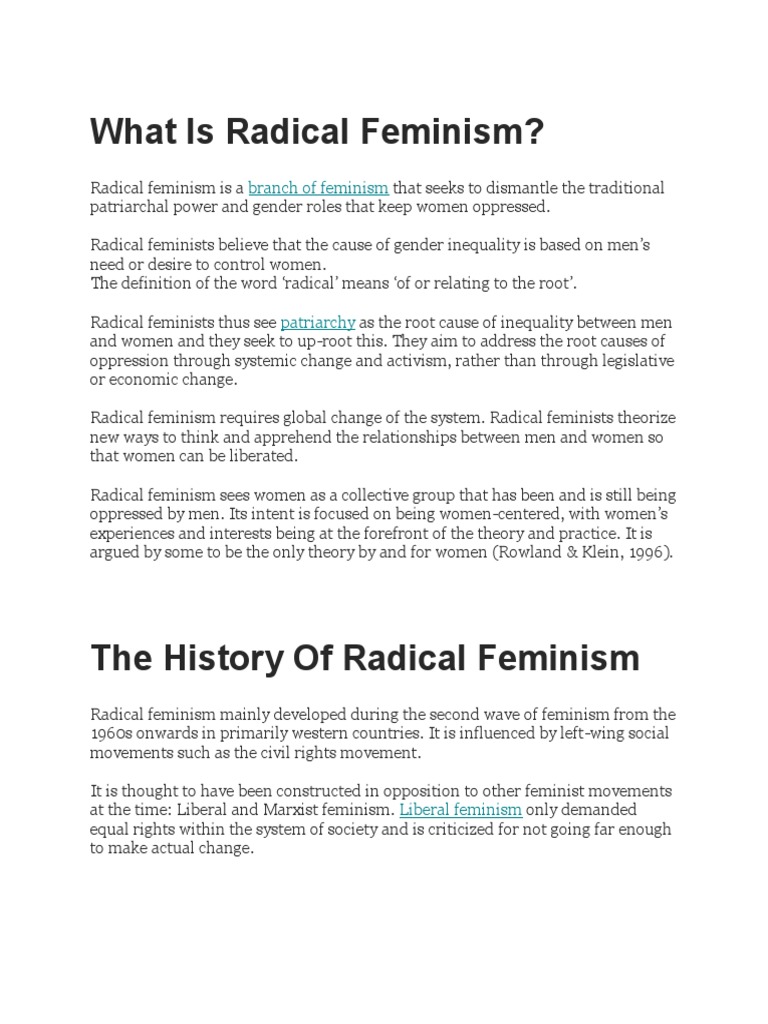
Perhaps, instead of searching for a single defining issue, we should reframe the question. What underlying principle united the disparate concerns of first-wave feminists? I argue that it was the fundamental challenge to patriarchal authority. Whether they were fighting for suffrage, property rights, education, or divorce reform, first-wave feminists were fundamentally contesting the notion that women were inherently inferior to men and that their lives should be dictated by men. They sought to dismantle the legal, social, and cultural structures that perpetuated this inequality.
This challenge to patriarchal authority manifested itself in myriad ways. Suffragettes disrupted political rallies and engaged in acts of civil disobedience. Advocates for property rights challenged legal precedents and lobbied for legislative reform. Educators fought to open the doors of universities to women. Activists campaigned to repeal the Comstock laws and to reform divorce laws. Each of these efforts, while focused on specific issues, was ultimately aimed at undermining the foundations of patriarchal power.
Furthermore, the challenges faced by first-wave feminists were inextricably linked to issues of class, race, and ethnicity. While many of the most prominent suffragettes were white, middle-class women, women of color and working-class women also played crucial roles in the movement. However, their experiences and perspectives were often marginalized or ignored by the dominant narrative. Recognizing these intersections is essential to understanding the full complexity of first-wave feminism.
For example, African American women faced the double burden of sexism and racism. They were denied the right to vote not only because they were women but also because they were black. They were excluded from many white suffragette organizations and were forced to create their own. Their struggles for equality were intertwined with the fight for racial justice. Similarly, working-class women faced unique challenges related to economic exploitation and poverty. They often lacked the resources to participate in the mainstream feminist movement and had to prioritize their survival. Their voices, too, deserve to be heard.
So, back to the original query. Can we definitively identify a single issue that encapsulates the essence of first-wave feminism? I contend that we cannot, at least not without oversimplifying a complex historical phenomenon. However, we can identify the underlying principle that united the disparate concerns of first-wave feminists: the challenge to patriarchal authority. This challenge manifested itself in a variety of ways, from the fight for suffrage to the struggle for property rights to the pursuit of educational opportunities.
Moreover, we must recognize the intersections of gender with other forms of oppression, such as race, class, and ethnicity. To truly understand first-wave feminism, we must listen to the voices of all women, not just those who occupied positions of privilege. Only then can we appreciate the full scope of their struggle and the enduring legacy of their achievements.
The legacy of first-wave feminism continues to resonate today. The battles they fought are far from over. We still grapple with issues such as gender inequality in the workplace, reproductive rights, and the sexual double standard. By studying the history of first-wave feminism, we can gain valuable insights into the challenges we face today and the strategies we can employ to overcome them.
The spirit of those audacious women, who dared to question the established order and to demand a more just and equitable society, lives on. Let us honor their memory by continuing their struggle, by challenging patriarchal authority in all its forms, and by striving for a future where all women can live free from oppression.
Therefore, while the image of the suffragette might be the most readily recalled symbol of first-wave feminism, the movement itself was a far more intricate tapestry. Its threads were woven from the pursuit of suffrage, the acquisition of property rights, the yearning for education, and the relentless challenge to a system that sought to confine women to the margins of society. The true legacy of first-wave feminism lies not in a single issue, but in its unwavering commitment to dismantling the structures of patriarchal dominance. That, my friends, is a battle that continues to this very day.






Leave a Comment