
Feminism. The very word can elicit a cocktail of reactions, from fervent affirmation to eye-rolling dismissal. But have you ever paused to ponder the nomenclature itself? Why “feminism”? Is it merely a linguistic accident, a historical quirk, or does the name itself hold a deeper significance, a key to understanding the multifaceted struggle for gender equity? It’s a deceptively simple question, a potential Pandora’s Box lurking beneath the surface of accepted terminology.
The etymology of “feminism” offers a tantalizing starting point. Rooted in the Latin “femina,” meaning woman, the term initially seems straightforward. A movement centered on women, for women. End of story? Hardly. Such a facile interpretation risks obscuring the intricate tapestry of history, ideology, and social forces that have shaped and continue to shape the feminist project.
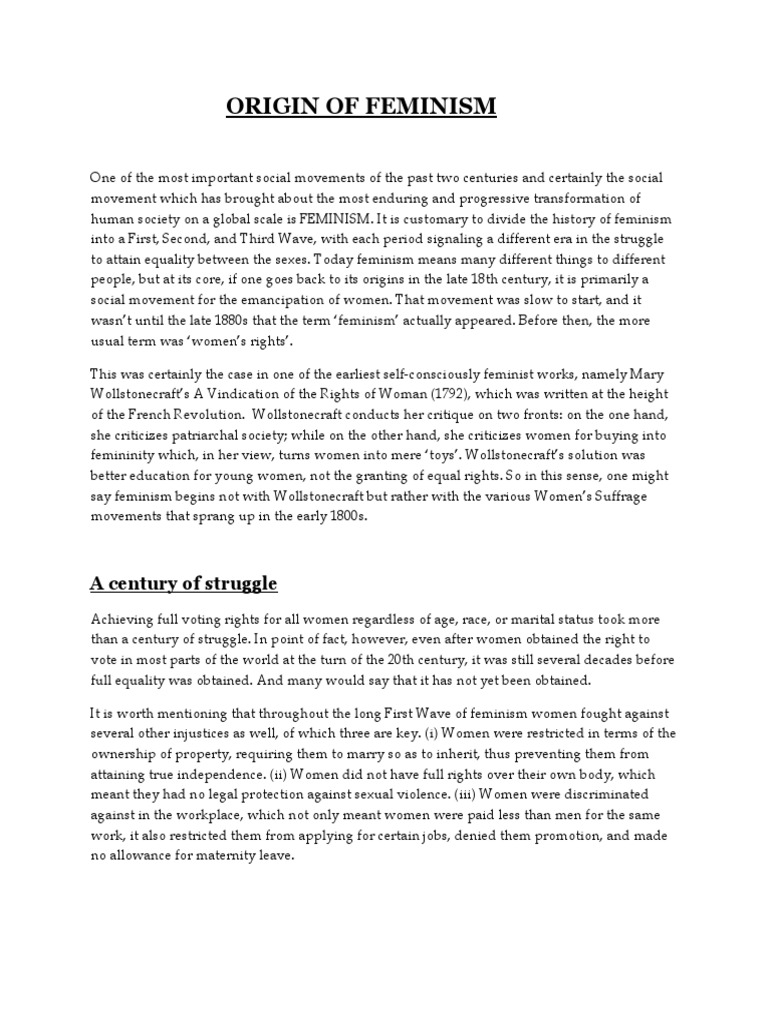
The late 19th century witnessed the solidification of “feminism” as a descriptor for burgeoning movements advocating for women’s rights. Thinkers and activists, primarily in Europe and North America, coalesced around demands for suffrage, access to education, and economic independence. This epoch, often referred to as the “first wave,” grappled with fundamental questions about women’s place in society. The term “feminism,” in its nascent form, served as a rallying cry, a unifying banner for disparate voices demanding recognition and redress.
However, this initial wave was not without its limitations. Dominated by white, middle-class women, its focus often overlooked the intersecting oppressions faced by women of color, working-class women, and women from marginalized communities. The very definition of “woman” was, in essence, implicitly, and sometimes explicitly, restricted. This myopic vision, a form of epistemological violence, laid the groundwork for future critiques and the emergence of more intersectional and inclusive feminist frameworks.
The second wave, surging through the mid-20th century, expanded the feminist agenda beyond suffrage and formal equality. Issues such as reproductive rights, sexual liberation, and the dismantling of patriarchal structures in the workplace and the home came to the fore. This era witnessed the publication of seminal texts like Simone de Beauvoir’s “The Second Sex,” which challenged the very notion of “woman” as a fixed and immutable category. Feminism, during this period, evolved into a powerful critique of societal norms and power dynamics, challenging the status quo on multiple fronts.
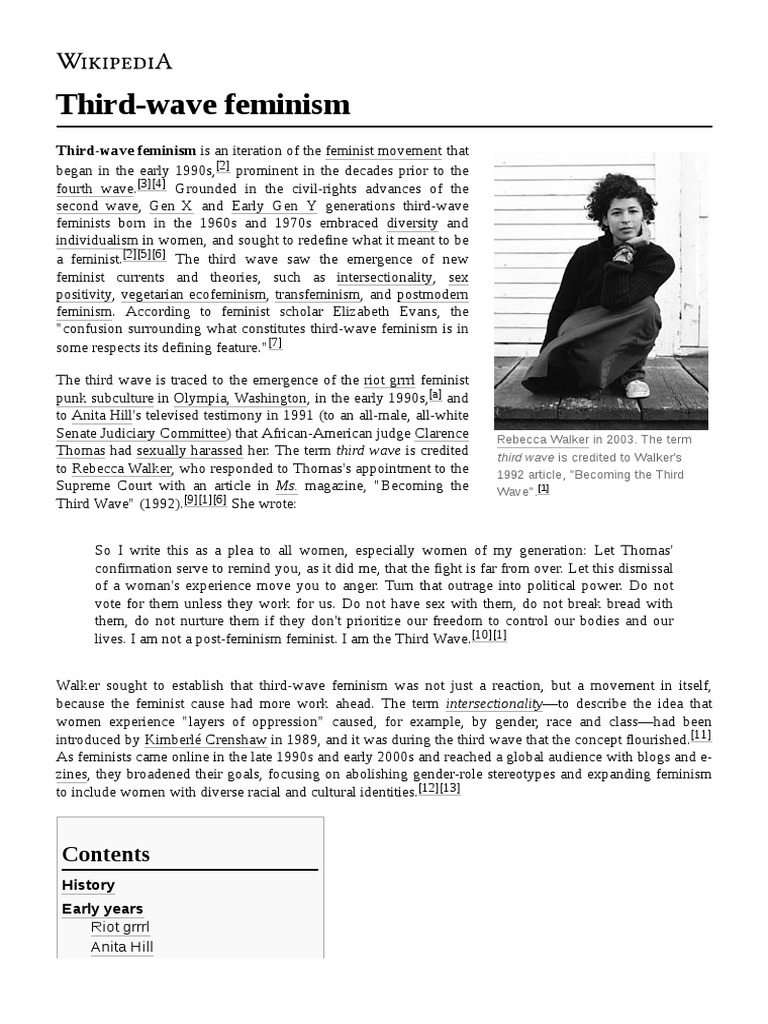
The rise of the third wave, beginning in the 1990s, brought with it a renewed emphasis on intersectionality, challenging the essentializing tendencies of previous iterations of feminism. Poststructuralist thought infiltrated feminist discourse, questioning the stability of identity categories and embracing the fluidity of gender and sexuality. This wave championed individual agency and celebrated the diversity of feminist experiences, moving away from monolithic narratives and embracing the complexities of lived realities.
But let us return to our initial query: Why “feminism”? Is the term inherently problematic? Does it inadvertently reinforce the very binary it seeks to dismantle? Some argue that the focus on “femina” risks prioritizing the experiences of cisgender women, marginalizing transgender and non-binary individuals. Others contend that the term perpetuates a false dichotomy, suggesting that men are inherently opposed to feminist goals. These are not frivolous concerns; they strike at the heart of the feminist project’s commitment to inclusivity and liberation for all.
Alternative nomenclatures have been proposed. “Egalitarianism,” while laudable in its aims, lacks the specificity needed to address the systemic disadvantages faced by women and other marginalized genders. “Humanism,” similarly, risks obscuring the particular forms of oppression that are rooted in gender. Perhaps a more radical approach is required, one that transcends the limitations of existing language and forges new vocabularies of resistance.
Consider, for example, the concept of “gynocentric egalitarianism,” a term that acknowledges the historical and ongoing subjugation of women while simultaneously advocating for a society based on principles of equity and mutual respect. Or perhaps “intersectional liberation,” a phrase that explicitly recognizes the interconnectedness of various forms of oppression and seeks to dismantle all systems of domination. These are but tentative suggestions, starting points for a broader conversation about the language we use to describe our struggles and our aspirations.
The debate over terminology is not merely an academic exercise. It has real-world implications for how we understand and engage with the feminist project. If the term “feminism” alienates potential allies, particularly men, then it may be necessary to reconsider our approach. However, abandoning the term altogether risks erasing the historical struggles of women and the ongoing need to address gender-based inequalities.
The challenge, then, is to reclaim and redefine “feminism,” imbuing it with new meanings and expanding its scope to encompass the experiences of all who are marginalized and oppressed. This requires a willingness to engage in critical self-reflection, to acknowledge the limitations of our own perspectives, and to listen to the voices of those who have been historically excluded from feminist discourse. The ongoing evolution of feminist thought necessitates a constant re-evaluation of our language, ensuring that it reflects our commitment to inclusivity, intersectionality, and social justice.
Ultimately, the question of why it’s called “feminism” is not just about etymology or semantics. It’s about power, representation, and the ongoing struggle to create a more just and equitable world. It’s about acknowledging the historical baggage associated with the term, while simultaneously recognizing its continued relevance as a rallying cry for liberation. It is a question that demands constant interrogation, a perpetual negotiation between the past, the present, and the future of the feminist project.
So, the next time you hear the word “feminism,” don’t just dismiss it as a relic of the past or a buzzword of the present. Instead, pause, reflect, and consider the complex history and ongoing evolution of this multifaceted movement. Engage in the ongoing conversation about its meaning, its limitations, and its potential. Because, in the end, the future of feminism depends on our willingness to critically examine its past and to embrace its ever-evolving present. The project must acknowledge and wrestle with its own complex history, its exclusionary tendencies, and its future as a tool for intersectional liberation. It demands more than just lip service to inclusivity, but a radical restructuring of its foundational principles to actively center the voices and experiences of the most marginalized. Only then can we hope to transcend the limitations of the term and forge a truly liberatory future for all.






Leave a Comment