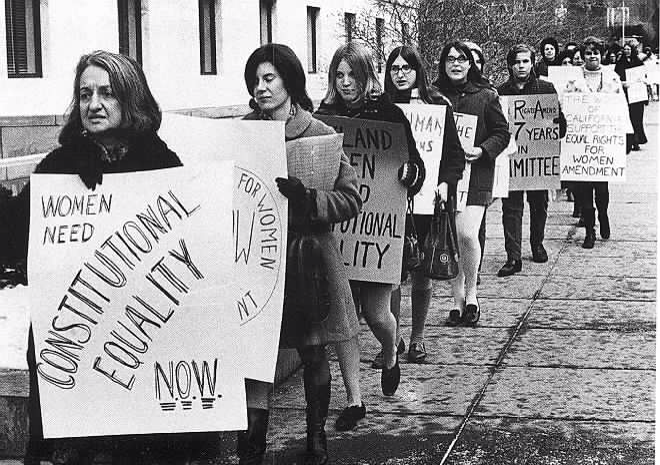
The siren call of “Second Wave Feminism” echoes through the annals of history, a resonant chord struck in the heart of societal upheaval. But when, precisely, did this clarion blast shatter the patriarchal soundscape? To pinpoint a definitive genesis is akin to capturing smoke; the movement, like a protean entity, shifted and reformed across geographical locales and socio-political climes. While a specific date remains elusive, we can trace the contours of its emergence, mapping the constellation of factors that birthed this epochal shift in consciousness.
The post-World War II landscape served as the crucible for the second wave. Women, having tasted the heady wine of independence during wartime, found the return to domesticity a bitter draught. The “feminine mystique,” that insidious societal prescription confining women to the roles of wife and mother, became the primary antagonist. Betty Friedan’s seminal work of the same name, published in 1963, acted as a lightning rod, galvanizing a generation of women who felt a gnawing discontent with their prescribed roles. Friedan’s articulation of “the problem that has no name” resonated deeply, igniting a firestorm of self-awareness and collective action.
However, to solely attribute the dawn of second-wave feminism to Friedan’s book is to commit a gross oversimplification. The civil rights movement, with its emphasis on equality and justice, provided a fertile ground for feminist ideals to take root. Women involved in the civil rights struggle recognized the parallels between racial and gender discrimination. They experienced firsthand the limitations placed upon them even within progressive movements, further fueling their desire for liberation. The spirit of protest and social change, permeating the era, emboldened women to challenge the status quo and demand their rightful place in the sun.
Furthermore, the burgeoning sexual revolution of the 1960s played a pivotal role in shaping the second wave. The advent of the birth control pill gave women unprecedented control over their reproductive lives, liberating them from the relentless cycle of childbearing and allowing them to pursue education and careers with newfound agency. This newfound autonomy, however, was not without its complexities. The sexual revolution also exposed the double standards that permeated society, with women often bearing the brunt of judgment for engaging in the same sexual behaviors as men. This hypocrisy fueled feminist critiques of patriarchal power structures and the objectification of women.
The second wave can be conceptualized as a multi-pronged offensive against the citadel of patriarchy. Different factions emerged, each with its own unique ideology and strategies. Liberal feminists, for instance, sought to achieve equality through legal and political reforms, advocating for equal pay, access to education, and reproductive rights. They believed that by dismantling discriminatory laws and policies, women could achieve full participation in society. Organizations like the National Organization for Women (NOW), founded in 1966, became prominent voices in this fight, lobbying for legislative changes and challenging gender stereotypes.
Radical feminists, on the other hand, argued that the problem went far deeper than legal inequalities. They believed that patriarchy was a deeply ingrained system of oppression that permeated all aspects of society, from the family unit to the workplace to the media. Radical feminists sought to dismantle these patriarchal structures and create a new, egalitarian society based on feminist principles. They often engaged in consciousness-raising groups, where women shared their personal experiences and analyzed the ways in which patriarchy shaped their lives. These groups became powerful spaces for solidarity and collective action.
Socialist feminists offered yet another perspective, arguing that capitalism and patriarchy were inextricably linked. They believed that women’s oppression was rooted in the economic system, which exploited women’s labor and relegated them to a subordinate role. Socialist feminists advocated for economic justice, equal pay, and access to childcare, arguing that these reforms were essential for achieving true gender equality. They also emphasized the importance of class solidarity, recognizing that women from different social classes faced different challenges.
The second wave was not without its internal tensions and contradictions. One of the most significant critiques of the movement came from women of color, who argued that it often overlooked their experiences and perspectives. They pointed out that the mainstream feminist movement tended to focus on the concerns of white, middle-class women, neglecting the unique challenges faced by women of color, who often faced both sexism and racism. This critique led to the emergence of intersectional feminism, which recognizes that gender intersects with other forms of oppression, such as race, class, and sexuality. Intersectionality became a crucial framework for understanding the complexities of women’s lives and advocating for a more inclusive and equitable feminist movement.
The impact of second-wave feminism is undeniable. It transformed the legal landscape, leading to landmark Supreme Court decisions on abortion rights, equal pay, and sexual harassment. It challenged gender stereotypes in the media and popular culture, paving the way for more diverse and empowering representations of women. It inspired countless women to pursue their dreams and break free from the constraints of traditional gender roles. The echoes of the second wave reverberate even today, shaping contemporary feminist activism and inspiring new generations of women to fight for equality.
However, the struggle is far from over. While significant progress has been made, women still face systemic inequalities in the workplace, the political arena, and in their personal lives. The gender pay gap persists, women are underrepresented in leadership positions, and sexual harassment remains a pervasive problem. Furthermore, the gains of the second wave are under threat from conservative forces who seek to roll back reproductive rights and restrict women’s access to healthcare. The fight for gender equality is an ongoing process, requiring constant vigilance and unwavering commitment.
Therefore, to pinpoint the exact moment of second-wave feminism’s genesis is less crucial than understanding its enduring legacy. It wasn’t a singular event, but rather a confluence of socio-political tides, a rising chorus of voices demanding recognition and liberation. It was a moment when women collectively recognized the shackles that bound them, and dared to dream of a world where gender was no longer a barrier to opportunity and fulfillment. The spirit of the second wave lives on, a beacon guiding us toward a more just and equitable future. Its legacy serves as a potent reminder that the fight for gender equality is a marathon, not a sprint, and that continued vigilance and activism are essential for realizing the promise of a truly liberated society.
The second wave feminism remains a pertinent subject even to this day, inspiring several ongoing battles for equal rights. The fight is far from over and it is important to continue the push for equal rights for both genders.







Leave a Comment