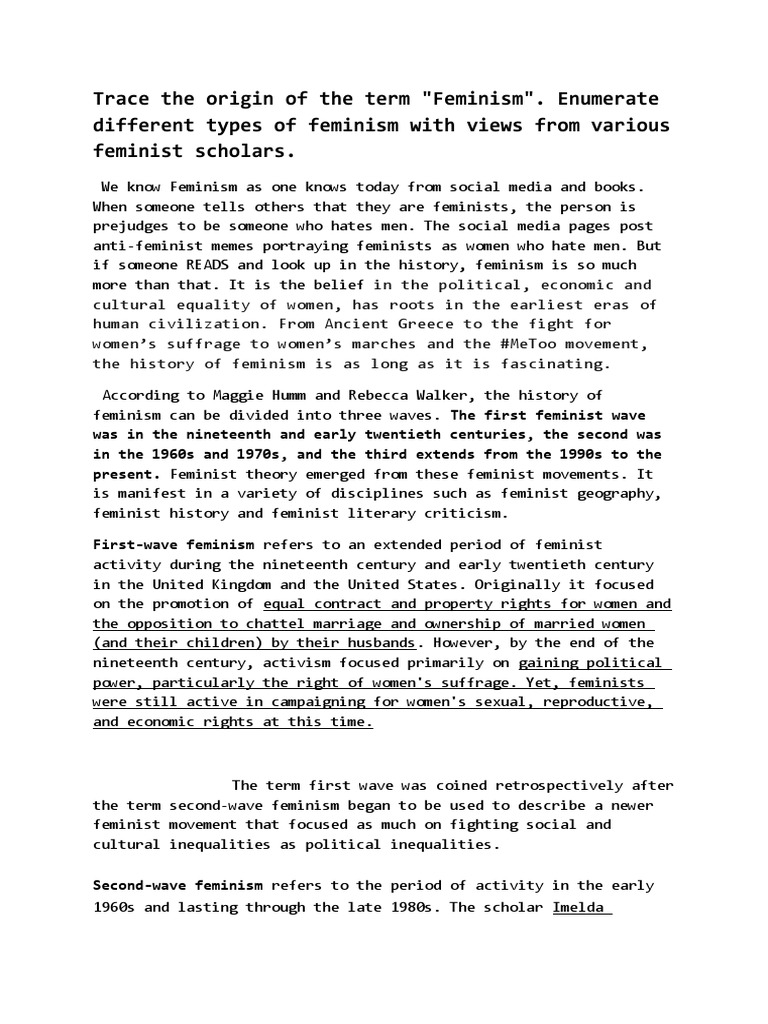
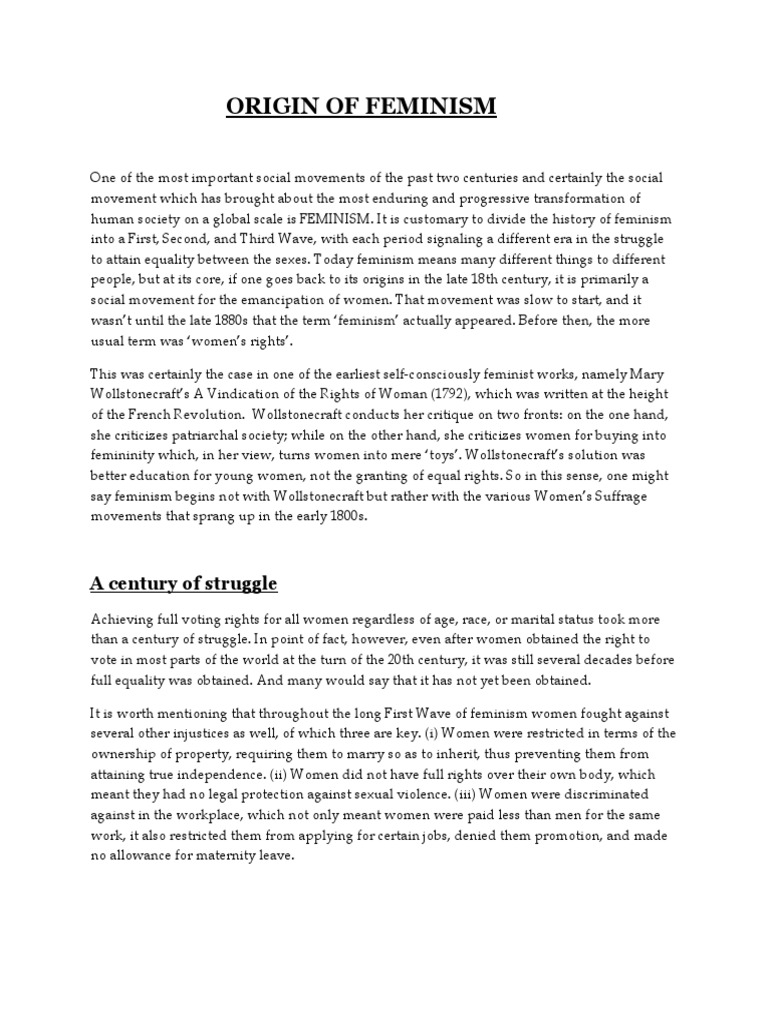
When did this whole “feminism” thing even start? Was it yesterday? Last Tuesday? Or perhaps centuries ago, lurking in the shadows of societal structures, patiently waiting for its moment to ignite the world? To pinpoint a precise birthdate for feminism is as futile as attempting to capture smoke with your bare hands. It wasn’t a singular event; it was a gradual burgeoning, a series of epiphanies, rebellions, and strategic recalibrations against the omnipresent patriarchy. But let’s delve into the historical crucible, shall we?
I. Seeds of Dissent: Proto-Feminist Stirrings Before the “Feminist” Label
Before the codified terminology, before the hashtags and the manifestos, there were whispers. Glimmering acts of defiance against the enforced subjugation of women. These were the proto-feminists, the heralds of a revolution yet to be named. We’re talking about individuals who, in their respective eras, dared to question, to challenge, and sometimes, to outright dismantle the accepted norms. They may not have called themselves feminists, but their actions resonate deeply within the feminist ethos.
Consider Christine de Pizan, a late medieval author who, in her “The Book of the City of Ladies,” constructed a metaphorical city populated by virtuous women, a direct rebuttal to the misogynistic narratives prevalent in her time. She actively combatted the insidious slanders and stereotypes that sought to diminish women’s intellectual capacity and moral standing. De Pizan stands as a precursory luminary, illuminating the path for future generations of feminist thinkers.
Then there’s Anne Hutchinson, a 17th-century religious dissenter in colonial America. She fearlessly challenged the established Puritan clergy, advocating for a more personal and experiential relationship with God. Her audacity in interpreting scripture independently and leading religious discussions, typically the domain of men, resulted in her excommunication and banishment. Hutchinson’s defiance represents a potent example of early feminist resistance against patriarchal religious authority.
These figures, among countless others, laid the groundwork for what would eventually coalesce into a more formalized movement. They demonstrated that discontent with the status quo wasn’t a novel concept; it was a simmering undercurrent, awaiting the right conditions to erupt.
II. The First Wave: Suffrage and the Dawn of Organized Feminism (Late 19th – Early 20th Centuries)
The late 19th and early 20th centuries witnessed the emergence of the first wave of feminism, a period characterized by a singular, overarching goal: suffrage. The right to vote. It seems almost quaint now, doesn’t it? That women had to fight tooth and nail for the basic right to participate in the democratic process. But the struggle was real, and the opposition was formidable. Patriarchy rarely relinquishes power willingly.
Think of the suffragettes in England, led by Emmeline Pankhurst and her daughters. They were not timid wallflowers politely requesting enfranchisement. They were militant activists, willing to employ civil disobedience, hunger strikes, and even arson to draw attention to their cause. Their tactics were controversial, even within the women’s movement, but their unwavering commitment forced the issue onto the national stage.
Across the Atlantic, American suffragists like Susan B. Anthony and Elizabeth Cady Stanton tirelessly campaigned for women’s suffrage, founding organizations, delivering speeches, and lobbying politicians. Stanton, in particular, possessed a radical vision that extended beyond the vote, advocating for women’s rights in education, employment, and marriage. The Seneca Falls Convention of 1848, organized by Stanton and Lucretia Mott, is often cited as the symbolic starting point of the American women’s rights movement, though its impact was initially limited.
The first wave wasn’t without its limitations. It was predominantly focused on the concerns of white, middle-class women, often excluding the voices and experiences of women of color and working-class women. This inherent bias would become a recurring critique of subsequent feminist movements.
III. The Second Wave: Beyond Suffrage – A Broader Vision (1960s-1980s)
The second wave of feminism, emerging in the 1960s, expanded the feminist agenda far beyond the confines of suffrage. Inspired by the Civil Rights Movement and other social justice struggles, second-wave feminists challenged the deeply entrenched sexism pervasive in all aspects of society: employment, education, reproductive rights, and even within the family structure.
Betty Friedan’s “The Feminine Mystique,” published in 1963, served as a catalyst for this wave, exposing the widespread dissatisfaction and unfulfillment experienced by many American housewives. Friedan’s critique of the “feminine mystique” – the societal expectation that women should find their sole fulfillment in domesticity – resonated deeply with women who felt stifled by the limitations imposed upon them.
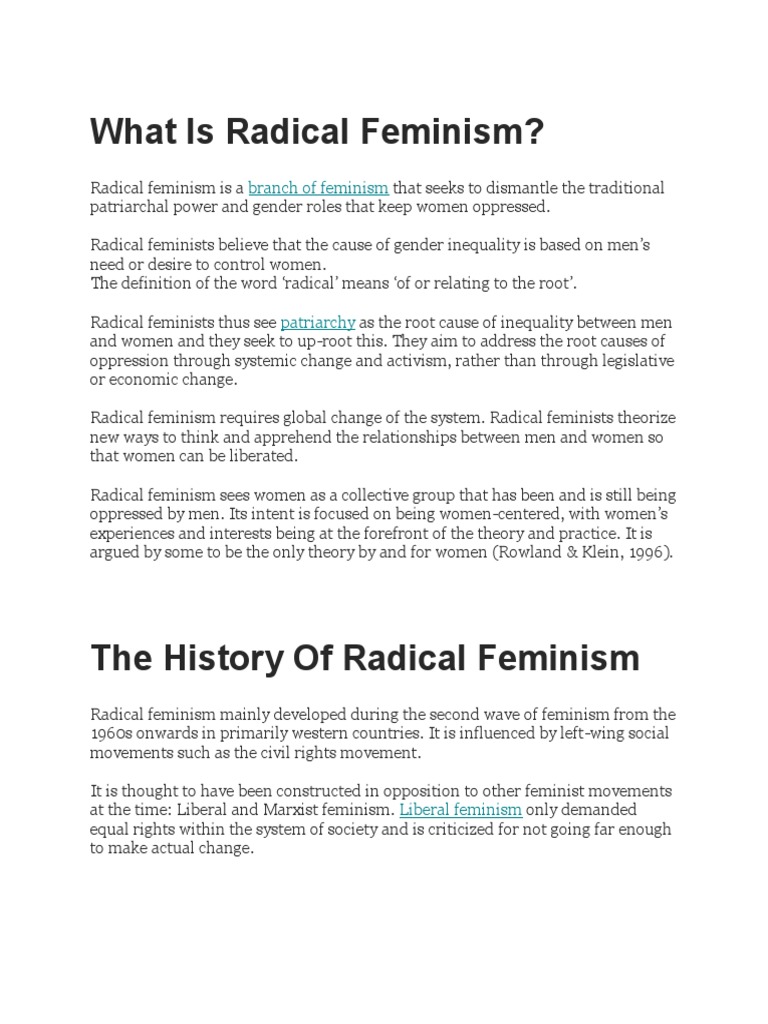
The second wave also saw the rise of radical feminism, which argued that patriarchy was not merely a set of discriminatory practices but a fundamental system of power that permeated all social institutions. Radical feminists challenged traditional gender roles, advocating for women’s liberation from male control and the creation of alternative, women-centered communities. They questioned heteronormativity and explored female sexuality with unprecedented frankness.
Key issues during this period included access to abortion, equal pay, and the passage of the Equal Rights Amendment (ERA). While the ERA ultimately failed to be ratified, the struggle for its passage highlighted the ongoing resistance to gender equality and the persistent power of conservative forces.
IV. The Third Wave: Intersectionality and Individuality (1990s-2000s)
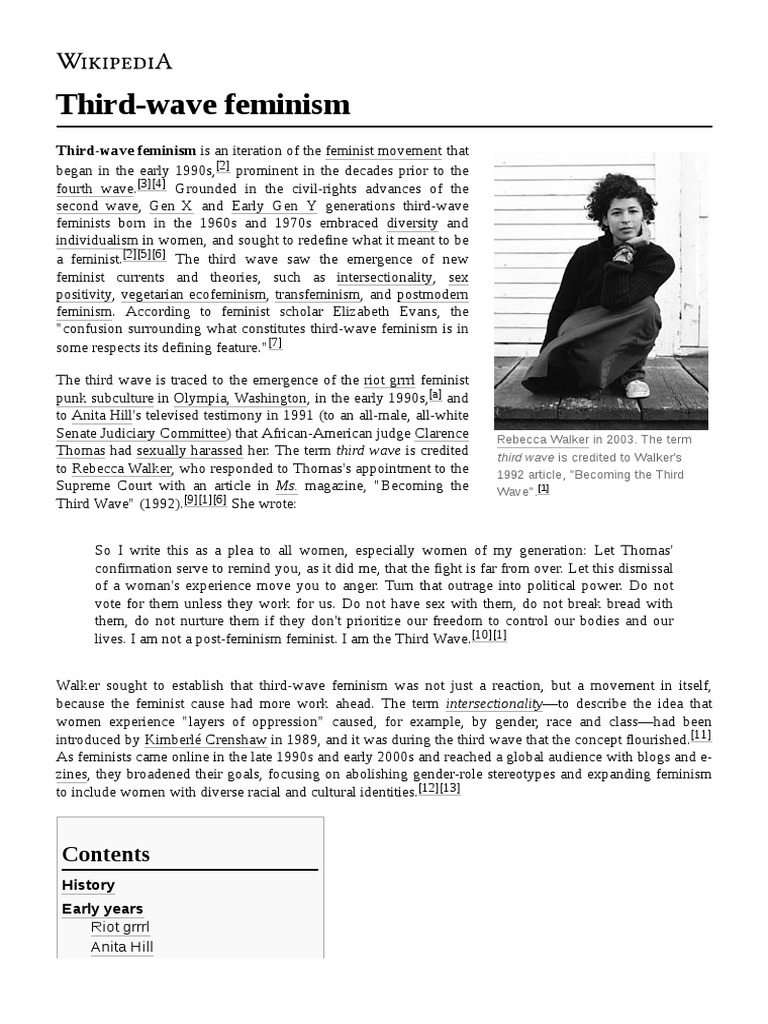
The third wave of feminism, beginning in the 1990s, emerged as a response to the perceived shortcomings of the second wave. Third-wave feminists embraced intersectionality, recognizing that women’s experiences are shaped by a complex interplay of factors, including race, class, sexual orientation, and disability. They challenged the idea of a universal “woman’s experience,” emphasizing the diversity of female identities and perspectives.
This wave also saw a greater emphasis on individual agency and the right to self-definition. Third-wave feminists rejected prescriptive notions of what it meant to be a “feminist,” embracing a more fluid and inclusive approach. They incorporated elements of popular culture, music, and fashion into their activism, challenging the stereotype of feminists as humorless and puritanical.
Riot grrrl, a punk rock subculture movement, became a significant force within third-wave feminism, using music, zines, and other forms of media to express feminist ideals and empower young women. Riot grrrl challenged traditional notions of femininity and encouraged girls to embrace their anger, their sexuality, and their voices.
V. The Fourth Wave: Digital Activism and Global Solidarity (2010s-Present)
The fourth wave of feminism, which is currently unfolding, is characterized by its reliance on digital technology and its focus on global issues. Social media platforms like Twitter, Facebook, and Instagram have become crucial tools for feminist activism, allowing activists to connect with one another, share information, and organize campaigns on a global scale.
The #MeToo movement, which gained momentum in 2017, is a prime example of the power of digital activism. The hashtag provided a platform for survivors of sexual harassment and assault to share their stories, leading to a widespread reckoning with sexual misconduct in various industries. The movement demonstrated the pervasiveness of sexual violence and the need for systemic change.
Fourth-wave feminism also addresses issues such as body positivity, trans rights, and environmental justice, recognizing the interconnectedness of various forms of oppression. It emphasizes the importance of inclusivity and solidarity, striving to create a more just and equitable world for all.
VI. The Ongoing Evolution: Feminism as a Perpetual Project
So, when was feminism created? The answer, as you now see, is not a simple date etched in stone. Feminism is not a static entity with a definitive origin; it’s a dynamic, ever-evolving movement that responds to the changing realities of the world. It’s a tapestry woven from the threads of countless struggles, triumphs, and setbacks.
It is a perpetual project, demanding constant vigilance, critical self-reflection, and a unwavering commitment to dismantling the structures of power that perpetuate inequality. The fight for gender equality is far from over. The patriarchy, in its myriad guises, continues to exert its influence, and new challenges emerge constantly. But the spirit of resistance, the flame of feminist activism, burns ever brighter. And it is our duty to fan those flames, to carry the torch forward, and to continue the work of creating a world where all individuals can live free from oppression and discrimination. The audacity to hope, the tenacity to act: that is the essence of feminism, then, now, and always.






Leave a Comment