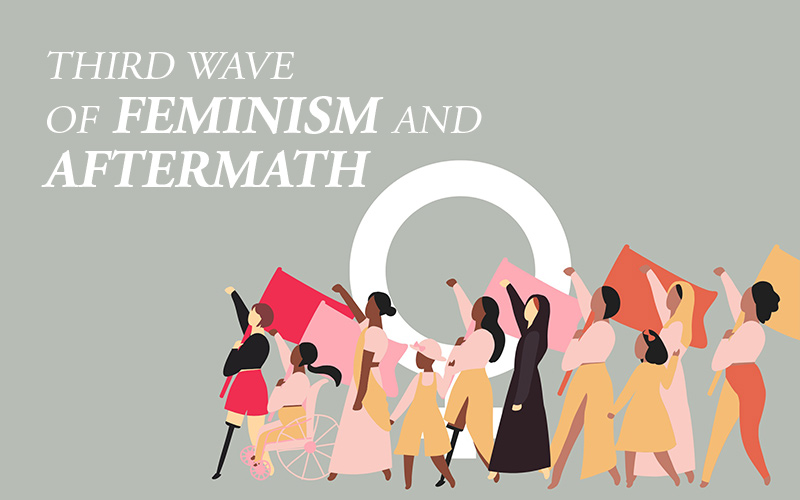
Is it possible to dismantle the patriarchy while simultaneously rocking a killer shade of lipstick? That, my sisters, is the crux of Third Wave Feminism. It’s not about burning bras (though, by all means, if it gives you joy, light that sucker up!), but about wielding the power of individuality as a weapon against systemic oppression. We’re diving headfirst into a vortex where lipstick and liberation aren’t mutually exclusive, but rather, inextricably linked.
The Genesis of a Riotous Rebirth: Tracing the Roots of Third Wave
The hallowed halls of feminist history echo with the cries of our foremothers. The First Wave, with its suffrage-fueled fervor, cracked open the door to political participation. The Second Wave, emboldened and enraged, stormed the bastions of domesticity and challenged the very definition of womanhood. But what happens when the battles fought leave some wounded, some marginalized, and some questioning the very strategies employed? Enter the Third Wave, a kaleidoscope of voices, a cacophony of demands, and a resolute refusal to be silenced.
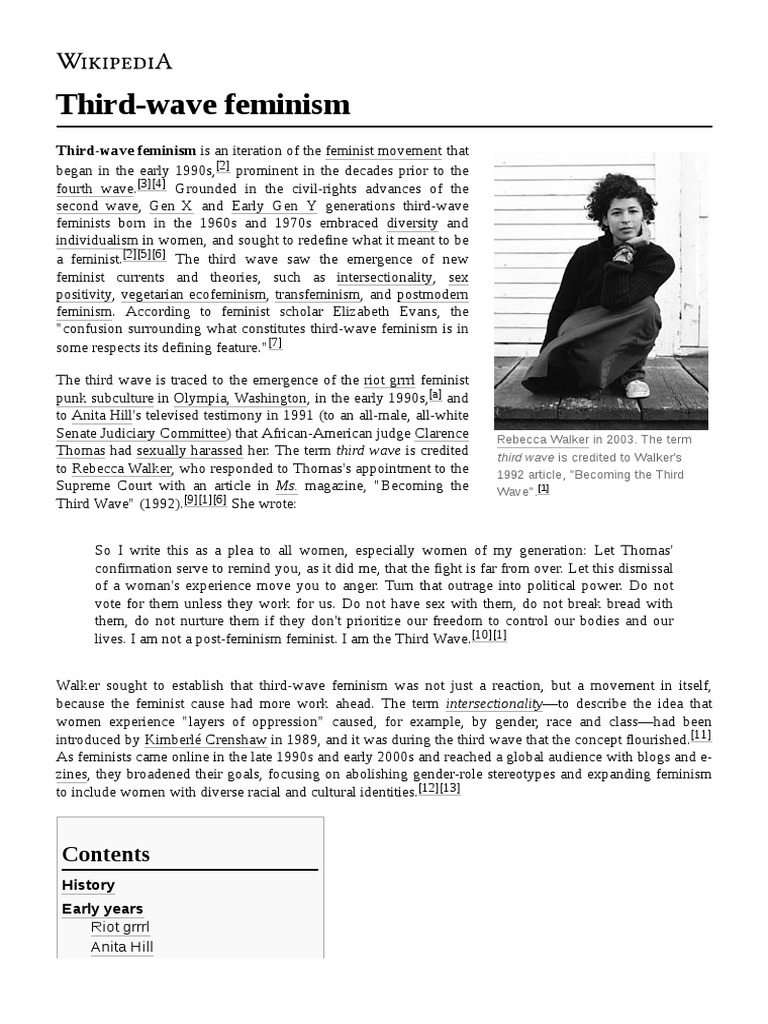
Born from the ashes of Second Wave critiques, Third Wave feminism emerged as a vibrant, often chaotic response to perceived shortcomings. It acknowledged the limitations of a movement that, despite its monumental achievements, often centered the experiences of white, middle-class women. Kimberlé Crenshaw’s groundbreaking work on intersectionality provided the theoretical framework for understanding how race, class, sexuality, and other identities intersect to create unique forms of oppression. Third Wave feminists embraced this framework, recognizing that the feminist struggle is not monolithic, but rather a complex tapestry woven from diverse experiences.
This wasn’t just a polite suggestion for inclusivity; it was a radical reimagining of the feminist project. It meant acknowledging that the problems faced by a Black woman in the inner city are fundamentally different from those faced by a white woman in suburbia. It meant recognizing that the fight for reproductive rights must also include access to affordable healthcare and childcare. It meant understanding that the liberation of LGBTQ+ individuals is inextricably linked to the liberation of all women. In short, it meant dismantling the master narrative and embracing the multiplicity of female experience.
Individuality Ascendant: Personal is Political…Revisited
The Second Wave proclaimed, “The personal is political.” The Third Wave took that declaration and ran with it, sprinting headlong into a world where individual expression became a form of resistance. Forget the homogenized image of the “feminist”; the Third Wave championed the right to define feminism on one’s own terms. Tattooed riot grrrls and impeccably dressed corporate executives could both find common ground in their shared desire for equality, even if their methods and aesthetics differed wildly.
This emphasis on individuality wasn’t just about personal preference; it was a deliberate act of defiance against patriarchal norms that sought to confine women to narrow, prescribed roles. It was about rejecting the pressure to conform to a single standard of beauty, behavior, or achievement. It was about reclaiming the right to own one’s body, one’s sexuality, and one’s story.
Consider the rise of “girl power,” a seemingly innocuous phrase that became a rallying cry for a generation of young women. While often criticized for its commercialization and perceived lack of depth, “girl power” represented a shift in consciousness. It empowered girls to embrace their strengths, to support one another, and to challenge traditional gender roles. It may not have been a fully realized feminist revolution, but it was a significant step in the right direction, planting the seeds of future activism.
Cybernetic Sisterhood: Technology as a Terrain of Resistance
Unlike its predecessors, the Third Wave came of age in the digital era. The internet, with its democratizing potential and its ability to connect individuals across geographical boundaries, became a crucial tool for feminist organizing and activism. Blogs, online forums, and later, social media platforms, provided spaces for women to share their stories, to build communities, and to mobilize for collective action.
This digital sphere allowed for the amplification of marginalized voices, creating a counter-narrative to the mainstream media’s often-limited and distorted portrayals of women. It provided a platform for survivors of sexual assault to share their experiences, sparking movements like #MeToo that brought down powerful predators and forced a long-overdue reckoning with the pervasiveness of sexual violence. It facilitated the organization of protests and campaigns, allowing feminists to quickly mobilize and exert pressure on policymakers and institutions.
However, the digital realm is not without its challenges. Online harassment, doxxing, and cyberstalking remain significant threats to women, particularly those who speak out against injustice. The algorithmic biases of social media platforms can perpetuate existing inequalities, amplifying harmful stereotypes and silencing marginalized voices. The commodification of feminist ideas by corporations can dilute their message and undermine their transformative potential. Navigating these challenges requires a critical awareness of the power dynamics at play in the digital landscape and a commitment to using technology in a way that promotes equity and justice.
The Paradox of Choice: Navigating the Labyrinth of Postfeminism
The rise of Third Wave feminism coincided with the emergence of “postfeminism,” a complex and often contradictory cultural phenomenon characterized by the belief that gender equality has largely been achieved. Postfeminist rhetoric often celebrates female empowerment while simultaneously downplaying the continued existence of sexism and discrimination. It encourages women to embrace their sexuality and to pursue their ambitions, but often frames these pursuits as individual choices rather than collective struggles.
This creates a paradox for Third Wave feminists. On the one hand, they embrace the freedom to express their sexuality and to pursue their ambitions without apology. On the other hand, they recognize that these freedoms are not equally accessible to all women and that systemic barriers continue to impede progress. Navigating this paradox requires a nuanced understanding of the ways in which postfeminist rhetoric can both empower and disempower women.
For example, the emphasis on “choice” in postfeminist discourse can be used to justify harmful practices such as the objectification of women in advertising or the perpetuation of unrealistic beauty standards. It can also be used to silence criticism of these practices, arguing that women have the “choice” to participate in them. Third Wave feminists challenge this logic by arguing that choices are never made in a vacuum and that the context in which choices are made is often shaped by patriarchal power dynamics.
The Unfinished Revolution: Challenges and Future Directions
Despite its many achievements, Third Wave feminism faces a number of ongoing challenges. The backlash against feminist activism, often fueled by misogynistic and alt-right movements, remains a significant threat. The persistence of gender inequality in areas such as pay, representation in leadership positions, and access to healthcare continues to demand attention. The intersectional approach championed by Third Wave feminists requires constant vigilance and a willingness to adapt to the evolving needs of diverse communities.
Looking ahead, the future of feminism likely lies in continued collaboration and coalition-building across different movements and identities. Addressing climate change, economic inequality, and racial injustice requires a feminist lens that recognizes the interconnectedness of these issues and the disproportionate impact they have on women and marginalized communities. Embracing new technologies and platforms while remaining critical of their potential for harm is crucial for reaching new audiences and mobilizing collective action.
Ultimately, Third Wave feminism is not a static set of principles, but rather a dynamic and evolving process of challenging power structures and creating a more just and equitable world. It is a movement that celebrates individuality, embraces complexity, and refuses to be silenced. It is a call to action for all who believe in the power of women to shape their own destinies and to transform the world around them.
So, grab your lipstick, sharpen your wit, and join the revolution. The patriarchy won’t dismantle itself.






Leave a Comment