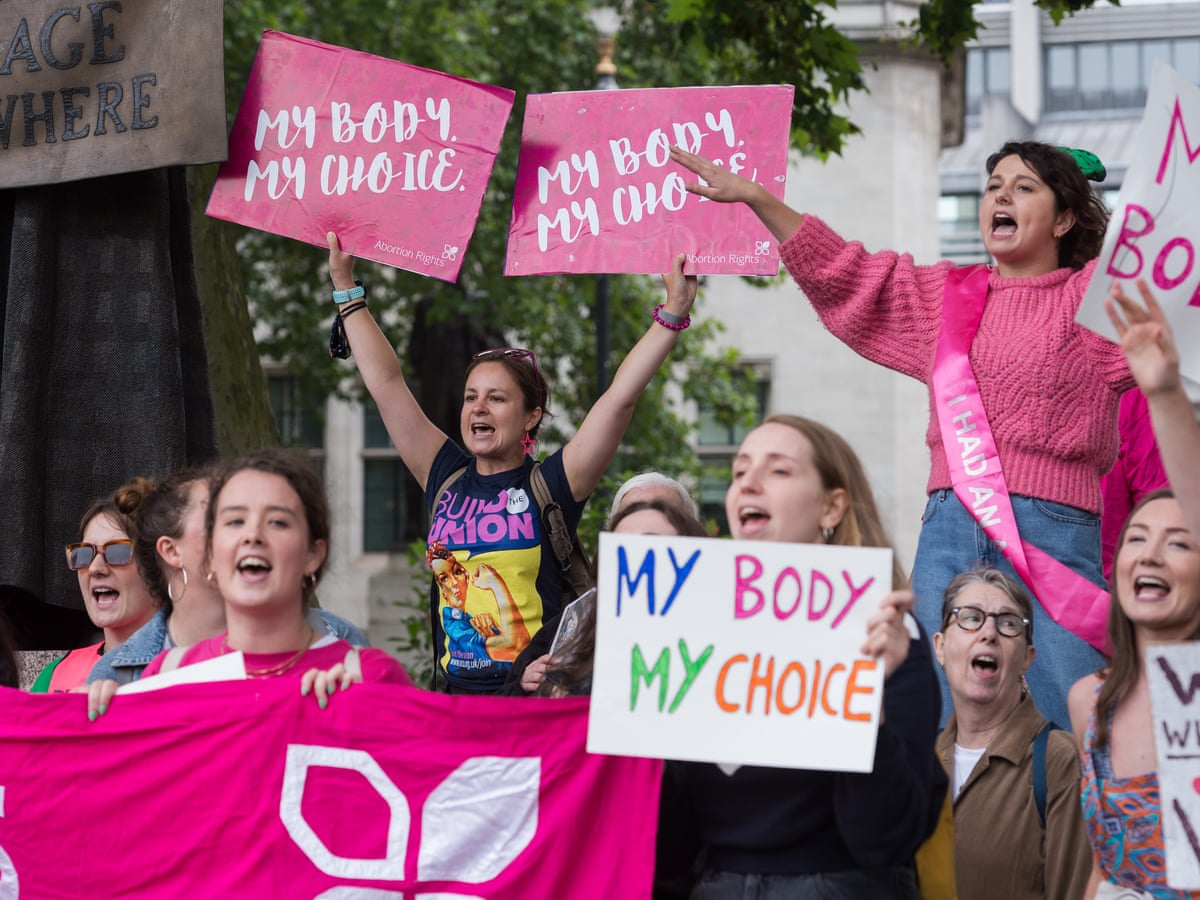
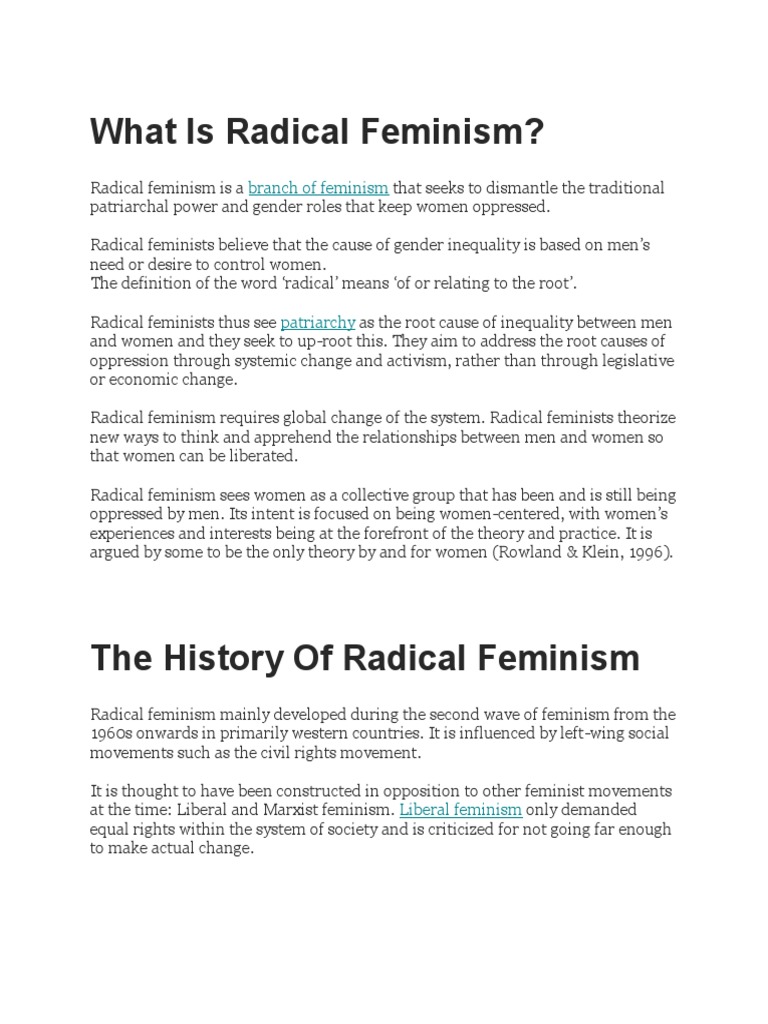
Radical feminism. The very term conjures images of bra-burning, man-hating, and societal upheaval. It’s a label readily deployed as a pejorative, a way to dismiss and delegitimize dissenting voices challenging the established order. But what is radical feminism, beyond the caricatures and the carefully cultivated misconceptions? Why does it continue to fascinate, to provoke, and to frighten even in the purportedly post-feminist landscape of the 21st century?
Perhaps the enduring allure, and the concomitant antipathy, stems from radical feminism’s unflinching willingness to interrogate the very foundations of patriarchal power. We’re not talking about tweaking the system or seeking incremental improvements; radical feminists aim for the jugular, demanding a wholesale dismantling of the structures that perpetuate gender inequality. This isn’t about equal pay for equal work within a system designed to exploit all workers; it’s about questioning the very nature of work itself, its inherent capitalist underpinnings, and its disproportionate impact on women.
The Core Tenets: Beyond the Sound Bites
To understand radical feminism, we must move beyond the superficial and delve into its core tenets. Here are some foundational principles that define this often-maligned ideology:
- Patriarchy as the Root of Oppression: Radical feminists identify patriarchy—a system of male dominance and control—as the primary source of women’s oppression. This isn’t merely a matter of individual prejudice or bias; it’s a systemic issue woven into the fabric of our social, political, and economic institutions.
- Gender as a Social Construct: A cornerstone of radical feminist thought is the understanding that gender is not a biological imperative but a social construct. We are not born with inherent “masculine” or “feminine” traits; rather, these are imposed upon us through socialization, conditioning, and cultural norms. This perspective challenges the notion that certain roles or behaviors are “natural” for women, liberating them from the constraints of traditional gender roles.
- The Personal is Political: This iconic feminist slogan underscores the idea that personal experiences are deeply intertwined with broader political structures. What may seem like individual struggles—such as domestic violence, unequal pay, or objectification in the media—are actually manifestations of systemic power imbalances. This perspective empowers women to recognize their shared experiences and to mobilize collectively for change.
- Challenging Gender Roles: The questioning and deconstruction of traditional gender roles are central to radical feminism. This involves challenging societal expectations of how women should behave, dress, and express themselves. It also encompasses a critique of the division of labor within the household and the unequal burden placed on women for childcare and domestic tasks.
- Reproductive Autonomy: Radical feminists advocate for women’s absolute right to control their own bodies and reproductive choices. This includes access to safe and legal abortion, contraception, and comprehensive reproductive healthcare. It also extends to challenging the medical establishment’s control over women’s bodies and the pathologization of female experiences.
- Critique of Traditional Relationships: Traditional marriage and family structures are often viewed with skepticism by radical feminists, who see them as institutions that perpetuate patriarchal power dynamics. They advocate for alternative relationship models that are based on equality, mutual respect, and genuine consent.
Waves and Variations: A Nuanced History
Radical feminism is not a monolithic ideology. It has evolved over time, with different strands emerging and diverging. Understanding its historical context is crucial for appreciating its complexity.
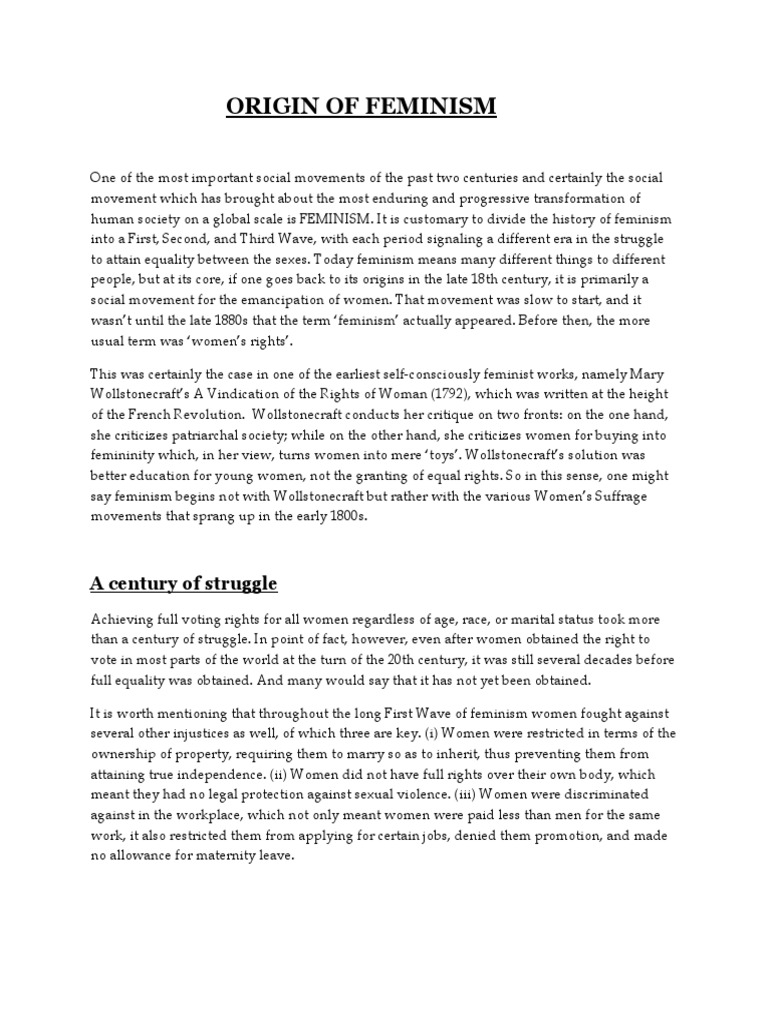
- The First Wave (Late 19th – Early 20th Century): While often associated with suffrage, the first wave of feminism also included radical voices that challenged the very foundations of patriarchy. Figures like Emma Goldman advocated for sexual liberation, reproductive rights, and economic independence for women.
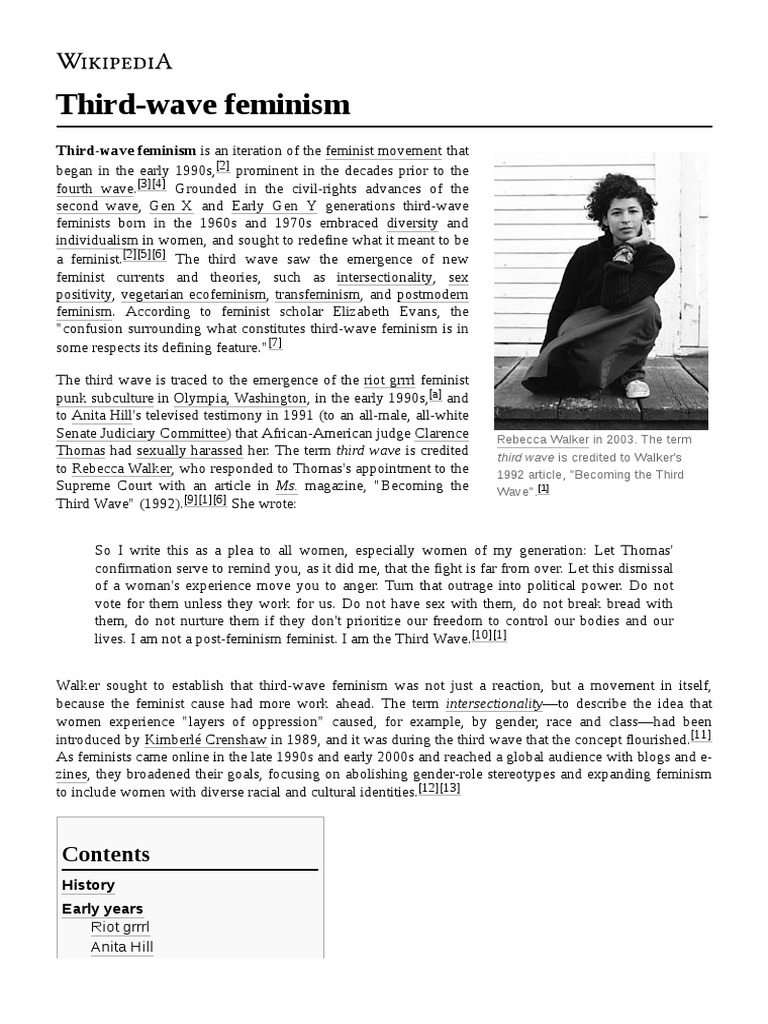
- The Second Wave (1960s – 1980s): This period witnessed the rise of radical feminism as a distinct and influential force. Key texts like Kate Millett’s “Sexual Politics” and Shulamith Firestone’s “The Dialectic of Sex” provided groundbreaking analyses of patriarchal power and its impact on women’s lives. Consciousness-raising groups became a central tool for women to share their experiences and develop a collective understanding of their oppression.
- Cultural Feminism: A branch of radical feminism that emphasizes the unique qualities and values of women. Cultural feminists often celebrate female culture and seek to create alternative spaces and institutions that are free from patriarchal influence. However, this approach has been criticized for essentializing women and reinforcing traditional gender stereotypes.
- Radical-Lesbian Feminism: This strand of radical feminism argues that heterosexuality is a political institution that reinforces male dominance. Radical-lesbian feminists advocate for lesbian separatism, creating communities and spaces that are exclusively for women and free from male influence.
The Shadow Side: Criticisms and Controversies
Radical feminism is not without its critics. Some of the common criticisms include:
- Essentialism: The accusation that radical feminism essentializes women, assuming that all women share a common experience and a unified identity. This critique argues that such essentialism can ignore the diversity of women’s experiences, particularly those of women of color, working-class women, and LGBTQ+ women.
- Exclusionary Practices: Concerns about the exclusion of women of color and other marginalized groups from mainstream radical feminist movements. Critics argue that the focus on white, middle-class women’s experiences can overshadow the unique challenges faced by women from different backgrounds.
- Theoretical Abstraction: The perception that some radical feminist theories are overly abstract and detached from the realities of everyday life. Critics argue that this can make radical feminism inaccessible to many women and limit its practical application.
- Man-Hating: The persistent stereotype of radical feminists as “man-haters.” While some radical feminists advocate for separatism or express anger towards men, this is not a universal sentiment. Many radical feminists believe that men can be allies in the struggle for gender equality, but that they must first acknowledge and challenge their own privilege.
Relevance in the 21st Century: Why Radical Feminism Still Matters
In an era where “feminism” has become increasingly commodified and co-opted by mainstream culture, radical feminism offers a powerful and uncompromising critique of the status quo. Its relevance in the 21st century is undeniable.
- Challenging the Corporate Co-optation of Feminism: Radical feminism resists the tendency to reduce feminism to a marketing strategy or a superficial celebration of female empowerment. It challenges the corporate co-optation of feminist ideals and insists on addressing the systemic issues that perpetuate gender inequality.
- Addressing the Root Causes of Violence Against Women: Radical feminists continue to be at the forefront of efforts to combat violence against women, recognizing that this violence is not an isolated phenomenon but a manifestation of patriarchal power. They advocate for systemic changes that address the root causes of violence and provide support for survivors.
- Promoting Reproductive Justice: In a time when reproductive rights are under attack in many parts of the world, radical feminists remain staunch defenders of reproductive autonomy. They advocate for comprehensive reproductive healthcare and challenge the medical establishment’s control over women’s bodies.
- Deconstructing Gender Norms: Radical feminism’s emphasis on deconstructing gender norms is particularly relevant in a world where gender identity is becoming increasingly fluid and complex. It provides a framework for understanding how gender is constructed and how it can be challenged and transformed.
- Inspiring Activism: Radical feminism continues to inspire activism and social change. It empowers women to challenge oppressive structures and to create a more just and equitable world. Its unwavering commitment to radical transformation remains a vital force in the ongoing struggle for gender equality.
Beyond Simplistic Labels: Engaging with Complexity
Ultimately, engaging with radical feminism requires moving beyond simplistic labels and engaging with its complex and nuanced ideas. It demands a willingness to question our assumptions, to challenge the status quo, and to imagine a world where gender equality is not just a slogan but a lived reality. It’s not about embracing every tenet wholesale, but about critically examining the arguments and considering their potential to dismantle oppressive systems. Perhaps the fear surrounding radical feminism isn’t about the “bra-burning” image, but about the fear of truly confronting the deep-seated inequalities that benefit so many.
The very act of labeling it “radical” serves to marginalize and dismiss it, preventing a genuine engagement with its core arguments. Maybe it’s time to reclaim the term, not as a badge of extremism, but as a symbol of unwavering commitment to fundamental change. Because, let’s face it, incrementalism hasn’t exactly liberated us, has it?






Leave a Comment