Let’s peel back the layers of history, shall we? Forget the sanitized versions, the palatable narratives spoon-fed to us. We’re diving headfirst into the raw, untamed heart of first-wave feminism. A movement often relegated to dusty textbooks and simplistic summations, yet whose tremors still reverberate through our present-day struggles. Prepare to question everything you think you know.
This isn’t just about suffrage, although that’s a significant, undeniable chunk. This is about a seismic shift in consciousness, a radical re-evaluation of women’s place in a world designed to keep them tethered, subservient, and silent. It’s about the audacity to challenge the very foundations of patriarchal power, brick by painful brick.
Why should you care? Because understanding the roots of our movement is crucial to navigating its present and shaping its future. Ignoring the complexities, the contradictions, and the outright problematic aspects of first-wave feminism is a disservice to those who fought, bled, and dared to dream of a different reality. It’s also a recipe for repeating the mistakes of the past. We examine now to never commit these horrors again.
The Context: A World Steeped in Misogyny
Imagine a world where women were considered legal minors, perpetually under the guardianship of fathers, husbands, or brothers. A world where their bodies were deemed the property of their spouses, their voices stifled in the public sphere, their intellect dismissed as frivolous. This wasn’t some dystopian fantasy; this was the reality of the 19th and early 20th centuries, the breeding ground for first-wave feminism.
Consider the prevailing ideology, the deeply ingrained belief in separate spheres. Men belonged to the public realm of politics, business, and intellectual pursuits. Women were relegated to the domestic sphere, the realm of hearth and home, expected to be pious, pure, submissive, and domestic. This wasn’t just a matter of social convention; it was enshrined in law, religion, and societal norms. The very air was thick with the miasma of misogyny.
Education was a privilege, not a right, often denied to women or limited to subjects deemed “appropriate” for their gender. Employment opportunities were scarce and discriminatory, with women earning significantly less than men for the same work, if they could even find it. Political participation was nonexistent, with women barred from voting, holding office, or influencing policy decisions. They were effectively voiceless in the shaping of their own destinies.
The Spark: Seeds of Discontent
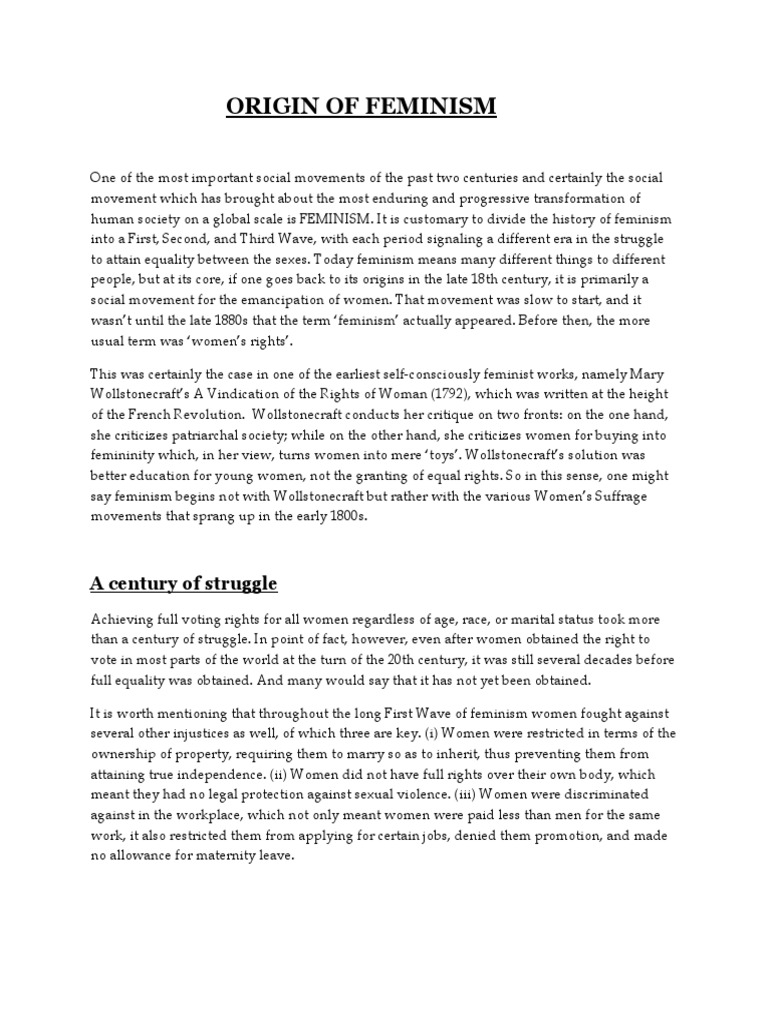
Despite the oppressive constraints, the seeds of discontent were sown. The Enlightenment, with its emphasis on reason, individual rights, and natural law, provided a philosophical framework for challenging the status quo. Thinkers like Mary Wollstonecraft, with her groundbreaking “A Vindication of the Rights of Woman” (1792), dared to argue that women were rational beings entitled to the same rights and opportunities as men. A revolutionary concept.
Abolitionism also played a crucial role. Women involved in the anti-slavery movement gained valuable experience in organizing, public speaking, and political activism. They recognized the parallels between their own subjugation and the enslavement of African Americans, forging alliances and developing a critique of power structures that would inform their feminist activism. It was clear, there was a problem.
The burgeoning industrial revolution, while creating new economic opportunities for some women, also exposed them to exploitative labor conditions and heightened awareness of their economic vulnerability. The rise of the middle class, with its emphasis on female domesticity, paradoxically created a space for women to cultivate intellectual pursuits and challenge traditional gender roles. These women started to question their own place in society.
The Manifestos: Articulating the Vision
The Seneca Falls Convention of 1848, organized by Elizabeth Cady Stanton and Lucretia Mott, is widely considered the symbolic launch of the first-wave feminist movement in the United States. The Declaration of Sentiments, modeled after the Declaration of Independence, boldly proclaimed that “all men and women are created equal” and outlined a series of grievances and demands, including the right to vote. It was a gauntlet thrown down at the feet of patriarchy.
This wasn’t just a document; it was a battle cry. It articulated a vision of a world where women were not merely appendages to men but autonomous individuals with the right to self-determination. It challenged the legal, social, and religious justifications for female subjugation, laying the groundwork for a long and arduous struggle. The gauntlet was down, and the fight had just begun.
Other key texts, such as Sojourner Truth’s powerful “Ain’t I a Woman?” speech (1851) and John Stuart Mill’s “The Subjection of Women” (1869), further amplified the call for female equality. These manifestos, disseminated through pamphlets, newspapers, and public lectures, helped to galvanize support and shape the intellectual landscape of the movement. The message was clear: women deserved equal rights.
The Tactics: From Petitions to Picketing
First-wave feminists employed a variety of tactics to advance their cause, ranging from peaceful petitions and lobbying efforts to more radical forms of civil disobedience. Suffrage was the central focus, but the movement also addressed issues such as property rights, educational opportunities, and access to employment. They were fighting on all fronts.
Organizations like the National Woman Suffrage Association (NWSA), led by Stanton and Susan B. Anthony, and the American Woman Suffrage Association (AWSA), led by Lucy Stone and Henry Blackwell, spearheaded the suffrage campaign. They organized parades, rallies, and public demonstrations, braving ridicule, hostility, and even violence to make their voices heard. They refused to be silenced.
The more militant wing of the movement, led by Alice Paul and the National Woman’s Party (NWP), adopted more confrontational tactics, such as picketing the White House and engaging in hunger strikes, to pressure President Woodrow Wilson and Congress to pass a suffrage amendment. These women were willing to risk imprisonment and even death to achieve their goals. Their dedication was unwavering.
The Triumphs: Victories Won, Battles Remaining
The culmination of decades of struggle came in 1920 with the ratification of the 19th Amendment to the U.S. Constitution, granting women the right to vote. This was a monumental victory, a testament to the perseverance and determination of generations of feminists. But it was also just the beginning. The fight for full equality was far from over.
While the suffrage victory was a significant milestone, it did not address the many other forms of discrimination that women continued to face. Issues such as economic inequality, reproductive rights, and violence against women remained largely unaddressed. The 19th Amendment, while revolutionary, was not the end-all-be-all.
Furthermore, the first-wave feminist movement was not without its limitations and internal contradictions. The movement was largely dominated by white, middle-class women, and often excluded or marginalized the voices of women of color and working-class women. This is an unmissable aspect of the movement. It cannot be glossed over.
The Legacies: Echoes in the Present
Despite its shortcomings, first-wave feminism laid the foundation for subsequent waves of feminist activism. It established the principle that women are entitled to the same rights and opportunities as men, and it paved the way for future generations to challenge patriarchal power structures. Its legacy is undeniable.
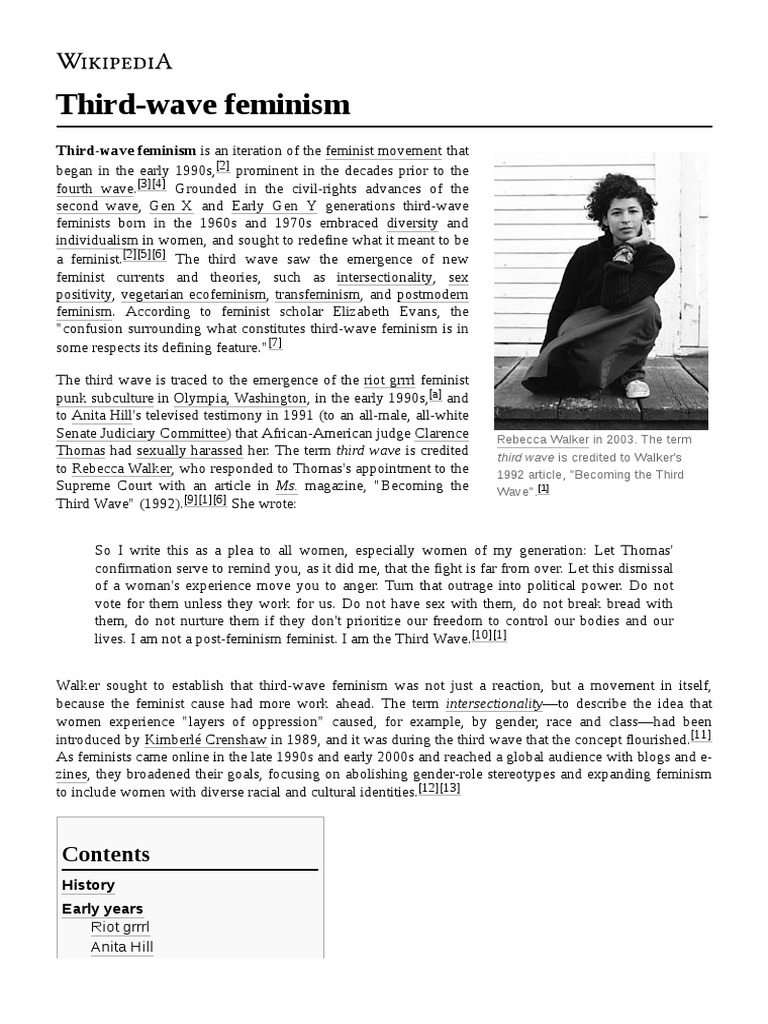
The issues that first-wave feminists fought for – suffrage, property rights, educational opportunities – are still relevant today, albeit in different forms. The fight for equal pay, reproductive rights, and an end to gender-based violence continues. The struggle for intersectional feminism, one that centers the experiences of marginalized women, is a direct response to the limitations of the first wave. Feminism must be for everyone.
Understanding the history of first-wave feminism is essential for understanding the complexities of the feminist movement as a whole. It allows us to appreciate the progress that has been made, to acknowledge the challenges that remain, and to learn from the mistakes of the past. It is a necessary, albeit sometimes difficult, undertaking.
So, let us not romanticize the past, nor dismiss it as irrelevant. Instead, let us engage with it critically, honestly, and with a fierce determination to build a more just and equitable future for all women. The fight is far from over. It has merely evolved. Are you ready to join the fray?







Leave a Comment