
The future of work is not a distant abstraction—it is being written in boardrooms, factory floors, and kitchen tables right now. And if that future is not feminist, it is not a future worth having. This is not a plea for charity or a call for symbolic gestures. It is a demand for structural transformation, a reckoning with the invisible architectures of power that have long dictated who gets to thrive—and who gets left behind. The workplace of tomorrow must dismantle the hierarchies of the past, not replicate them in sleeker, more digital forms. Anything less is complicity in a system that has never served the majority.
The Illusion of Progress: Why “Diversity” Isn’t Enough
We’ve been sold a myth: that incremental inclusion—adding a few women to leadership, sprinkling “flexible” policies into rigid structures—constitutes meaningful change. But diversity without equity is not progress; it is decoration. A woman in a corner office does not dismantle the expectation that she will still perform emotional labor for the entire team. A “family-friendly” policy does not erase the stigma faced by mothers who dare to log off at 5 p.m. when their male colleagues are praised for burning the midnight oil. These are not solutions. They are bandages on a gaping wound.
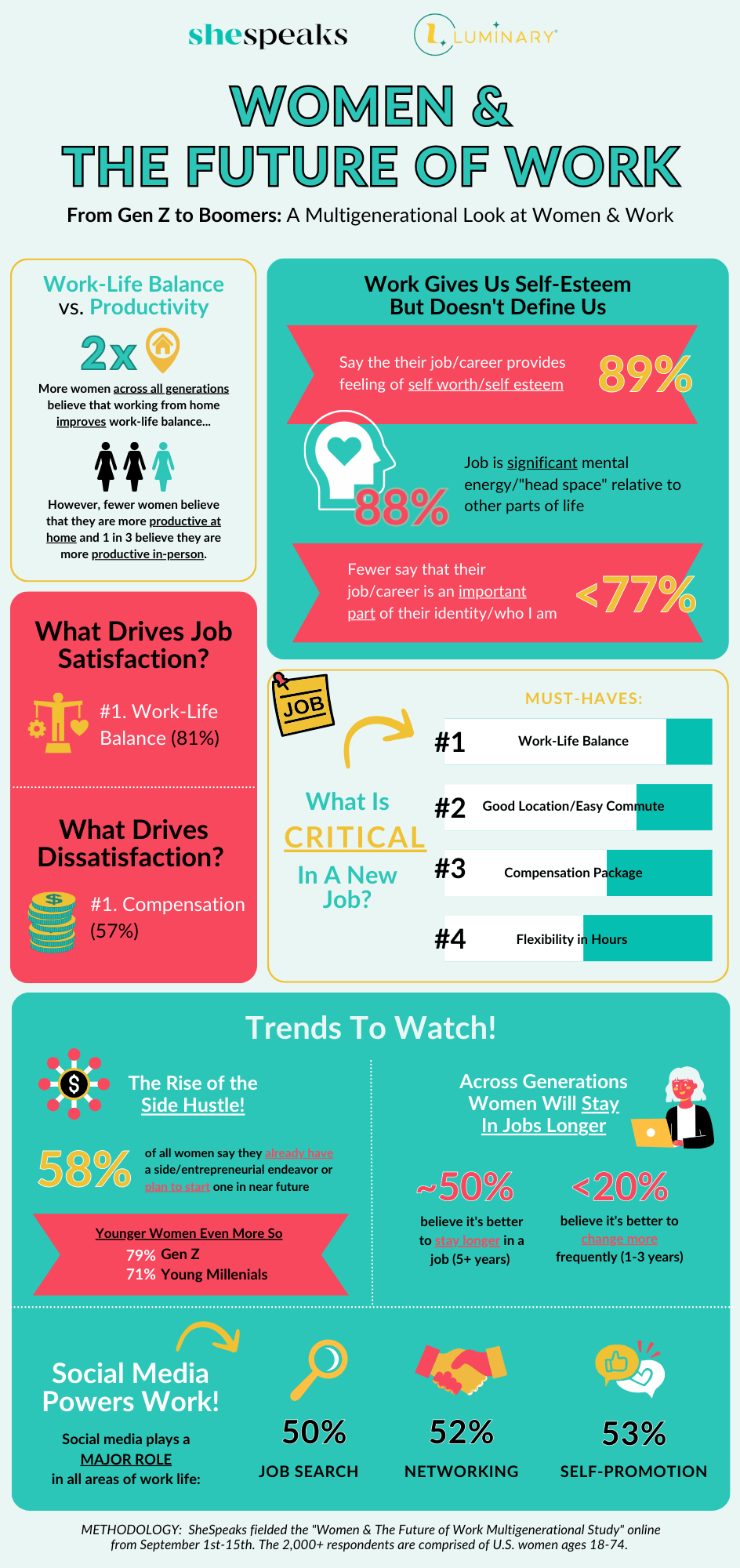
The language of “balance” is particularly insidious. It implies that women must somehow split themselves in two to fit into a system designed by and for men. Work-life balance is a fiction when the “life” part is treated as an afterthought, a concession to be bargained for rather than a fundamental right. The future of work cannot be built on the backs of those who are already overburdened. It must be reimagined from the ground up, with care, collaboration, and collective accountability at its core.

The Tyranny of Productivity: When Busyness Masquerades as Worth
In the cult of productivity, hours logged are conflated with value produced. But productivity is not a feminist metric. It is a capitalist one, steeped in the myth that self-worth is measured by output, not impact. Women, particularly women of color, have long been socialized to equate their labor with their humanity. We are expected to overdeliver, to say yes when we mean no, to smile through exploitation. The future of work cannot replicate this cycle of self-erasure.
Consider the unpaid labor that undergirds every “productive” day: the mental load of remembering birthdays and deadlines, the emotional labor of smoothing over conflicts, the domestic labor that allows others to focus solely on their careers. This is not efficiency. It is exploitation. A feminist future demands that we measure success not by how much we produce, but by how well we sustain ourselves and each other. It means rejecting the glorification of burnout as a badge of honor. It means recognizing that rest is not a luxury—it is a revolutionary act.
Care Work: The Invisible Backbone of the Economy
Every economy depends on care work—raising children, tending to the sick, supporting the elderly. Yet this labor, predominantly performed by women, is systematically undervalued and undercompensated. The future of work must center care not as an afterthought, but as the foundation of all labor. This means universal childcare, paid parental leave, and healthcare systems that treat mental health with the same urgency as physical health. It means dismantling the stigma around careers in care—whether as nurses, teachers, or domestic workers—and ensuring these professions are compensated with dignity.
But care cannot be reduced to policy changes alone. It must be a cultural shift. We must reject the idea that care is a “women’s issue” and instead recognize it as a human issue. Men must be socialized to share this burden, not as an act of charity, but as a baseline expectation. The future of work is not just about who gets to sit at the table. It is about who gets to define the table itself—and what we serve on it.
The Algorithm of Bias: How Tech Replicates Old Power Structures
Technology is not neutral. It is a mirror that reflects and amplifies the biases of its creators. From hiring algorithms that favor resumes with “male-sounding” names to AI tools that perpetuate gender stereotypes, the future of work is being coded by the same forces that have historically excluded women. The solution is not to “fix” the algorithms—it is to dismantle the systems that feed them. This means diversifying the teams that design technology, interrogating the data sets that train AI, and demanding transparency in how decisions are made.
But technology can also be a force for liberation. Imagine platforms that prioritize care over competition, that reward collaboration over individualism, that center the voices of those who have been silenced. The future of work is not just about adopting new tools—it is about redefining what those tools are for. Will they serve the few, or the many? Will they deepen inequality, or help us build something radically different?
Collective Power: The Only Force Strong Enough to Resist
Individual success is a myth. The future of work will not be built by lone wolves clawing their way to the top. It will be built by collectives—unions, cooperatives, mutual aid networks—that recognize that no one thrives unless everyone thrives. Women have always been at the forefront of these movements, from the factory floor to the digital realm. The future of work must honor this legacy by centering collective action, not individual achievement.
This means reimagining ownership. Worker cooperatives, where decisions are made democratically and profits are shared equitably, offer a glimpse of what is possible. It means supporting freelancers and gig workers in organizing for fair wages and protections. It means recognizing that the future of work is not a zero-sum game—there is enough for everyone if we stop hoarding it.

The Future Is Not a Destination—It Is a Practice
The future of work is not a place we arrive at. It is a practice we embody every day. It is the refusal to accept the status quo. It is the demand for care to be centered, for bias to be interrogated, for power to be shared. It is the understanding that liberation is not a privilege—it is a necessity. The future is feminist, or it is not the future at all.
We do not have the luxury of waiting for permission. The tools are here. The knowledge is here. What we lack is the collective will to wield them. So let us begin—not with grand declarations, but with small, stubborn acts of defiance. Let us refuse to perform emotional labor for free. Let us demand rest as a right, not a reward. Let us build systems that lift everyone, not just the few. The future is not coming. We must make it.









Leave a Comment