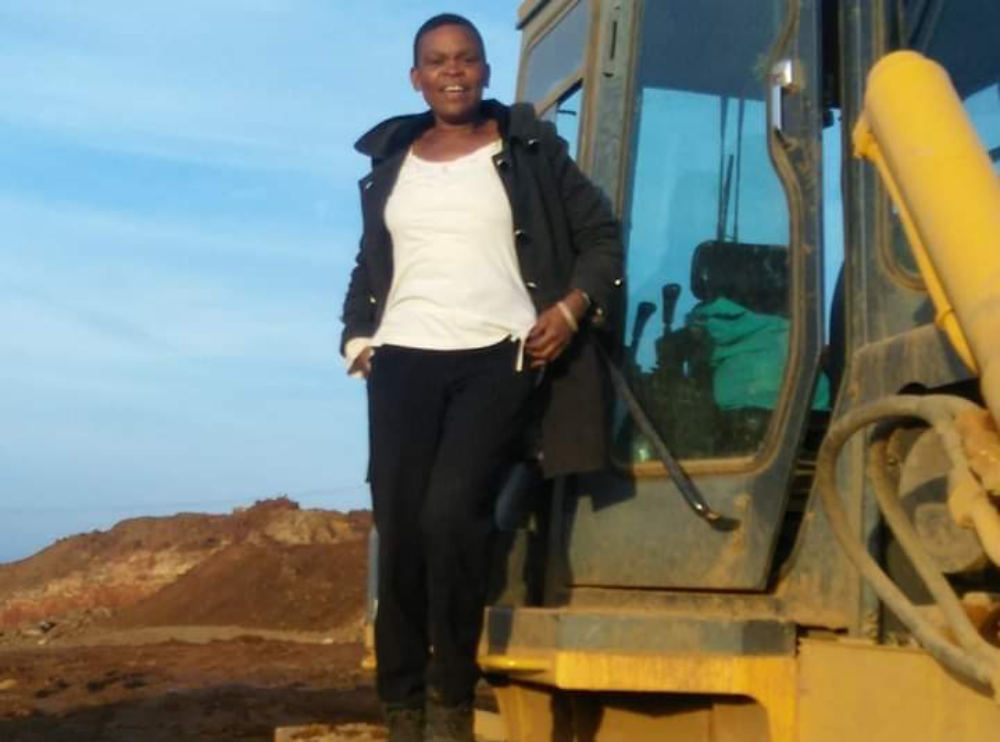
What happens when a woman steps into a construction site, where the air hums with the clatter of steel-toed boots and the scent of sawdust clings to every breath? She becomes a contractor in an industry that’s 97% male—a statistic that doesn’t just describe dominance, but a fortress of tradition, testosterone, and unspoken rules. This isn’t just a career choice; it’s a quiet rebellion, a calculated defiance against a world that still measures strength in cubic inches of bicep rather than the sharpness of a contractor’s pencil. But what does it truly take to carve out a space in a domain where the odds are stacked like a poorly balanced load of bricks?
The First Crack in the Concrete: Breaking the Mold Without Breaking Yourself
Imagine walking onto a job site for the first time, where every glance feels like a judgment, every comment a test of your resolve. The industry’s gender imbalance isn’t just a number—it’s a psychological gauntlet. Women in construction aren’t just contractors; they’re pioneers navigating a landscape where the unwritten manual might as well be written in hieroglyphs. The first challenge? Proving you belong before you’ve even swung a hammer. It’s not about being the loudest in the room; it’s about being the most relentless. The industry doesn’t just want competence—it demands an unshakable confidence that borders on defiance.
Consider the microaggressions: the raised eyebrows when you pull up in a work truck, the “helpful” suggestions that your real role is in the office, not on the site. These aren’t just annoyances; they’re the industry’s way of testing your mettle. But here’s the twist—what if those very challenges become the fuel that sharpens your edge? The construction world isn’t built for women, but that’s precisely why it needs them. Every “no” you refuse to accept is another brick in the foundation of change.

The Toolbelt Paradox: When Strength Isn’t Measured in Pounds
Construction has long been a temple of brute force, where the strongest arms win the day. But what happens when the strongest arms belong to someone who doesn’t fit the mold? Women contractors aren’t just fighting for a seat at the table—they’re redefining what it means to wield power in an industry that’s always assumed power looks a certain way. The toolbelt, that iconic symbol of the tradesperson, becomes a paradox: a tool designed for men’s bodies, yet worn by those who refuse to be confined by them.
Ergonomics, safety gear, even the language of the job site—everything is calibrated for a male physique. But here’s the irony: women contractors don’t just adapt; they innovate. They redesign workflows, challenge outdated safety standards, and prove that efficiency isn’t a one-size-fits-all equation. The industry’s obsession with physical strength is a relic, a dinosaur in an era where brains and adaptability should reign supreme. So why cling to a past that’s crumbling under the weight of its own limitations?
The real power move? Turning the industry’s weaknesses into your strengths. A woman contractor doesn’t just build structures; she rebuilds the very framework of how construction operates. And that’s a kind of strength the old guard never saw coming.
The Loneliness of the Long-Distance Contractor: Building a Tribe in a Sea of Testosterone
Isolation isn’t just a feeling—it’s an occupational hazard for women in male-dominated fields. Picture this: a room full of men, all nodding along to a joke you don’t find funny, all assuming you’re there to take notes, not to lead. The loneliness of being the only woman in the room isn’t just emotional; it’s strategic. It forces you to either shrink or stand taller. There’s no middle ground. And standing taller? That’s exhausting. But it’s also where the magic happens.
Networking isn’t just about swapping business cards; it’s about finding the rare few who see you as more than a novelty. The construction industry’s old boys’ club isn’t just a stereotype—it’s a real barrier. But what if the solution isn’t to force your way into their circle, but to build your own? Women contractors are forging alliances, mentoring the next generation, and creating spaces where competence, not conformity, is the currency. The industry’s future isn’t in its past; it’s in the hands of those who dare to rewrite the rules.
And let’s be clear: this isn’t about tokenism. It’s about survival. The women who thrive in construction aren’t just surviving—they’re thriving by turning isolation into innovation. They’re the ones who ask the uncomfortable questions, who challenge the status quo, and who prove that a construction site can be a place of equality, not just a boys’ club with hard hats.

The Unseen Battle: When the Real Work Happens Off the Site
Construction isn’t just about swinging hammers and pouring concrete. The real battle is fought in boardrooms, in permit offices, and in the fine print of contracts. Women contractors don’t just build structures; they navigate a labyrinth of bureaucracy designed by and for men. From securing financing to dealing with skeptical clients, the challenges are as much about paperwork as they are about power tools. The industry’s systems weren’t built with women in mind—and that’s where the real work begins.
Consider the double standards: a man’s assertiveness is seen as leadership; a woman’s is labeled as “difficult.” A man’s ambition is praised; a woman’s is questioned. The construction world isn’t just male-dominated—it’s male-centric, with every process, every expectation, every unspoken rule tailored to fit a very specific mold. But here’s the kicker: women contractors aren’t just navigating these systems—they’re dismantling them. They’re proving that efficiency isn’t gendered, that leadership isn’t a size-fit, and that the future of construction belongs to those who can adapt, innovate, and demand better.
The unseen battle is the one fought in the margins, where the real change happens. It’s the quiet persistence of a woman who refuses to take “no” for an answer, who turns every setback into a setup for a comeback. And that? That’s the kind of strength that builds more than structures—it builds legacies.
The Future Isn’t Built on Tradition—It’s Built on Rebellion
What does the future of construction look like? If it’s up to the women already carving out their space, it looks like a revolution. A rebellion against the idea that strength has a gender, that leadership has a face, that innovation has a limit. The 97% male statistic isn’t just a number—it’s a challenge. It’s a dare to the women who dare to enter the field: Prove you belong. And then? Prove you deserve to stay.
The industry’s future isn’t in its past. It’s in the hands of those who see the cracks in the foundation and aren’t afraid to widen them. Women contractors aren’t just participants in construction—they’re the architects of its evolution. They’re the ones who ask: Why does it have to be this way? And then they go about building something better.
So here’s to the women who show up, day after day, in a world that wasn’t made for them. Here’s to the contractors who swing hammers and shatter ceilings. The future isn’t just being built—it’s being demanded. And it’s glorious.









Leave a Comment