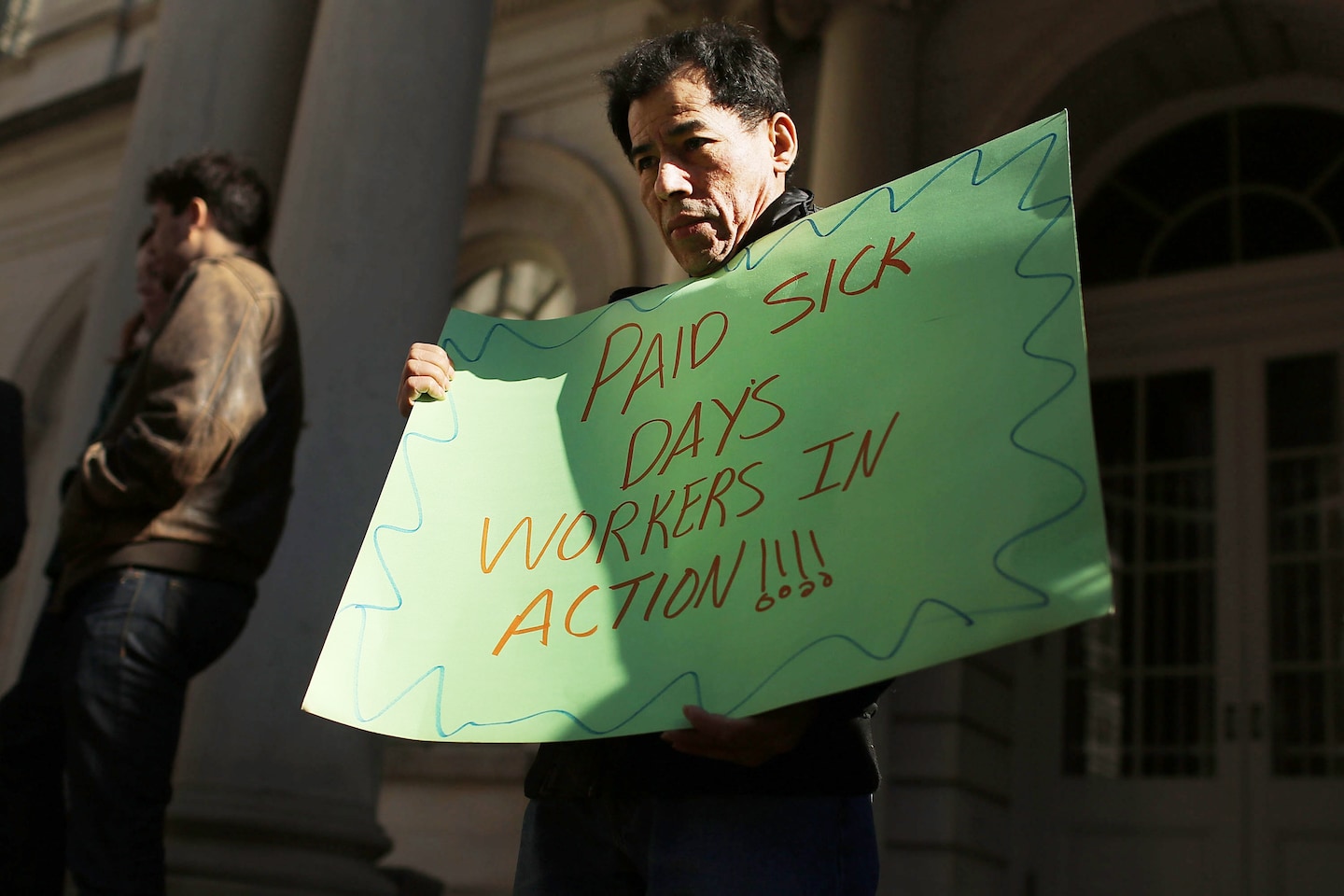
In the annals of labor rights, few victories resonate as profoundly as the triumph of paid sick leave—a battle waged not just for personal respite, but for the collective well-being of an entire state. This is the story of a woman whose relentless advocacy didn’t just secure her own reprieve from the tyranny of presenteeism; it rewrote the labor laws for thousands, proving that one determined voice can cascade into systemic change. Her fight wasn’t just about days off; it was about dignity, equity, and the unshakable belief that health should never be a privilege.
The Spark That Lit the Fire: A Personal Catalyst for Systemic Change
It began with a cough that refused to subside, a hacking that rattled through her chest like a drumline in a protest march. She dragged herself to work anyway—because what else could she do? The rent wouldn’t pay itself, and the boss had made it abundantly clear that “toughing it out” was the company’s unofficial motto. But this time, the cough turned into pneumonia. A week in bed, a mountain of medical bills, and a revelation: her suffering wasn’t an anomaly. It was a symptom of a broken system where workers were forced to choose between their health and their livelihood.
That epiphany didn’t just sting—it seared. She transformed her private agony into public ammunition. Armed with nothing but her own story and a spreadsheet of missed wages, she started knocking on doors, dialing numbers, and rallying her coworkers. The campaign wasn’t polished; it was raw, fueled by the kind of fury that only comes from having been backed into a corner. She didn’t just want paid sick leave—she wanted to dismantle the illusion that productivity and suffering were interchangeable currencies.
From Kitchen Tables to Capitol Halls: The Grassroots Juggernaut
The movement she ignited wasn’t a top-down decree—it was a groundswell, a hydra-headed rebellion that sprouted in diners, barbershops, and union halls. Workers who had never spoken up before suddenly found their voices, recounting stories of food poisoning, migraines, and back injuries that forced them to choose between medication and meals. The campaign wasn’t just about policy; it was about reclaiming agency. Flyers with bold, unapologetic slogans—“Your Fever Isn’t a Luxury”—were plastered on bathroom stalls and bus stops, turning public spaces into battlegrounds for visibility.
Petitions weren’t just signed; they were tattooed onto the collective consciousness. Town halls became therapy sessions where people cried not just for themselves, but for the coworker who’d miscarried on the job because she couldn’t afford to stop. The movement’s strength lay in its refusal to sanitize pain. It wasn’t a polite request for “better conditions”—it was a demand for justice, delivered in the unfiltered language of those who had been broken by the system.
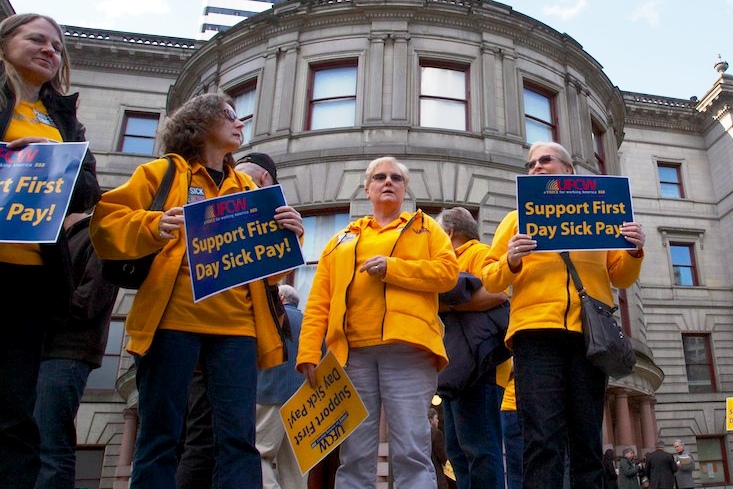
The Opposition’s Playbook: When Empathy Is the Real Threat
Of course, not everyone cheered. The opposition’s tactics were as predictable as they were despicable: scare tactics about “burdening small businesses,” warnings that mandates would “kill jobs,” and the evergreen favorite—“personal responsibility.” They framed the fight as a zero-sum game, as if workers’ health was a luxury that had to be earned, not a right that had to be granted. One particularly egregious op-ed compared paid sick leave to “a nanny state run amok,” as if the ability to rest when sick was some kind of communist plot.
But the movement didn’t flinch. They met every smear with data—studies showing that paid sick leave reduces workplace injuries, boosts productivity, and even saves lives. They countered fear with solidarity, pointing out that the businesses most loudly decrying the mandate were the same ones that paid poverty wages and denied bathroom breaks. The opposition’s real fear wasn’t economic collapse; it was the terrifying prospect of workers realizing they deserved better—and refusing to settle for less.
The Victory Lap: When Policy Reflects the People’s Will
The day the bill passed, the statehouse erupted—not with the sterile applause of politicians patting themselves on the back, but with the raw, unfiltered joy of people who had fought for something they were told was impossible. It wasn’t just a law; it was a manifesto. It said: Your body is not a machine. Your illness is not a commodity. Your life matters more than a bottom line.
But the fight didn’t end there. Implementation became its own battleground. Employers dragged their feet, misclassified workers, and found loopholes to exploit. The movement didn’t disband; it pivoted. They turned into watchdogs, documenting violations, organizing clinics to help workers understand their rights, and turning every transgression into a teachable moment. The law was a tool, but the real victory was the shift in consciousness—workers who had once accepted exploitation as their fate now knew they could demand more.
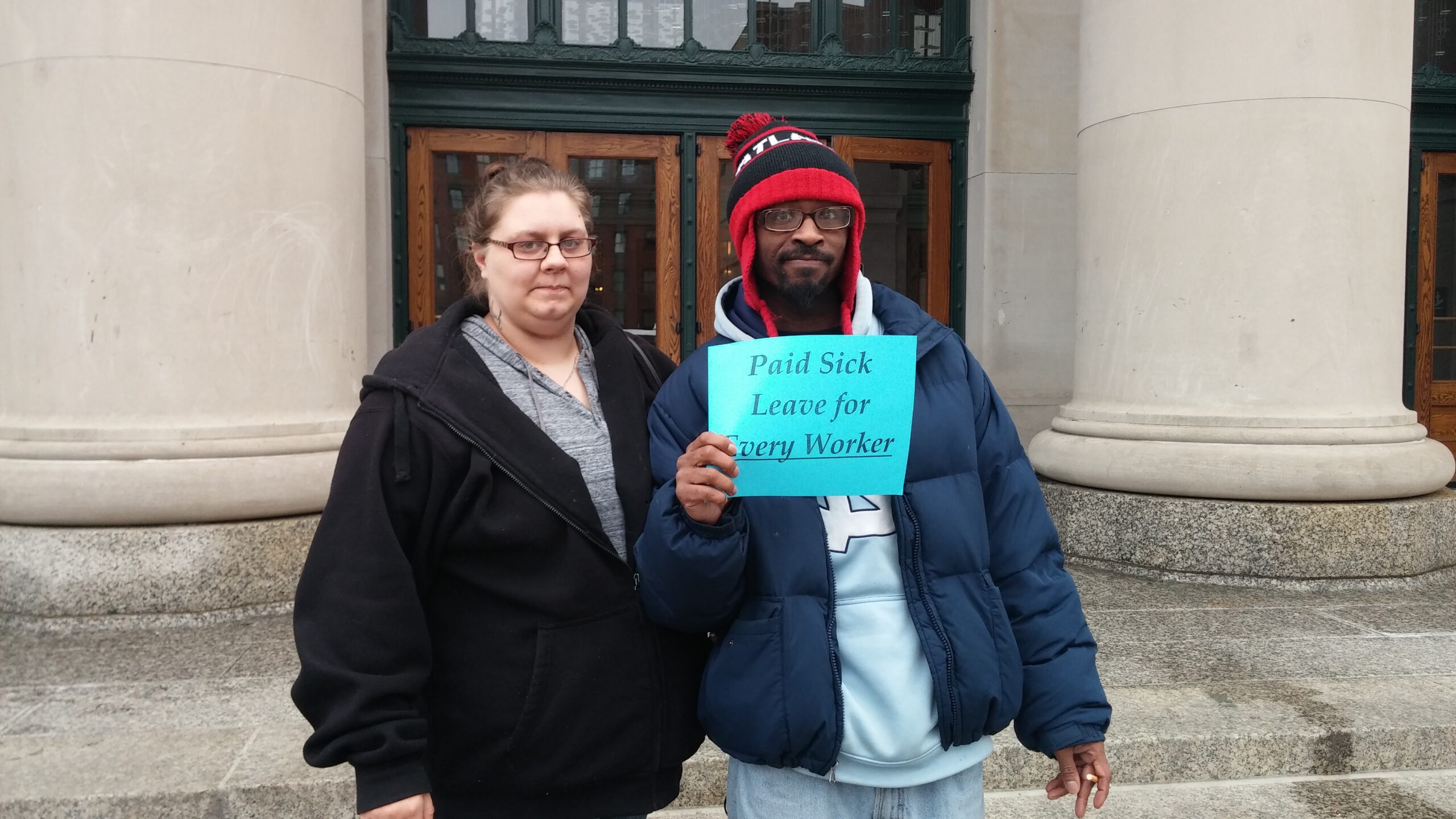
The Ripple Effect: How One State’s Win Became a National Wake-Up Call
The impact radiated far beyond state lines. Other states, watching the dominoes fall, began to reconsider their own stances. Corporations that had once resisted now scrambled to adjust, fearing a mass exodus of workers to states where rest wasn’t a radical act. The victory proved that change wasn’t just possible—it was contagious. It emboldened other movements: from $15 minimum wage campaigns to universal healthcare advocacy, the paid sick leave win became a blueprint for how to turn personal grievance into collective power.
But the most profound legacy wasn’t in the headlines or the policy papers. It was in the quiet moments—the single mother who finally took her asthmatic child to the doctor without fear of being fired, the warehouse worker who no longer had to choose between antibiotics and rent, the elderly cashier who could retire without the guilt of leaving coworkers in the lurch. These weren’t just individual triumphs; they were proof that systemic change isn’t an abstraction. It’s the sum of a thousand personal revolutions.
The Unfinished Symphony: Why the Fight Never Really Ends
Of course, the battle isn’t over. Enforcement remains uneven. Some employers still treat the law as a suggestion. And in other states, workers are still fighting the same fight, their stories echoing the one that started it all. But the victory in this state wasn’t just a policy win—it was a cultural earthquake. It shattered the myth that workers should be grateful for crumbs. It proved that when people organize, they don’t just change laws—they change the very fabric of what’s considered acceptable.
The woman who started it all? She’s still out there, though you might not recognize her. She’s not just a footnote in a history book; she’s the coworker who steps in when someone’s kid is sick, the neighbor who helps translate the fine print of the labor code, the voice in the crowd that reminds everyone: This fight isn’t over. The next time you see a paid sick leave sign in a store window, remember—it wasn’t handed down from on high. It was fought for. And it will be fought for again, until dignity isn’t a privilege, but a given.





Leave a Comment