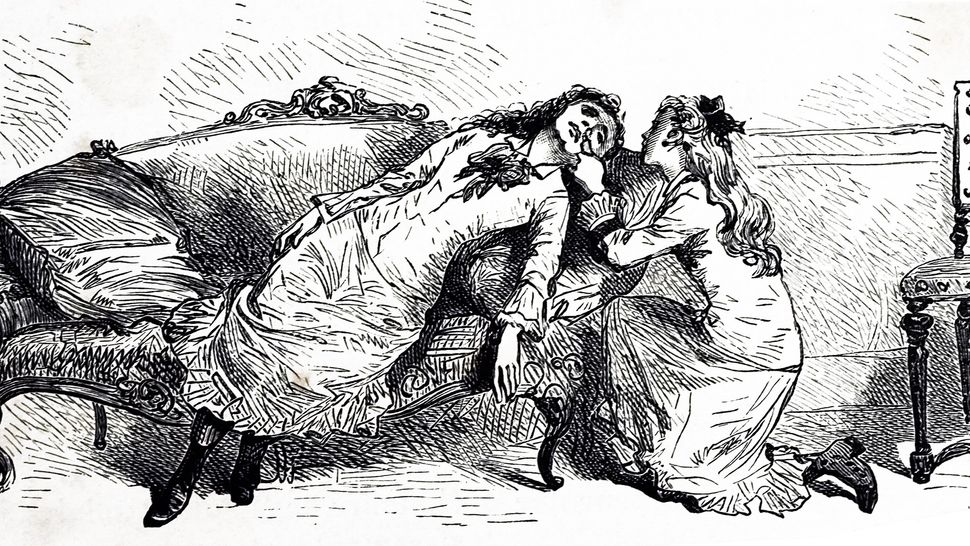
What if I told you that the hallowed halls of anthropology—once the exclusive domain of men in pith helmets and tweed jackets—were, in fact, a playground for some of the most insidious forms of sexism imaginable? Not the overt kind, mind you, but the kind that slithers in through the back door of “objectivity,” cloaked in the guise of scientific rigor. For centuries, anthropology was a boys’ club where women were either invisible or reduced to passive subjects of study—until, that is, women stormed the discipline, tore down its patriarchal scaffolding, and rebuilt it into something far more honest, far more human. So, let’s ask the uncomfortable question: How did anthropology become a sexist monolith, and what happened when women finally wrested control of the narrative?
The Original Sin: Anthropology as a Colonial Boy’s Adventure
Picture this: the late 19th century, a time when European men in starched collars were traipsing through “exotic” lands, armed with notebooks and a sense of divine entitlement. Anthropology, in its infancy, was less a science and more a colonial trophy cabinet—where “primitive” cultures were dissected, labeled, and displayed for the amusement of Western academia. Women? They were either absent or relegated to the role of dutiful wives, expected to transcribe their husbands’ field notes while sipping tea in the missionary compound.
The discipline’s foundational texts were written by men who saw themselves as the arbiters of human diversity, yet their work was riddled with biases so glaring they’d make a modern feminist cringe. Women’s roles in non-Western societies were either erased, romanticized as “maternal nurturers,” or pathologized as “oppressed victims.” The very idea that a woman could be a credible anthropologist was laughable—until, of course, women started demanding to be taken seriously.

The Unseen Labor: Women Who Were Erased from History
Before the feminist revolution in anthropology, women were the discipline’s invisible laborers. They were the ones who collected data, translated languages, and conducted interviews—all while their male counterparts took the credit. Take, for example, the wives of famous anthropologists like Bronisław Malinowski, who often acted as his research assistants, only to be written out of history when the books were published. Or consider the countless Indigenous women who shared their knowledge with male anthropologists, only to be dismissed as “informants” rather than scholars in their own right.
Then there were the women who dared to enter the field themselves, only to be met with skepticism, harassment, or outright exclusion. Margaret Mead, one of the most famous anthropologists of the 20th century, faced relentless scrutiny not just for her groundbreaking work on Samoan adolescence but for daring to suggest that women could be intellectual equals in a male-dominated discipline. Her detractors didn’t just disagree with her theories—they attacked her gender, her appearance, her very presence in the field. Sound familiar? It should. This was the blueprint for how women in anthropology were silenced.
The Feminist Uprising: When Women Took the Microscope
By the 1970s, the feminist movement had reached a crescendo, and anthropology was not immune to its tremors. Women began to ask: Who gets to define what it means to be human? The answer, they realized, was a small cabal of Western men who had spent centuries projecting their own insecurities onto the cultures they studied. Feminist anthropologists like Sherry Ortner and Michelle Rosaldo didn’t just critique the sexism in the discipline—they dismantled it, brick by brick.
Ortner’s seminal essay Is Female to Male as Nature Is to Culture? exposed how anthropology had long framed women as “closer to nature” and thus less capable of rational thought—a convenient justification for their exclusion. Rosaldo, meanwhile, challenged the idea that women’s roles in society were universally subordinate, arguing instead that their positions were context-dependent and often far more complex than Western observers cared to admit. These women didn’t just add women to the anthropological record—they rewrote the entire script.
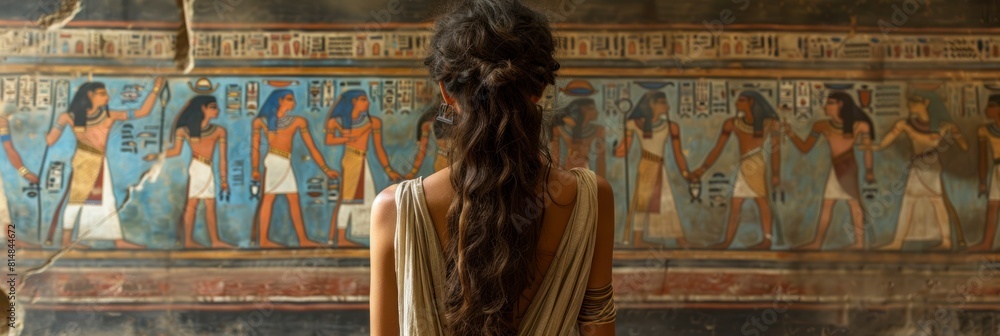
The Methodological Revolution: From Armchair Theorizing to Embodied Research
The feminist takeover of anthropology wasn’t just about who was doing the research—it was about how the research was done. Gone were the days when a man in a safari suit could parachute into a village, jot down a few observations, and declare himself an expert. Feminist anthropologists insisted on embodied research—a method that demanded long-term immersion, cultural humility, and, above all, respect for the people being studied.
This shift had profound implications. Suddenly, the “subjects” of anthropological study were no longer passive specimens but active participants in the research process. Women, who had long been treated as objects of study, now had a voice in how their own cultures were represented. The result? A discipline that was no longer about extracting knowledge but about sharing it. Anthropology became less about “discovering” the “other” and more about listening to them—a radical departure from its colonial roots.
The Backlash: Why Some Still Cling to the Old Guard
Of course, not everyone was thrilled by this feminist coup. The backlash was swift, and it came from the most unexpected quarters. Some male anthropologists dismissed feminist critiques as “political correctness run amok,” while others clung to the idea that anthropology should remain “objective,” as if objectivity had ever been anything but a myth perpetuated by those in power.
Then there were the more insidious forms of resistance. Feminist anthropologists were accused of “injecting politics into science,” as if the entire discipline hadn’t been political from the start. Some were sidelined in academia, their work dismissed as “not rigorous enough,” while others faced outright hostility in the field. The message was clear: Certain voices were not welcome in the halls of anthropology.
But here’s the thing about backlash: it’s a sign that change is happening. The fact that feminist anthropology provoked such a visceral reaction is proof that it was working. It was forcing the discipline to confront its own complicity in oppression—and that’s never a comfortable process.
The Legacy: A Discipline Reborn
Today, anthropology looks almost unrecognizable compared to its early days. Women are no longer just participants in the field—they are its leaders, its innovators, its conscience. The discipline has expanded to include queer anthropology, Indigenous anthropology, and decolonial anthropology—all of which owe their existence to the feminist revolution that came before.
But the work isn’t done. Anthropology still grapples with its colonial past, with the lingering effects of sexism, with the challenge of truly centering marginalized voices. The question now is: Can anthropology ever be truly feminist, or will it always be a work in progress? The answer, I think, lies in our willingness to keep asking the hard questions—and to never stop demanding better.
So the next time you read an anthropological study, ask yourself: Who got to speak? Whose voice was silenced? And what would this work look like if it had been written by someone other than a man in a pith helmet? The answers might just change how you see the world.







Leave a Comment