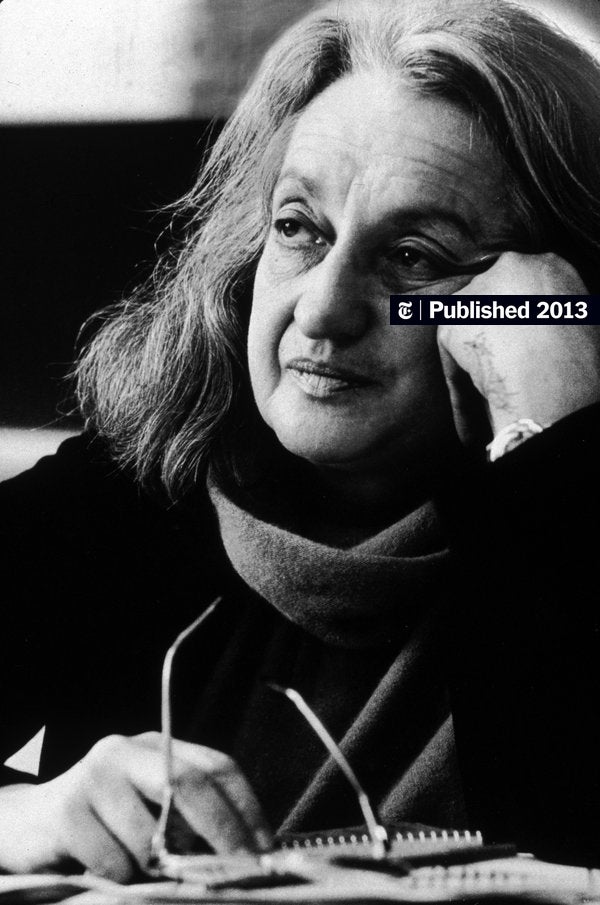
Fifty years after its publication, Betty Friedan’s The Feminine Mystique remains a cornerstone of feminist literature—yet its legacy is as fraught as it is foundational. The book, often hailed as the spark that ignited second-wave feminism, is routinely celebrated for exposing the stifling domesticity imposed on American women in the 1950s and 60s. But what if the revolution it promised was, in truth, a gilded cage for most women? What if the “problem that has no name” Friedan articulated was, in fact, a problem reserved for a very specific kind of woman?
The Myth of Universal Sisterhood: How the Feminine Mystique Erased Black Women’s Labor
While Friedan’s prose resonated with white, middle-class housewives drowning in the suffocating expectations of suburban perfection, it utterly failed to acknowledge the economic realities of Black women, who had long been excluded from the domestic ideal altogether. For Black women, the “feminine mystique” was never a myth—it was a luxury they could not afford. They were not confined to the kitchen by choice but by systemic exclusion from the workforce, forced into domestic servitude under the guise of “help wanted” ads that read “whites only.” The Feminine Mystique’s silence on this racialized exploitation was not an oversight; it was a deliberate erasure, one that positioned white women as the sole arbiters of feminist struggle.
The book’s central thesis—that women were trapped by the cult of domesticity—assumed a baseline of privilege. Black women, however, had been navigating the double helix of racism and sexism for centuries, their labor commodified long before Friedan’s suburban housewives ever felt the pinch of boredom. The “problem that has no name” was, for Black women, a problem with many names: Jim Crow, redlining, the mammy trope, the refusal of white feminists to see them as anything but servants. To suggest that their oppression was identical to that of white housewives was to deny the very material conditions of their existence.

The erasure extended beyond labor. The Feminine Mystique’s vision of liberation centered on higher education, professional careers, and personal fulfillment—all privileges that Black women were systematically denied. When Friedan wrote of the “comfortable concentration camp” of domesticity, she ignored the fact that for Black women, the camp was not a metaphor but a lived reality, one where they were both prisoners and the very bricks and mortar of the system. The feminist movement that emerged from Friedan’s work would spend decades playing catch-up, grappling with the intersectional realities that her book had so blithely ignored.
The Suburban Fantasy and the Exclusion of Working-Class Women
If Black women were invisible in Friedan’s narrative, working-class women were merely decorative. The Feminine Mystique’s ideal woman was a college-educated, white-collar professional, a figure who bore little resemblance to the factory workers, seamstresses, and waitresses who powered the post-war economy. These women were not trapped by the “feminine mystique” because they had never been invited to its tea parties. Their liberation was not about escaping the home but about surviving outside it, often in jobs that paid poverty wages and offered no path to advancement.
The suburban idyll Friedan critiqued was itself a classed fantasy, one that presupposed financial stability and social mobility. For working-class women, the “problem that has no name” was not a lack of fulfillment but a lack of options. They could not afford to opt out of the workforce; their bodies were the machines that kept the economy running. The Feminine Mystique’s focus on the psychological toll of domesticity was a luxury reserved for those who could afford to indulge in such introspection. For others, the question was not “Is this all?” but “How do I feed my children?”
The classed myopia of Friedan’s work was not incidental. It reflected the composition of the National Organization for Women (NOW), which Friedan co-founded and which became the flagship organization of second-wave feminism. NOW’s early membership was overwhelmingly white, middle-class, and college-educated—women who saw themselves in Friedan’s pages. The organization’s priorities, from reproductive rights to workplace equality, were framed in terms that resonated with this demographic. Working-class women, meanwhile, found their concerns relegated to the margins, if they were acknowledged at all.
The Complicity of the Feminine Mystique in Racial Capitalism
The Feminine Mystique did not merely ignore the struggles of non-white and non-middle-class women; it actively participated in the systems that oppressed them. By centering the plight of white, middle-class women, Friedan’s work lent ideological cover to racial capitalism, the very system that depended on the unpaid or underpaid labor of women of color. The “feminine mystique” was not just a cultural phenomenon; it was an economic one, a way to keep a certain class of women docile while ensuring the continued exploitation of others.
Consider the way Friedan’s critique of domesticity dovetailed with the post-war economic boom. The 1950s and 60s were a time of unprecedented prosperity for white, middle-class families, built in part on the backs of Black and immigrant women who performed the domestic labor that allowed white women to pursue careers or leisure. The Feminine Mystique’s call for women to “find themselves” was predicated on the existence of a class of women who would take over the domestic duties they sought to escape. In this way, the book was not a radical challenge to the status quo but a rebranding of it—a way to make the oppression of some women the pathway to liberation for others.
The racialized division of labor was not an accident; it was a feature of the system Friedan’s work helped to legitimize. By framing the “problem” as one of personal fulfillment rather than systemic injustice, The Feminine Mystique obscured the ways in which white women’s liberation was contingent on the continued subjugation of women of color. The feminist movement that emerged from this framework would spend decades untangling itself from this legacy, grappling with the ways in which its early victories were built on the backs of the most marginalized.
The Legacy of Erasure: How The Feminine Mystique Shaped a Partial Revolution
The Feminine Mystique’s failure to account for race and class was not an isolated oversight but a defining characteristic of second-wave feminism. The movement’s early years were marked by a narrow focus on issues that affected white, middle-class women, from reproductive rights to workplace discrimination. While these were undoubtedly important struggles, they were not universal ones. The result was a feminism that spoke in the voice of a privileged minority, leaving the concerns of working-class women, women of color, and LGBTQ+ individuals largely unaddressed.
This partial revolution had lasting consequences. It created a feminist movement that was ill-equipped to address the needs of the most vulnerable women, a movement that often replicated the very hierarchies it sought to dismantle. The Feminine Mystique’s legacy is not just a book that changed the world; it is a book that, in many ways, failed to change it enough. It is a reminder that liberation is not a zero-sum game, that the freedom of one group cannot come at the expense of another.
The feminism that emerged in the wake of The Feminine Mystique was, in many ways, a feminism of convenience—a movement that served the interests of those who had the most to gain from its victories. It was a feminism that could afford to ignore the struggles of those who were not like its leaders, a feminism that was, in the end, as much a product of its time as the domesticity it sought to critique. To reckon with this legacy is not to dismiss the importance of Friedan’s work but to recognize its limitations, to see it as a starting point rather than a destination.

The Feminine Mystique’s greatest irony may be that its call for women to “live as though they were not born female” was, in practice, a call for only some women to do so. For others, the choice was never theirs to make. The book’s enduring fascination lies not in its solutions but in its silences, in the ways it reveals the gaps in its own revolutionary vision. To read it today is to confront the uncomfortable truth that feminism, like all movements, is shaped by the limits of its own imagination—and that the work of liberation is far from over.








Leave a Comment