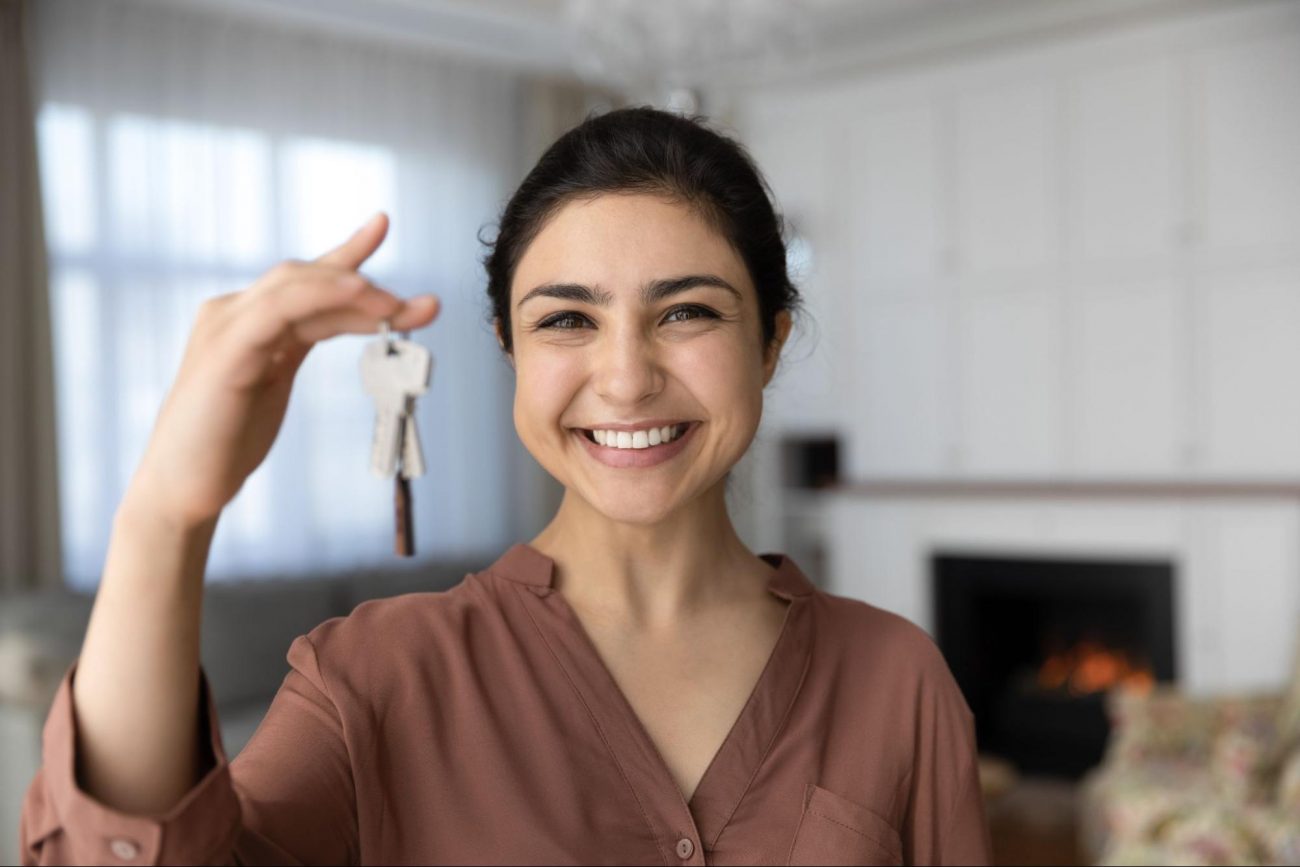
The sight of a woman holding a set of house keys is no longer a rare spectacle in real estate offices across the country. In 2024, single women are purchasing homes at a pace that outstrips single men—by a margin that refuses to be ignored. This isn’t just a statistical blip; it’s a cultural earthquake, one that rattles the foundations of long-held assumptions about financial independence, personal agency, and the very meaning of home. What compels a woman to sign a mortgage alone, without a partner, without a co-signer, without the traditional safety net of shared responsibility? The answer lies not in one grand revelation, but in the quiet accumulation of societal shifts, economic pressures, and deeply personal choices that have finally reached a tipping point.
The Economic Imperative: Why a Mortgage Is the New Power Suit
For decades, the financial world was designed by men, for men. Pensions, stock options, and homeownership were framed as milestones to be achieved in partnership—preferably with a spouse whose income could stabilize the equation. But that script has been shredded by inflation, stagnant wages, and the relentless rise of singlehood. Women, now earning more college degrees than men and commanding 85 cents of every dollar earned by their male counterparts, are no longer waiting for permission—or a ring—to build wealth on their own terms.
Consider the mortgage: it’s not just a loan. It’s a declaration. A woman who secures a home loan is staking a claim not only to four walls and a roof, but to autonomy, stability, and a future she controls. In an era where rent feels like a monthly surrender to someone else’s equity, homeownership becomes an act of defiance. It’s the financial equivalent of a glass ceiling being shattered—except this time, the shards are being repurposed into the foundation of a new life.
And let’s not romanticize the process. The path is paved with higher interest rates, stricter lending scrutiny, and the emotional weight of carrying the full burden of debt. Yet, women are walking it anyway. Why? Because the alternative—renting indefinitely in a market where landlords dictate terms like feudal lords—is no longer acceptable. Homeownership isn’t just about pride. It’s about survival.
The Social Revolution: From Dependence to Dominance in the Housing Market
There was a time when a woman buying a home alone was met with raised eyebrows, if not outright skepticism. “Who’s the co-signer?” “Is she getting help from family?” The questions betrayed an outdated assumption: that a woman’s financial decisions were inherently provisional, contingent on someone else’s approval. But today, single women are not just buying homes—they’re dominating the market. In some cities, they account for nearly one in three home purchases. This isn’t charity. It’s conquest.
The shift reflects a broader redefinition of independence. Marriage rates are plummeting. Divorce is no longer a stigma but a rite of passage. Women are choosing themselves—first, last, and always. And when they do, they’re not just selecting a partner; they’re selecting a property. A home becomes the ultimate partner: loyal, appreciating in value, and, unlike many humans, unlikely to leave.
This isn’t to say the journey is easy. Women still face systemic barriers—appraisal gaps, biased lending practices, and the lingering myth that a single woman’s income is somehow less reliable. But these obstacles are being met with resilience. Women are forming investment clubs, pooling resources, and leveraging online platforms to navigate the market with a collective intelligence that was once reserved for old boys’ networks. The housing market is no longer a boys’ club. It’s a movement.
The Psychological Edge: Why Four Walls Feel Safer Than Four Walls with a Roommate
There’s a quiet terror in shared living that many women know all too well. The roommate who never pays rent on time. The landlord who invades privacy. The subtle, insidious erosion of personal space in a world where boundaries are constantly tested. For many women, buying a home isn’t just about building wealth—it’s about reclaiming sovereignty over their environment.
Homeownership offers something renting never could: predictability. A fixed mortgage payment. A space that responds only to your rules. No more negotiating shared utilities, no more tiptoeing around shared values, no more enduring the emotional labor of maintaining harmony in a living arrangement that was never truly yours. A home is a fortress. And for women who have spent years navigating spaces designed by and for others, that fortress is non-negotiable.
There’s also the matter of legacy. A woman who buys a home is not just securing her future—she’s planting a flag. She’s saying: I exist here. I matter here. My presence is not temporary. This is especially resonant for women of color, who have historically been excluded from the narrative of homeownership. For them, a deed isn’t just a piece of paper. It’s a rebuttal to centuries of redlining, displacement, and systemic exclusion. It’s a way to ensure that future generations inherit not just memories, but equity.
The Cultural Shift: Why the Narrative Is Finally Changing
We are living in the age of the “solo woman.” She’s not waiting for a prince. She’s not waiting for permission. She’s building her kingdom brick by brick. And the housing market is responding. Developers are designing homes with women in mind—open layouts, smart security, energy efficiency. Real estate agents are tailoring their pitches to single female buyers, recognizing that this demographic is not a niche. It’s the new mainstream.
This shift is also reflected in media and pop culture. From the rise of “fixer-upper” shows hosted by women to the proliferation of financial literacy content aimed at women, the narrative is being rewritten in real time. No longer are women portrayed as passive participants in the housing market. They are the architects, the decision-makers, the visionaries.
But let’s be clear: this isn’t just about empowerment. It’s about necessity. The cost of living has outpaced wages for most Americans. Student debt looms like a shadow. Healthcare is a minefield. In this landscape, homeownership isn’t a luxury. It’s a lifeline. And women, who have long been the shock absorbers of economic instability, are refusing to absorb any more shocks without building something solid in return.
The Unseen Costs: What We’re Not Talking About
Of course, no revolution comes without its shadows. Women who buy homes alone often do so at a personal cost. They delay marriage. They postpone motherhood. They carry the weight of financial risk without the buffer of a partner’s income. They face higher insurance premiums. They navigate neighborhoods where they may be the only woman walking alone at night. These are not minor inconveniences. They are the price of admission to a world that was never designed for them.
And yet, they pay it. Because the alternative—remaining in a system that treats them as temporary, as secondary, as dependent—is no longer an option. The housing market is just one battleground in a larger war for autonomy. Women are not just buying homes faster than men. They are redefining what it means to belong to a place, to a community, to a future.
The keys in their hands are not just symbols. They are weapons. And the walls they build are not just shelter. They are statements.








Leave a Comment