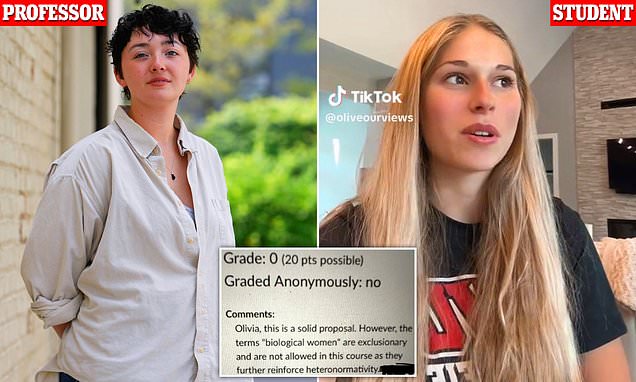
In the labyrinthine halls of college admissions, where dreams are like fragile glass poised on the edge of possibility, a single revelation shattered the veneer of fairness that cloaked the process. She stepped forward—not with a sword, but with data; a scalpel at the heart of systemic inequity. This was not merely an exposé; it was a seismic tremor that rippled through academia, laying bare a stark and pervasive gender bias that had long been whispered about but seldom confronted in full blazing daylight.
The Quiet Undercurrent of Gender Bias: A Systemic Malady
College admissions are often romanticized as meritocratic, an ethereal dance where intellect and passion dictate destiny. But beneath this shimmering facade lies a quiet undercurrent of gender bias—an insidious force weaving through acceptance letters and rejection slips. Her revelation illuminated an ancient script written in invisible ink: women’s achievements, intelligence, and potential too often discounted, filtered through archaic assumptions about gender roles and capabilities.
This bias is not a blunt instrument but a chimera, subtle and multifaceted. In some instances, it manifests as lowered expectations for female applicants pursuing STEM, while in others, it’s a paradoxical preference that pigeonholes women into stereotypical roles. The data she exposed dissected these contradictions with ruthless precision, revealing an uneven playing field masquerading as egalitarian neutrality.

Data as a Catalyst: The Weaponization of Numbers
Numbers, often heralded as impartial arbiters, became the vehicle for this truth bomb. The data didn’t whisper—it roared. It detailed disparaging acceptance rates, highlighted glaring gaps in recommendation letter sentiments, and quantified the gender disparities in interview callbacks. By transforming anecdotal frustrations into empirical evidence, she reified what was previously dismissed as mere perception or isolated bias.
The viral spread of this data was no mere happenstance. It became a clarion call, a beacon for those long disenfranchised by the gendered underpinnings of higher education’s gatekeeping mechanisms. Her analytical dissection morphed from a quiet academic exercise into a public reckoning, compelling institutions to grapple with their own complicity.

Breaking the Mold: Challenging Institutionalized Stereotypes
At the core of this exposé lies a challenge to the institutionalized stereotypes that govern admissions officers’ subconscious calculus. Women applicants often confront a double-bind: they must be ambitious yet likable, assertive yet humble, exceptional yet not threatening. The data unveiled that these contradictory standards distort evaluations and shape outcomes.
Her findings also highlighted how institutional biases are entwined with cultural narratives. Admissions processes, seemingly divorced from social prejudices, actually mirror and reinforce societal gender hierarchies. The viral resonance of the data served as a prism, refracting a complex interplay of gender, power, and privilege concealed beneath procedural protocol.
The Ripple Effect: From Viral Data to Institutional Introspection
The wave of attention was not a fleeting gust—it initiated a persistent storm. Universities faced public scrutiny, pressured to reassess their admissions frameworks through a gender-conscious lens. It sparked dialogues about unconscious bias training, the revision of evaluation rubrics, and the incorporation of holistic methodologies that appreciate diversity beyond binary metrics.
Beyond policy shifts, the viral nature of the data empowered an army of students, parents, and activists to demand accountability and transparency. It became an ideological fulcrum galvanizing advocacy for equitable access, and a testament to how rigorous inquiry can puncture entrenched obfuscations.

The Human Cost: Stories Behind the Numbers
While data paints broad strokes, the true portrait of gender bias in college admissions emerges from its human impact. Each percentage point in disparity represents a young woman whose ambitions are curtailed, a voice rendered faint amid systemic noise. The viral disclosure rekindled conversations about the emotional toll—the diminished confidence, the internalized self-doubt, the quiet erosion of potential.
Her revelations forced a reckoning not only on institutional levels but also within the souls of applicants continually navigating a landscape rigged with obstacles invisible to many. The poignant narratives attached to the data illuminate the urgency for change—not just statistical recalibration but a holistic transformation of culture.
The Path Forward: Reimagining Equity in Admissions
With the gender bias now unveiled to all, the path forward requires courageous reimagination. Admissions offices must transcend perfunctory gestures and confront uncomfortable truths head-on. This involves dismantling ingrained evaluative heuristics, investing in diversity-conscious training, and embracing disruptive innovation to ensure admissions processes celebrate genuine merit untethered by gendered expectations.
The viral data exposed an imperative: to reforge admission gates into portals of true inclusion and fairness. The metaphor of breaking glass is apt—shards reflecting the fractured systems must be meticulously collected and reconstructed into resilient mosaics that uplift rather than exclude.
She did not simply expose bias; she ignited a transformative dialogue. In that honest illumination, there is the promise of a future where college admissions no longer echo society’s gender inequities, but rather herald a new era of equitable possibility.










Leave a Comment