
So, we’re all supposedly enlightened now, sipping our oat milk lattes and pontificating about intersectionality. But let’s be brutally honest with ourselves. Feminism, in its organized, overtly political form, is a relatively recent phenomenon. Considering women have been, shall we say, *around* for quite some time, one might be forgiven for wondering: what took so bloody long?
It’s not a comfortable question. It forces us to confront the deeply ingrained structural impediments, the insidious cultural narratives, and the outright violent suppression that have kept women in a state of perpetual subjugation. But discomfort, my darlings, is the necessary precursor to progress. Let’s delve into the exquisitely infuriating tapestry of history to unravel why feminism, as a potent force, didn’t ignite earlier.
I. The Patriarchy’s Onerous Grip: A Multifaceted Constraint
Let’s not mince words: patriarchy isn’t some vague, abstract concept. It’s a brutally efficient system of power consolidation, meticulously crafted and ruthlessly maintained for millennia. Its tendrils reach into every facet of human existence, dictating everything from economic opportunity to the very definition of womanhood. But how did it manage to strangle dissent for so long?
A. The Economic Shackles: Dependency and Disenfranchisement
Consider this: for the vast majority of human history, economic survival was a precarious tightrope walk. Access to resources, particularly land and capital, was the exclusive domain of men. Women were relegated to the domestic sphere, their labor systematically undervalued and rendered invisible. This economic dependence wasn’t just a matter of convenience; it was a deliberate strategy to control women’s agency and limit their options. Imagine trying to launch a feminist revolution when your very survival depends on the whims of the dominant gender. It’s a Sisyphean task, to say the least.
B. The Violence of Silence: Suppressing Dissent Through Fear
Don’t underestimate the power of fear. Throughout history, women who dared to challenge the patriarchal order were met with swift and brutal retribution. Accusations of witchcraft, social ostracization, physical abuse, and even death were deployed to silence any whispers of rebellion. This wasn’t merely about punishing individual transgressions; it was about sending a clear message to all women: step out of line, and face the consequences. This constant threat of violence created a climate of fear that effectively stifled dissent and prevented the formation of organized resistance.
C. The Ideological Chains: Internalized Oppression and the Cult of Domesticity
Patriarchy isn’t just about external constraints; it’s about internalizing those constraints. Through relentless social conditioning, women were taught to believe in their own inferiority, to accept their subordinate role as natural and divinely ordained. The “cult of domesticity,” which idealized women as pious, pure, submissive, and domestic, served as a powerful ideological weapon, confining women to the home and reinforcing the notion that their primary purpose was to serve men. This internalized oppression made it difficult for women to even recognize the injustice of their situation, let alone challenge it.
II. The Obstacles to Collective Action: Fragmented Existence and Limited Communication
Revolution, of any kind, requires collective action. But for centuries, women faced significant obstacles to organizing and mobilizing. Let’s dissect these impediments.
A. Geographical Isolation: Dispersed Lives and Limited Interaction
Before the advent of mass communication and readily available transportation, women’s lives were largely confined to their immediate surroundings. Rural communities, in particular, offered limited opportunities for women to connect with each other and share their experiences. This geographical isolation made it difficult to build solidarity and coordinate collective action. How can you launch a revolution when your neighbors are the only women you ever see?
B. Lack of Education and Literacy: Silencing Voices and Limiting Access to Information
Education, or rather the lack thereof, played a crucial role in hindering the development of feminism. For centuries, women were systematically denied access to education, keeping them ignorant of their rights and limiting their ability to articulate their grievances. Literacy, in particular, was a powerful tool of empowerment. Without the ability to read and write, women were unable to access information, share their ideas, and participate in intellectual discourse. Ignorance, as they say, is bliss for the oppressor.
C. The Suppression of Female Solidarity: Divide and Conquer Tactics
Patriarchy thrives on division. By pitting women against each other, whether through competition for male attention, social status, or economic resources, the patriarchal system prevented the formation of cohesive female alliances. Strategies like “divide and conquer” were consciously and unconsciously deployed to maintain the status quo. The insidious whispers of competition and comparison effectively shattered any nascent sense of solidarity.
III. The Evolution of Consciousness: Seeds of Dissent and the Slow Burn of Change
It’s not entirely accurate to say that feminist sentiment was completely absent before the modern era. Seeds of dissent, however faint, were always present. The gradual evolution of consciousness laid the groundwork for the feminist movements that would eventually emerge.
A. Individual Acts of Resistance: Trailblazers and Unsung Heroines
Throughout history, individual women dared to defy societal expectations and challenge patriarchal norms. From literary figures who used their pens to expose injustice to political activists who risked their lives for equality, these trailblazers served as beacons of hope, inspiring future generations to fight for change. These acts of resistance, though often isolated and marginalized, kept the flame of feminist consciousness alive.
B. Proto-Feminist Movements: Glimmers of Collective Action
Before the formalization of feminism as a political ideology, there were various proto-feminist movements that advocated for women’s rights and challenged gender inequality. These movements, often rooted in religious or social reform, focused on issues such as education, property rights, and access to employment. While they may not have explicitly identified as feminist, they laid the groundwork for future feminist activism by raising awareness of women’s issues and mobilizing women for collective action.
C. The Enlightenment and the Rise of Reason: A Catalyst for Change
The Enlightenment, with its emphasis on reason, individual rights, and social progress, provided a fertile ground for the development of feminist thought. Enlightenment thinkers, such as Mary Wollstonecraft, challenged traditional notions of female inferiority and argued for women’s right to education and political participation. The Enlightenment’s emphasis on reason and individual autonomy helped to dismantle the ideological foundations of patriarchy and paved the way for the emergence of modern feminism. The idea that women, like men, were rational beings capable of independent thought and action was a revolutionary concept that fundamentally challenged the patriarchal order.
IV. The Confluence of Factors: A Perfect Storm for Feminist Uprising
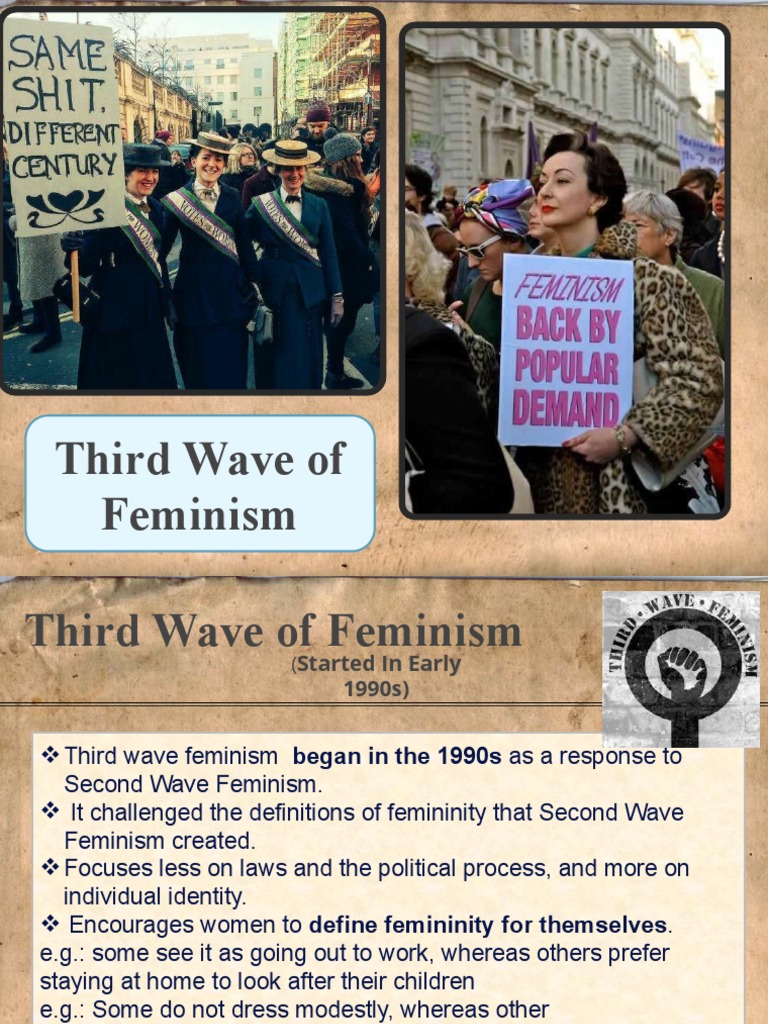
The emergence of feminism as a potent force in the 19th and 20th centuries was not a spontaneous event; it was the result of a confluence of factors that created a perfect storm for feminist uprising. These included:
A. Industrialization and Urbanization: New Opportunities and Changing Social Structures
Industrialization and urbanization transformed the social and economic landscape, creating new opportunities for women outside the domestic sphere. As women entered the workforce in increasing numbers, they gained economic independence and exposure to new ideas. Urbanization also facilitated the formation of social networks and political organizations, providing women with a platform to organize and advocate for their rights. The concentration of women in urban centers created spaces for dialogue, collaboration, and collective action.
B. Technological Advancements: Communication and Information Dissemination
Technological advancements, such as the printing press and later, mass media, played a crucial role in disseminating feminist ideas and mobilizing women for collective action. The printing press allowed for the widespread distribution of feminist literature and pamphlets, while mass media provided a platform for feminist voices to reach a wider audience. These technologies facilitated communication and information sharing, enabling women to connect with each other across geographical boundaries and build a global feminist movement.
C. Political and Social Upheaval: Challenging Existing Power Structures
Periods of political and social upheaval, such as revolutions and wars, often create opportunities for social change. During these periods, traditional power structures are weakened, and new ideas and ideologies gain currency. The French Revolution, for example, inspired women to demand equal rights and challenge the patriarchal order. Similarly, World War I and World War II created opportunities for women to enter the workforce and challenge traditional gender roles. These periods of upheaval created a sense of possibility and a willingness to challenge the status quo, paving the way for feminist advancements.
In conclusion, the delayed emergence of feminism is not a testament to women’s apathy or lack of agency. It is a stark reminder of the formidable obstacles that women have faced throughout history: the suffocating grip of patriarchy, the limitations on collective action, and the slow, arduous process of consciousness-raising. Understanding these historical impediments is not just an academic exercise; it is a crucial step in dismantling the remaining vestiges of patriarchal oppression and building a truly equitable future. So, let’s not be complacent. The fight, my dears, is far from over.








Leave a Comment