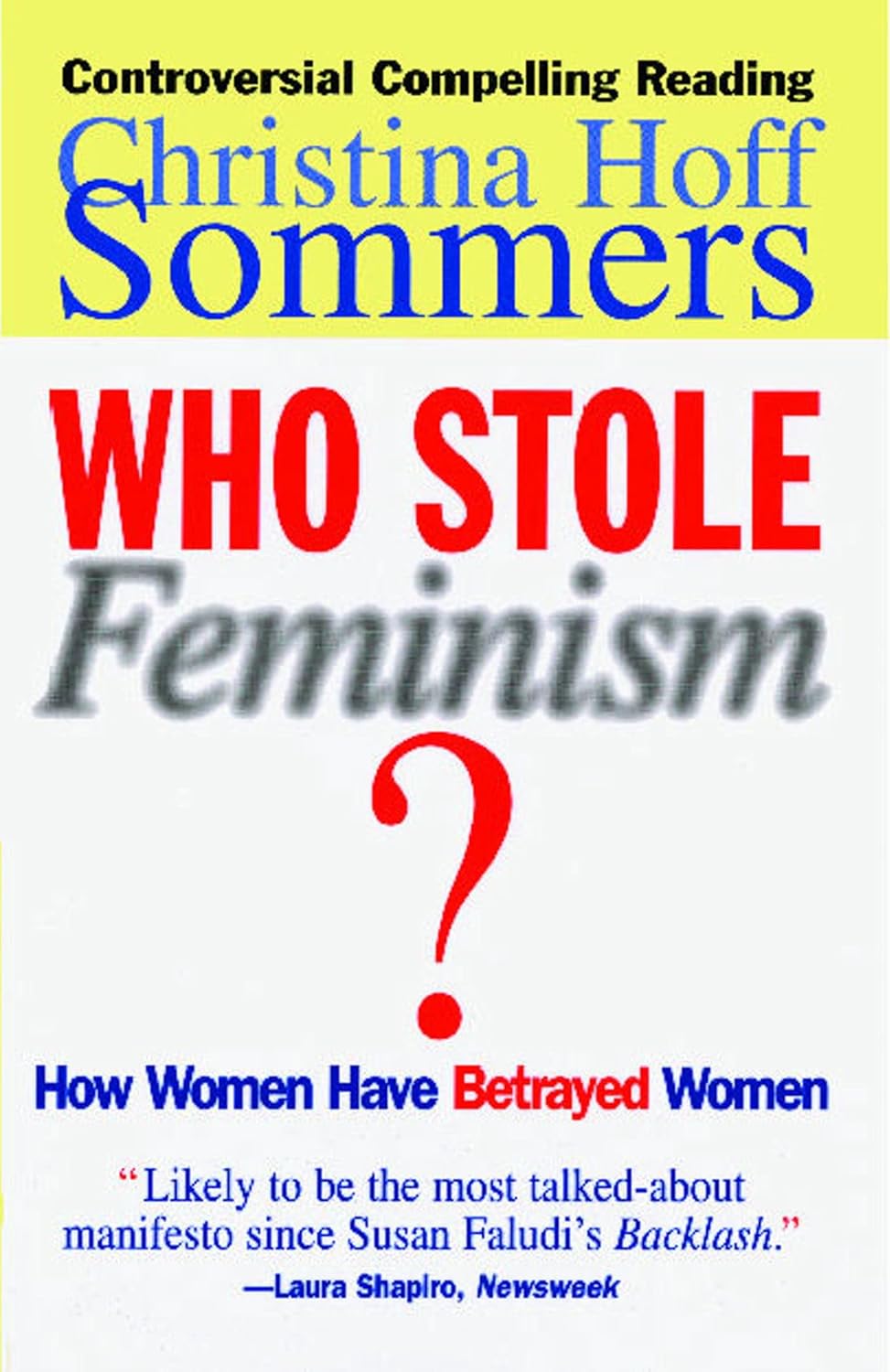
The question lingers, doesn’t it? Who *stole* feminism? It’s a provocative query, one that bites at the edges of our established narratives. It’s more than a mere accusation. It’s an indictment, a subtle accusation of betrayal rippling through the very foundation of a movement predicated on solidarity. But perhaps, that’s the point. Perhaps the very framing of the question, the inherent drama of a “theft,” reveals a deeper discomfort, a simmering anxiety about the direction feminism has taken, and more profoundly, about who gets to define its trajectory.
The book title itself, echoing in our minds, operates as a canard. We need to dissect this. Why does this notion – the idea of women betraying women – hold such tenacious grip on the collective imagination? Is it simply the human tendency to find scapegoats when faced with complex societal shifts? Or does it reflect something more fundamental: a struggle for power, for ideological dominance, within feminism itself? This fascination, this morbid curiosity, is not accidental. It is meticulously constructed, fed by our inherent susceptibility to narratives of conflict and intrigue.
One must delve into the labyrinthine corridors of feminist thought to understand the multifaceted nature of this alleged betrayal. A simplistic answer is, of course, utterly insufficient. We must dismantle the argument piece by piece. We must interrogate the underlying assumptions that fuel this narrative.
The Myth of Feminist Monolith:
The first, and perhaps most crucial, element to deconstruct is the very idea of a monolithic feminism. The notion that all women should, or even could, subscribe to a singular set of beliefs and strategies is a fallacy. Feminism, from its inception, has been a diverse and often fractious movement, encompassing a spectrum of perspectives, from liberal to radical, socialist to intersectional. This diversity is not a weakness; it is a strength, reflecting the vast and varied experiences of women across the globe. To speak of “betrayal” implies a deviation from a prescribed path, a violation of an established orthodoxy. However, such an orthodoxy simply does not exist. The internal tensions and debates that animate feminism are not signs of failure but rather evidence of its dynamism, its capacity for self-critique and evolution.
Individualism vs. Collectivism: A Fraught Dichotomy:
A recurring theme in accusations of feminist “theft” often revolves around the tension between individual achievement and collective liberation. Critics sometimes argue that certain strands of feminism – particularly those focused on individual empowerment and career advancement – have abandoned the broader struggle for social and economic justice for all women. This critique often manifests as a disdain for “lean-in feminism,” which is perceived as catering to the privileged few while ignoring the systemic barriers faced by marginalized women. The argument is that such feminism prioritizes individual success within a fundamentally unequal system, thereby perpetuating the very structures it purports to dismantle. However, this is a gross oversimplification. The pursuit of individual opportunity and the fight for collective liberation are not mutually exclusive. They are, in fact, inextricably linked. Individual success can serve as a powerful catalyst for change, providing role models and resources for those who have been historically excluded. Moreover, individual empowerment can embolden women to challenge oppressive structures and advocate for systemic reform. The key is to ensure that individual achievement is not pursued at the expense of collective solidarity, and that feminist strategies are inclusive and responsive to the needs of all women, regardless of their background or circumstances.
The Peril of Essentialism:
Another problematic aspect of the “betrayal” narrative is its tendency towards essentialism, the belief that women share a common, inherent nature or set of experiences. This essentialist view often leads to the assumption that there is a “right” way to be a woman, and that any deviation from this norm constitutes a betrayal of the feminist cause. However, such a view is not only reductive and exclusionary but also deeply harmful. It ignores the diversity of women’s identities and experiences, and it perpetuates harmful stereotypes about what it means to be a woman. Furthermore, it silences the voices of marginalized women who do not conform to dominant cultural norms. A truly inclusive feminism must reject essentialism and embrace the multiplicity of female experiences. It must recognize that there is no single “feminist agenda” and that women have the right to define their own identities and pursue their own goals without being subjected to judgment or condemnation.
The Weaponization of Victimhood:
It’s easy to fall into a trap. The narrative of “women betraying women” is often intertwined with a subtle, and sometimes not-so-subtle, invocation of victimhood. The argument is that certain women, through their actions or choices, have somehow undermined the progress of the entire movement, thereby perpetuating the oppression of all women. This weaponization of victimhood is particularly insidious. It serves to silence dissent and to create a climate of fear and conformity. It suggests that any criticism of feminist ideology is tantamount to a betrayal of the sisterhood and that any deviation from the prescribed path will be met with swift and merciless condemnation. However, a healthy movement must be open to criticism and self-reflection. It must be willing to interrogate its own assumptions and to challenge its own orthodoxies. The fear of being labeled a “traitor” or a “sellout” should not prevent women from speaking their minds and from advocating for their own beliefs. True solidarity is not about blind obedience; it is about mutual respect and understanding, even in the face of disagreement.
The Allure of Purity:
The accusation of feminist “theft” often reflects a deeper longing for purity, a desire for a movement that is untainted by compromise or contradiction. This yearning for ideological purity is understandable. It stems from a genuine desire to create a better world. However, it is also unrealistic and ultimately counterproductive. Feminism, like any social movement, is inherently messy and imperfect. It is shaped by the complex and often conflicting desires of individuals and groups. It is subject to the limitations of human understanding and the constraints of political reality. To demand absolute purity is to demand the impossible, and to set the stage for endless disappointment and disillusionment. A more pragmatic and ultimately more effective approach is to embrace the messiness of feminism, to accept that there will always be disagreements and contradictions, and to focus on building coalitions and forging alliances that can advance the cause of gender equality, even if those alliances are imperfect and temporary.
Beyond the Binary: Reframing the Conversation:
Ultimately, the question of who “stole” feminism is a false dichotomy. It is a distraction from the real issues facing women today: systemic inequality, pervasive sexism, and the ongoing struggle for reproductive rights. Instead of focusing on internal divisions and assigning blame, we should be working together to build a more just and equitable world for all women. This requires a willingness to listen to different perspectives, to challenge our own assumptions, and to embrace the complexity of the feminist project. It requires a rejection of essentialism, a celebration of diversity, and a commitment to building bridges across ideological divides. It requires a recognition that feminism is not a zero-sum game, and that the success of one woman does not necessarily come at the expense of another. It requires a shift in focus from individual achievement to collective liberation, from the pursuit of personal empowerment to the dismantling of systemic oppression. Only then can we move beyond the sterile and ultimately unproductive debate about who “stole” feminism and begin to build a movement that is truly inclusive, truly transformative, and truly capable of achieving its goals.
The real “theft,” perhaps, isn’t the hijacking of an ideology but the erosion of empathy, the silencing of dissenting voices, and the replacement of nuanced debate with simplistic accusations. The conversation is richer, deeper, and far more urgent than the reductive question allows. We need to move beyond the lure of the provocative title and engage in the hard, messy, and ultimately rewarding work of building a more just and equitable world, together.







Leave a Comment