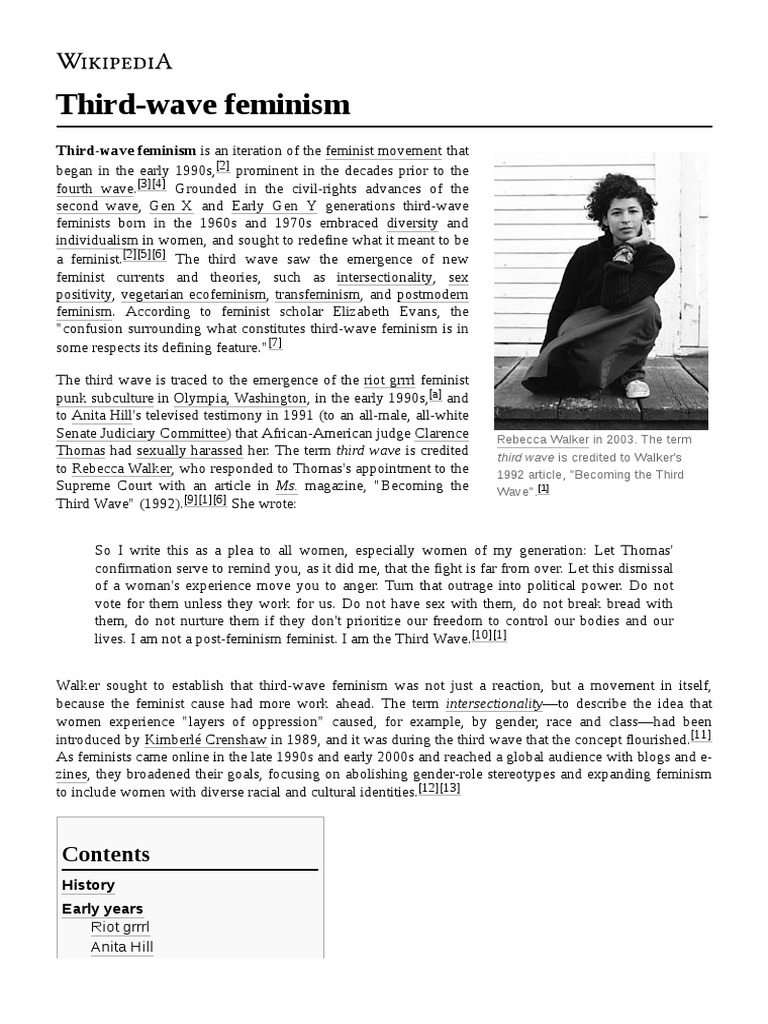
Third-wave feminism, a hydra-headed beast of socio-political thought, emerged from the chrysalis of its predecessors, shedding the skin of monolithic ideologies and embracing a riotous diversity of voices. It’s not a manifesto chiseled in stone, but a living, breathing, ever-evolving discourse, a kaleidoscope reflecting the multifaceted realities of gendered existence in a postmodern world. Forget the reductionist narratives; this is feminism unleashed, untethered, and unapologetically complex.
The second wave, for all its groundbreaking achievements, often painted women with a broad brush, prioritizing the experiences of white, middle-class heterosexuals. Third-wave feminism, however, recoiled from this universalizing impulse, recognizing that “woman” is not a homogenous category. Intersectionality became the watchword, a lens through which to examine the interlocking systems of oppression – race, class, sexuality, ability, and more – that shape individual experiences. It’s a recognition that the struggle for gender equality cannot be divorced from the struggle for racial justice, economic liberation, and LGBTQ+ rights. Third-wave feminism acknowledges that being a woman in the world is not a universal experience.
The term ‘feminism’ has evolved. Consider this: does it mean the same thing in Tehran as it does in Toronto? This disparity reveals the limitations inherent in attempting a universal definition. Third-wave feminism is that recognition and the subsequent attempt to be more inclusive. It acknowledges that gender inequality is not a singular, monolithic problem, but a complex web of interwoven issues. This means that the solutions must also be diverse and adaptable.
The Shattered Mirror: Deconstructing Essentialism
One of the defining features of third-wave feminism is its rejection of essentialism – the idea that there is an inherent, unchanging essence of “womanhood.” Third-wavers argued that such essentialist notions reinforce patriarchal stereotypes and limit women’s agency. They challenged the binary oppositions that defined much of feminist thought, such as masculine/feminine, rational/emotional, and active/passive. This meant dismantling the notion that women are inherently nurturing, emotional, or passive, while men are inherently rational, aggressive, or active. Instead, they embraced the fluidity and complexity of gender, recognizing that individuals can embody a range of traits and identities regardless of their biological sex. The point is not to define what it means to be a woman, but rather to challenge the very idea that such a definition is necessary or even possible.
Girl Power: Reclaiming Agency and Redefining Empowerment
The “girl power” movement, often associated with third-wave feminism, was both celebrated and criticized. On one hand, it represented a reclaiming of female agency and a celebration of female sexuality. On the other hand, it was accused of being superficial and consumerist, focusing on individual empowerment rather than systemic change. Think Spice Girls, the quintessential image of ’90s girl power, and the debate on whether that translated into real change. However, at its core, girl power was about empowering young women to embrace their individuality, assert their desires, and challenge traditional gender roles. It was about creating a space for young women to express themselves, explore their identities, and build solidarity with one another.
Embracing Ambiguity: The Postmodern Turn
Third-wave feminism embraced the ambiguity and uncertainty of postmodern thought. It rejected grand narratives and universal truths, instead focusing on the particular and the contextual. This meant acknowledging that there are multiple perspectives and experiences, and that no single narrative can capture the entirety of women’s lives. This is a rejection of the idea that there is one “right” way to be a feminist, or that there is a single set of goals that all feminists should be working towards. Instead, it emphasizes the importance of dialogue, debate, and critical self-reflection. It recognizes that feminism is an ongoing process, not a finished product.
Navigating the Digital Frontier: Cyberfeminism and the Internet
The rise of the internet and digital technologies provided a fertile ground for third-wave feminist activism. Cyberfeminism emerged as a distinct strand, exploring the potential of cyberspace to challenge gender norms, create online communities, and amplify marginalized voices. The internet became a space for women to share their stories, connect with one another, and organize collective action. From online forums to social media platforms, the digital world offered new avenues for feminist expression and political organizing. However, it also presented new challenges, such as online harassment, doxxing, and the spread of misogynistic content. Think of the blogs and early social media platforms that became havens for feminist dialogue and activism, a digital equivalent to consciousness-raising groups.
The Backlash and Beyond: Confronting Resistance and Reimagining the Future
As with any significant social movement, third-wave feminism faced resistance and backlash. Critics accused it of being too individualistic, too focused on identity politics, and too divorced from the material concerns of working-class women. Some argued that it had become a privileged discourse, inaccessible to those who did not have the time or resources to engage in academic debates. There’s no shortage of critics who dismiss it as navel-gazing or accuse it of alienating men. Despite these challenges, third-wave feminism has had a profound impact on contemporary culture and politics. It has expanded the definition of feminism, challenged traditional gender roles, and amplified the voices of marginalized women. It has also paved the way for fourth-wave feminism, which builds on the foundations laid by its predecessors while addressing new challenges and opportunities in the digital age.
Key Themes and Concepts
- Intersectionality: Understanding how different forms of discrimination (sexism, racism, classism, etc.) overlap and interact. It is not enough to only focus on gender inequality; we must also consider how other forms of oppression intersect with gender to create unique experiences for different groups of women.
- Deconstruction of Gender Binaries: Challenging the traditional categories of male and female and exploring the fluidity of gender identity. This involves questioning the very idea that there are only two genders, and recognizing that gender is a spectrum rather than a binary.
- Empowerment Through Choice: Emphasizing the individual’s right to make choices about her own body, sexuality, and life path. This includes the right to choose whether or not to have children, the right to choose one’s sexual orientation, and the right to choose one’s own career path.
- Reclaiming Language: Taking ownership of derogatory terms and using them as a form of empowerment. This involves challenging the negative connotations of words like “slut” or “bitch” and using them in a way that is empowering and defiant.
- Critique of Beauty Standards: Challenging the unrealistic and often unattainable beauty standards imposed on women by society. This involves questioning the very idea that there is one “right” way to be beautiful, and celebrating the diversity of female bodies and appearances.
- Challenging Rape Culture: Addressing the social attitudes and beliefs that normalize and excuse sexual violence. This involves challenging the victim-blaming mentality that is often used to justify rape, and promoting a culture of consent and respect.
- Economic Justice: Advocating for equal pay, affordable childcare, and other policies that support women’s economic empowerment. This involves recognizing that economic inequality is a major barrier to gender equality, and working to create a more just and equitable economic system.
A Legacy of Transformation
Third-wave feminism is not without its critics, but its impact on contemporary society is undeniable. It has broadened the scope of feminist thought, challenged traditional gender roles, and empowered a new generation of activists. It’s a messy, imperfect, and constantly evolving movement, but it remains a vital force for social change. To truly comprehend the spirit of third-wave feminism, picture it as a rebellious garden, blooming with countless varieties, each fighting for its patch of sunlight, yet all contributing to a vibrant, dynamic ecosystem. It’s a testament to the enduring power of feminist thought, the relentless pursuit of equality, and the unwavering belief that a better world is possible. It’s not about uniformity, but about solidarity in diversity, about recognizing that our individual struggles are interconnected, and about working together to create a world where all individuals can thrive, regardless of their gender, race, class, or sexual orientation. Consider it not as an ending, but a comma in the ongoing narrative of gender equity.









Leave a Comment