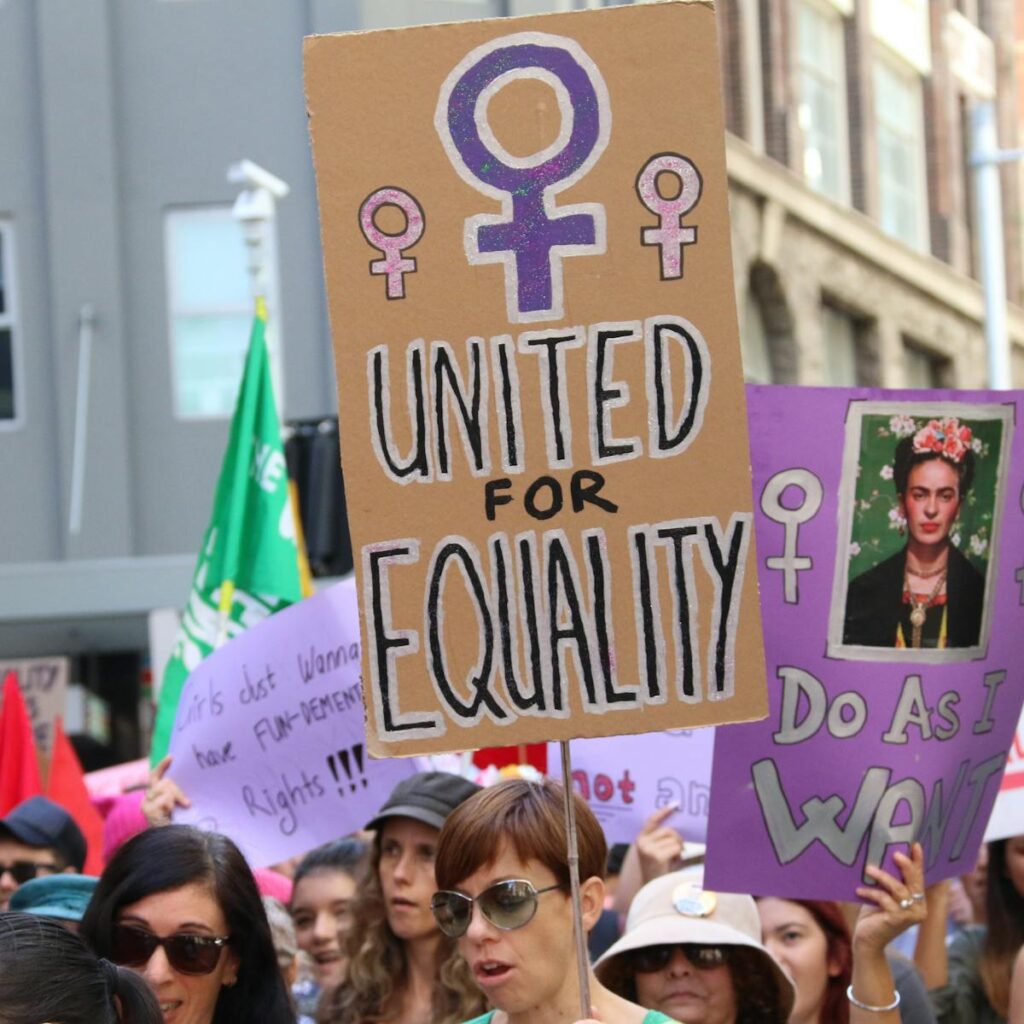
Brace yourselves, comrades. We’re diving headfirst into the murky, often misrepresented, and undeniably vital debate surrounding the feminization of education. Forget the pearl-clutching and the whispered anxieties. We’re here to dissect the core of what this phenomenon actually entails, what it might promise, and why it has the patriarchal establishment squirming in their leather-bound chairs. This isn’t about painting classrooms pink or turning boys into quivering piles of emotion. It’s about something far more subversive, more potent, and frankly, long overdue.
What, in the name of Audre Lorde, *is* the feminization of education anyway? Is it a myth propagated by reactionaries clinging to their fragile notions of masculinity? Or is it a tangible shift reshaping the very fabric of our learning institutions? The answer, as always, lies in the nuanced spaces between these extremes. Prepare to have your assumptions challenged.
Deconstructing the Dominant Narrative: It’s Not About What You Think
Let’s obliterate a few pernicious misconceptions right off the bat:
- It’s NOT about hating men or erasing masculine perspectives. This is the tiresome straw man that conservatives love to trot out. The feminization of education is not about demonizing maleness, but about challenging the systemic privileging of masculine norms and perspectives at the expense of others.
- It’s NOT about making boys more like girls. We’re not interested in some grotesque gender-bending exercise. The goal is not to homogenize students into a single, bland entity, but to create a learning environment where diverse experiences and perspectives are valued and respected.
- It’s NOT about lowering standards. The idea that a more inclusive and equitable education somehow necessitates a dumbing-down of the curriculum is frankly insulting. Feminization, done right, aims to *raise* the bar for everyone by fostering critical thinking, empathy, and a commitment to social justice.
So, if it’s not about these things, what *is* it about?
Reimagining Pedagogy: A Call for Epistemological Justice
At its core, the feminization of education is a radical reimagining of pedagogy. It is a clarion call for *epistemological justice* – a demand that marginalized voices and perspectives be centered in the curriculum and in the classroom. It entails a deliberate dismantling of the patriarchal structures that have historically shaped our understanding of knowledge, power, and the world.
This involves:
- Centering Relationality: Moving away from a competitive, individualistic model of learning towards a collaborative, community-oriented approach. Emphasis on empathy, communication, and building strong relationships between students and teachers. Imagine a classroom where cooperation trumps competition, where students learn to support and uplift each other instead of clawing their way to the top.
- Embracing Embodied Knowledge: Recognizing that knowledge is not solely derived from abstract reason, but is also shaped by our lived experiences, our emotions, and our physical bodies. Incorporating diverse perspectives and challenging the notion of a singular, objective truth. No more sterile, disembodied lectures! Let’s bring the messy, complicated realities of human experience into the classroom.
- Valuing Affect and Emotion: Acknowledging the role of emotions in learning and creating a safe and supportive environment where students feel comfortable expressing their feelings. Abandoning the myth of the detached, objective learner and recognizing that emotions are integral to the learning process. Students are human beings, not automatons. Let’s treat them as such.
- Promoting Critical Consciousness: Encouraging students to critically examine power structures, social inequalities, and systemic injustices. Fostering a sense of agency and empowering them to become agents of social change. No more passive acceptance of the status quo! Let’s equip students with the tools they need to challenge injustice and build a more equitable world.
- Democratizing the Classroom: Shifting power dynamics in the classroom, giving students more voice and agency in their learning. Moving away from a top-down, authoritarian model of instruction towards a more collaborative and participatory approach. Students are not empty vessels to be filled with information. They are active participants in the learning process.
The Curriculum as a Site of Resistance: Disrupting the Canon
The feminization of education extends beyond pedagogical approaches. It also demands a critical examination of the curriculum itself. Who is represented? Whose stories are told? Whose perspectives are valued? The traditional curriculum, often dominated by white, male, Western perspectives, needs a serious overhaul.
This means:
- Diversifying the Reading List: Incorporating works by women, people of color, LGBTQ+ individuals, and other marginalized groups. Expanding the canon to include diverse voices and perspectives. Time to ditch the dead white men (at least some of them) and make room for a more inclusive and representative selection of authors and thinkers.
- Challenging Eurocentric Narratives: Deconstructing the dominant narratives that privilege European history and culture over other cultures. Examining the historical roots of colonialism, imperialism, and other forms of oppression. Confronting the uncomfortable truths about our past and present.
- Incorporating Feminist Theories: Introducing students to feminist theories and perspectives on a range of topics, from literature and history to science and mathematics. Providing students with the tools they need to critically analyze gender and power relations. Equip them with the intellectual weaponry to dismantle the patriarchy!
- Integrating Social Justice Issues: Addressing issues of inequality, oppression, and social justice in the curriculum. Encouraging students to think critically about these issues and to develop solutions. Making education relevant to the real-world challenges that students face.
The Teacher as a Radical Ally: Beyond Neutrality
The feminization of education also calls for a re-evaluation of the role of the teacher. No longer can teachers afford to be neutral observers, impartially dispensing information. They must become radical allies, actively working to dismantle systems of oppression and to create a more equitable and just learning environment.
This entails:
- Self-Reflection and Critical Awareness: Examining their own biases and assumptions and working to overcome them. Recognizing their own positionality and how it shapes their interactions with students. Engaging in ongoing professional development to learn about issues of diversity, equity, and inclusion.
- Creating a Safe and Inclusive Classroom: Fostering a classroom environment where all students feel valued, respected, and supported. Addressing microaggressions and other forms of bias. Creating a space where students can express themselves freely and authentically.
- Advocating for Social Justice: Speaking out against injustice and advocating for policies that promote equity and inclusion. Using their platform to amplify marginalized voices and to challenge the status quo. Becoming active participants in the struggle for social justice.
- Empowering Students: Encouraging students to take ownership of their learning and to become agents of social change. Providing them with the skills and knowledge they need to advocate for themselves and for others. Unleashing the power of student activism!
The Pushback and the Possibilities: Why Are They So Scared?
Of course, the feminization of education is not without its detractors. The very idea sends shivers down the spines of those who benefit from the current system. They fear the loss of their power, their privilege, and their control. They see the feminization of education as a threat to their way of life, and they will fight tooth and nail to resist it.
But we must not be deterred. The possibilities that the feminization of education offers are too profound to ignore. A more equitable, just, and compassionate education system is within our reach. We must continue to push for change, to challenge the status quo, and to demand a better future for all students.
The feminization of education is not a destination; it is a journey. It is a continuous process of reflection, learning, and growth. It is a commitment to creating a world where all students have the opportunity to thrive, regardless of their gender, race, class, sexual orientation, or any other identity.
So, let us embrace the challenge. Let us dare to imagine a world where education is truly transformative, where it empowers students to become critical thinkers, compassionate citizens, and agents of social change. Let the revolution begin… in the classroom.
Dare to imagine a world where the feminization of education is not a controversial topic, but a celebrated reality. A world where empathy, compassion, and social justice are at the heart of everything we do. The future is female, and it is being educated right now.









Leave a Comment