
Modern feminism. The very term crackles with potential energy, doesn’t it? But what is it, really? A monolithic bloc of furious women demanding the impossible? Or a complex, multifaceted tapestry woven from the threads of diverse experiences, aspirations, and grievances? Let’s peel back the layers and interrogate this ever-evolving force.
Forget the caricatures you’ve seen plastered across social media. Ditch the reductive sound bites that masquerade as nuanced analysis. This isn’t your grandmother’s consciousness-raising circle. This is something far more vital, far more necessary. This is about dismantling the insidious structures of patriarchal oppression that continue to strangle the life out of individuals and societies alike.
I. The Ghost of Feminisms Past: A Lineage of Rebellion
We can’t understand modern feminism without acknowledging its genealogy. The waves of feminist thought that crashed upon the shores of history, each leaving its indelible mark on the landscape of gender politics.
A. First Wave: Suffrage and the Seeds of Change.
Imagine a world where women were considered legal minors, denied the right to own property, control their earnings, or, crucially, vote. The first wave feminists, primarily white, middle-class women, fought tooth and nail for enfranchisement. They understood that political power was the key to unlocking other freedoms. Think Susan B. Anthony, Elizabeth Cady Stanton, women who challenged the deeply entrenched notion of female inferiority. A victory, yes, but a victory that often excluded women of color, highlighting the inherent biases within the movement itself. Suffrage was a significant milestone, yet it left many marginalized voices unheard.
B. Second Wave: The Personal is Political.
Emerging in the 1960s and 70s, the second wave broadened the scope of feminist inquiry. It challenged the cultural norms that relegated women to the domestic sphere. Think Betty Friedan’s “The Feminine Mystique,” exposing the discontent simmering beneath the surface of suburban housewife-dom. Issues like reproductive rights, equal pay, and domestic violence took center stage. This era also saw the rise of radical feminism, which argued that patriarchy was a system of power that permeated every aspect of society, from the family unit to the workplace. A necessary, albeit sometimes essentialist, critique that laid bare the systemic nature of gender inequality. The critique however, ignored intersecting identities such as race and sexuality, leading to divisions within the movement.
C. Third Wave: Embracing Intersectionality and Complexity.
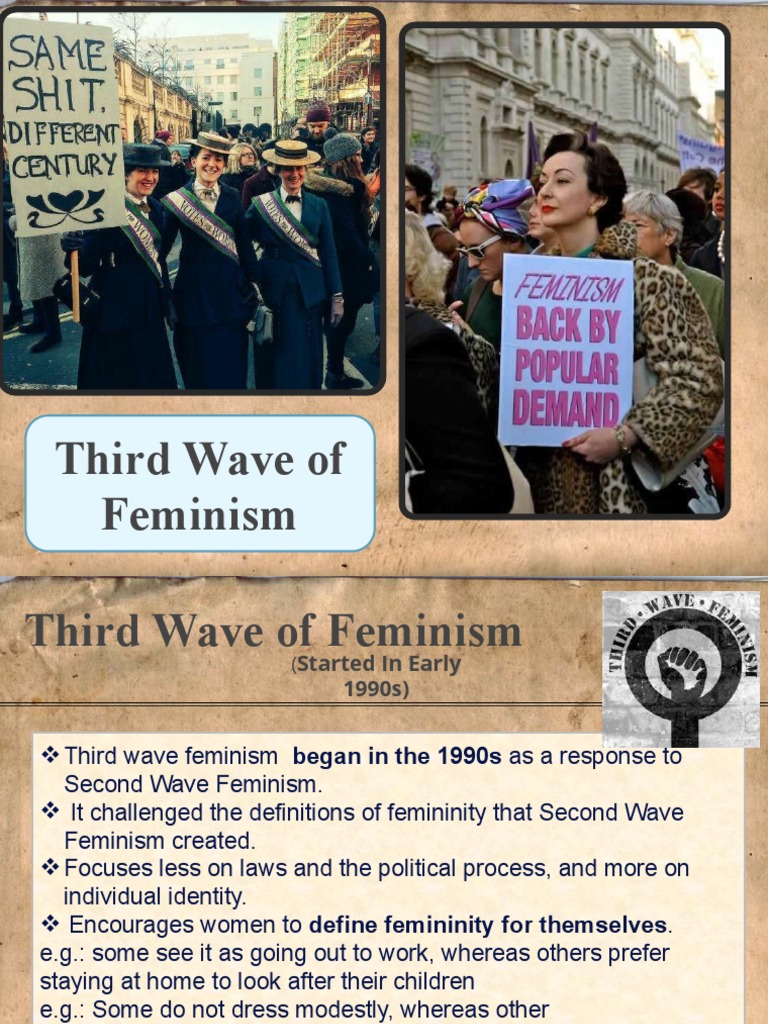
The third wave, beginning in the 1990s, recognized the limitations of previous iterations. It embraced intersectionality, acknowledging that gender intersects with race, class, sexuality, and other identities to create unique experiences of oppression. Think Kimberlé Crenshaw’s groundbreaking work on intersectionality, providing a framework for understanding how multiple forms of discrimination overlap and compound. This wave also challenged essentialist notions of womanhood, embracing fluidity and diversity. Riot grrrl, zines, and DIY culture became powerful tools for feminist expression and activism. This wave critiqued the monolithic idea of womanhood but struggled at times to solidify a core, unified agenda.
II. Modern Feminism: A Kaleidoscope of Voices
So, where does that leave us today? What defines modern feminism in the 21st century? The answer, predictably, is complex and multifaceted.
A. Intersectionality as a Guiding Principle.
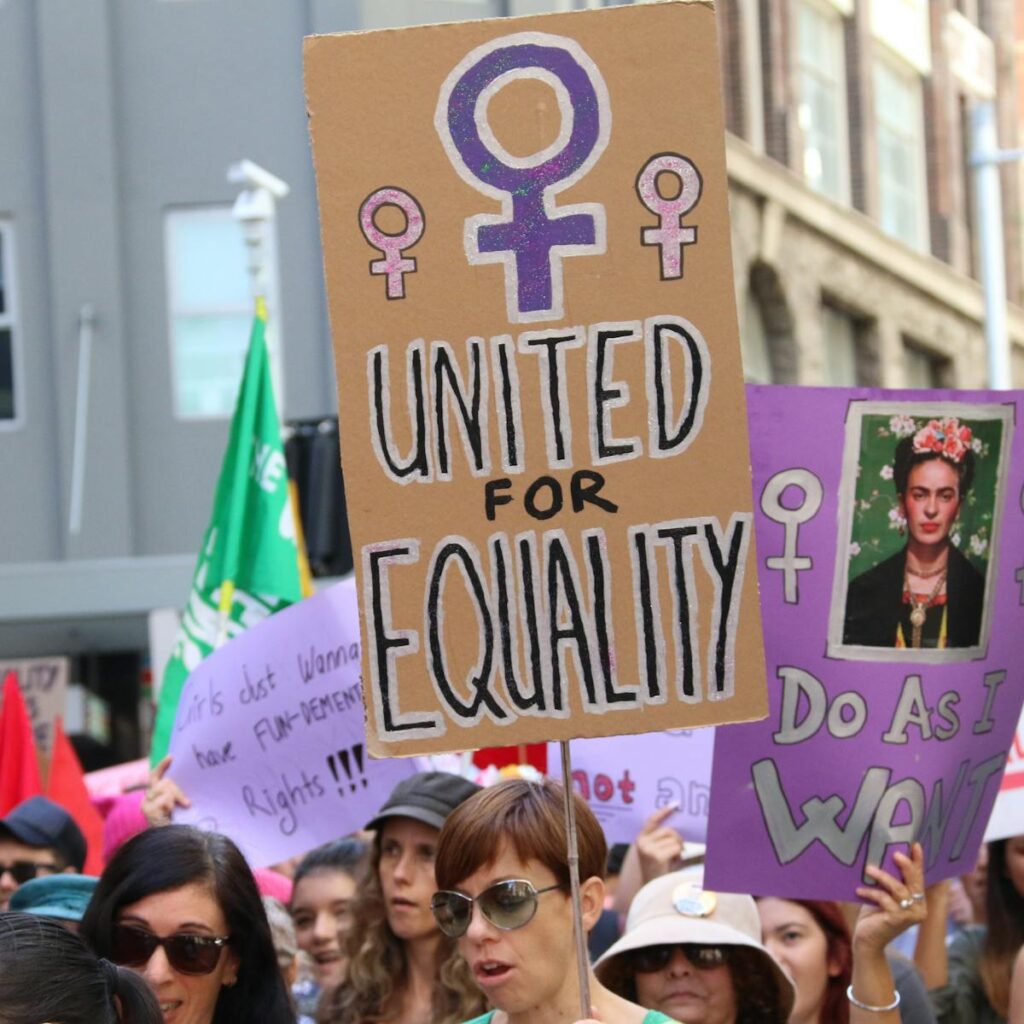
Modern feminism, at its best, is deeply rooted in intersectional analysis. This means recognizing that gender inequality is inextricably linked to other forms of oppression, such as racism, classism, homophobia, and ableism. You cannot advocate for women’s rights without simultaneously fighting for racial justice, economic equality, and LGBTQ+ rights. The struggles are intertwined, the oppressions interconnected. Ignoring this fundamental truth is not only ethically reprehensible but also strategically self-defeating.
B. Challenging Systems of Power, Not Just Individual Behaviors.
While individual acts of sexism are undeniably harmful, modern feminism focuses on dismantling the systemic structures that perpetuate inequality. This means challenging discriminatory laws, policies, and institutions. It means advocating for equal pay, affordable childcare, paid family leave, and comprehensive reproductive healthcare. It means reforming the criminal justice system, addressing the disproportionate impact of policing and incarceration on women of color. It’s about changing the rules of the game, not just calling out individual players.
C. Amplifying Marginalized Voices.
Modern feminism is not about a single voice or perspective. It’s about creating space for diverse voices, particularly those that have been historically marginalized. This means actively listening to women of color, LGBTQ+ individuals, disabled women, and women from marginalized communities. It means amplifying their stories, centering their experiences, and supporting their leadership. It’s not about speaking for them, but about providing them with the platform and resources to speak for themselves.
D. Embracing Technology and Digital Activism.
The internet and social media have revolutionized feminist activism. They provide unprecedented opportunities for connection, mobilization, and education. Online platforms allow activists to bypass traditional media gatekeepers and directly engage with audiences. #MeToo, #TimesUp, and other social media campaigns have demonstrated the power of collective action to challenge sexual harassment and assault. However, this digital landscape also presents challenges, including online harassment, doxing, and the spread of misinformation. Navigating these complexities is crucial for effective digital activism.
III. Contentious Debates and Internal Tensions
Feminism is not a homogenous ideology. It is a vibrant and contested space, characterized by ongoing debates and internal tensions. Ignoring these divisions would be disingenuous. It’s within these debates that growth and evolution occur.
A. The TERF Wars: Trans-Exclusionary Radical Feminism.
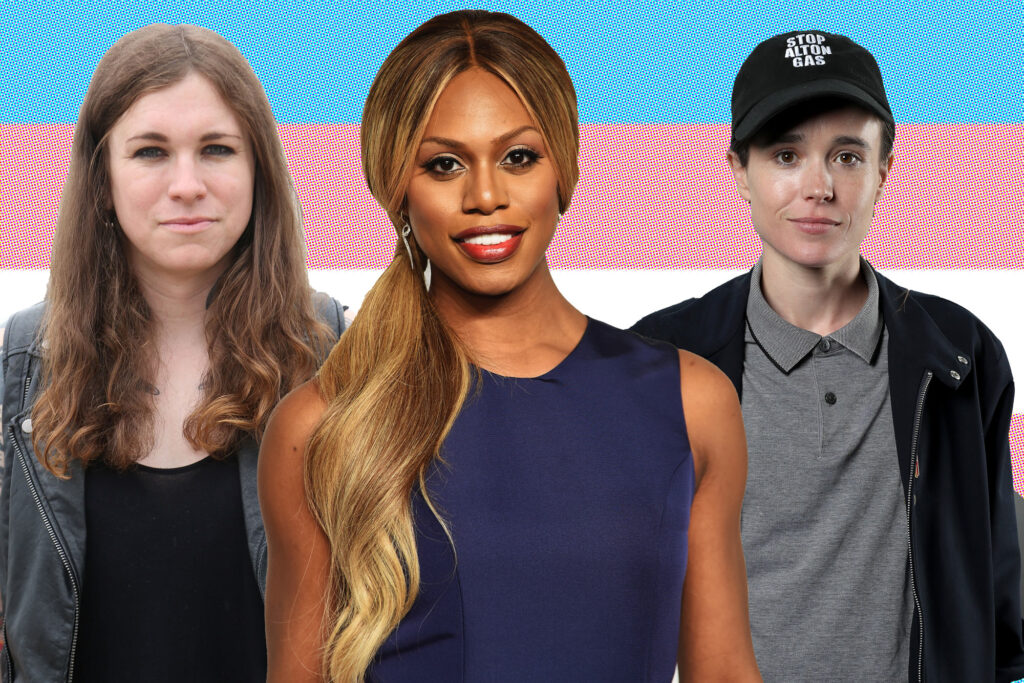
One of the most contentious debates within feminism concerns the inclusion of transgender women. Trans-exclusionary radical feminists (TERFs) argue that trans women are not “real” women and should be excluded from women’s spaces and activism. This position is vehemently opposed by the vast majority of feminists, who view it as transphobic and harmful. The belief that transgender women are women is a fundamental tenet of modern feminist thought. Transgender rights are human rights, and excluding trans women from the feminist movement undermines its core values of equality and inclusivity.
B. Sex Work and Empowerment: Agency vs. Exploitation.
The debate surrounding sex work is another source of tension within feminism. Some feminists argue that sex work is inherently exploitative and should be abolished. Others argue that sex work can be an empowering choice, providing women with autonomy and financial independence. This perspective emphasizes the importance of consent, agency, and safe working conditions. The key lies in distinguishing between forced prostitution and voluntary sex work. Anti-trafficking efforts should be prioritized, while simultaneously advocating for the decriminalization of sex work and the rights of sex workers.
C. The Question of “Choice Feminism”: Individualism vs. Collective Action.
Choice feminism posits that any choice a woman makes is inherently feminist, as long as she makes it freely. This perspective has been criticized for prioritizing individual autonomy over collective action. Critics argue that it can be used to justify choices that reinforce patriarchal norms, such as cosmetic surgery or staying at home to raise children, without challenging the underlying inequalities that shape those choices. Modern feminism acknowledges the importance of individual agency while also recognizing the need for collective action to dismantle systemic oppression.
IV. The Future of Feminism: A Call to Action
The future of feminism is unwritten. It is being shaped by the activists, scholars, and everyday individuals who are working to create a more just and equitable world. What will it look like? It hinges on our actions, our commitments, our willingness to challenge the status quo.
A. Embracing Global Solidarity.
Feminism must be a global movement, recognizing that women around the world face diverse challenges and experiences. This means supporting feminist activists in other countries, advocating for international human rights, and challenging neo-colonial power structures. It means acknowledging that Western feminism is not the only form of feminism and that we must learn from and amplify the voices of women from the Global South. A global sisterhood (and brotherhood) dedicated to dismantling oppression across borders.
B. Engaging Men as Allies.
Feminism is not just a women’s issue. It is a human issue. Men have a crucial role to play in dismantling patriarchy and creating a more equitable society. This means challenging toxic masculinity, supporting women’s leadership, and actively participating in feminist activism. Men must be willing to listen, learn, and unlearn the harmful attitudes and behaviors that perpetuate gender inequality. Allyship is not passive; it requires active engagement and a commitment to challenging male privilege.
C. Cultivating Critical Consciousness.
The most powerful tool we have is our ability to think critically and question the world around us. Feminism is not a dogma; it is a framework for understanding and challenging power structures. We must constantly interrogate our own biases, challenge our assumptions, and remain open to new perspectives. Education is key to cultivating critical consciousness and empowering individuals to become agents of change.
Modern feminism is not a destination. It’s a journey. A messy, complicated, and often frustrating journey. But it’s a journey worth taking. Because the alternative is a world where half the population is denied their full potential, where injustice reigns supreme, and where the promise of a better future remains forever out of reach. And frankly, that’s a world none of us should be willing to tolerate.






Leave a Comment