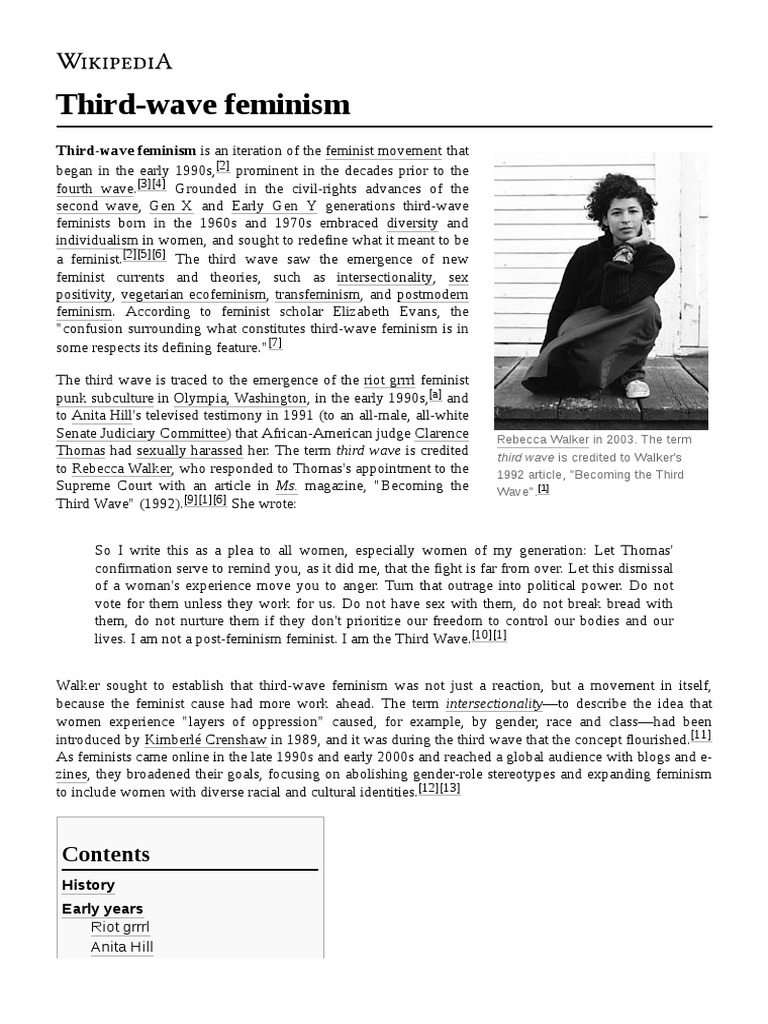
Ah, third wave feminism. The very mention conjures images of riot grrrls, unapologetic sexuality, and a defiant rejection of… well, pretty much everything. But what *is* it, really? Beyond the safety-pinned aesthetics and the performative outrage, lies a complex and often misunderstood chapter in the ongoing saga of gender equality. Why does this particular wave hold such sway? Why does it elicit both fervent adoration and vitriolic disdain? Perhaps it’s the audacity, the sheer chutzpah of a generation refusing to be boxed in. Or maybe it’s the uncomfortable truths it forces us to confront about power, privilege, and the ever-elusive notion of “womanhood.” Let’s dive in, shall we? Prepare for a gauntlet of introspection, because understanding third-wave feminism demands that we interrogate not just its tenets, but our own deeply held assumptions.
First, let’s dismantle the monolithic myth of feminism itself. Feminism isn’t a singular entity with a universally agreed-upon doctrine. It’s a kaleidoscope of perspectives, a cacophony of voices, all united by the fundamental belief in gender equality but diverging wildly on the *how*. Each wave represents a distinct historical context, a unique set of challenges, and a fresh articulation of feminist ideals. To understand the third wave, we must first acknowledge the legacy it inherited.
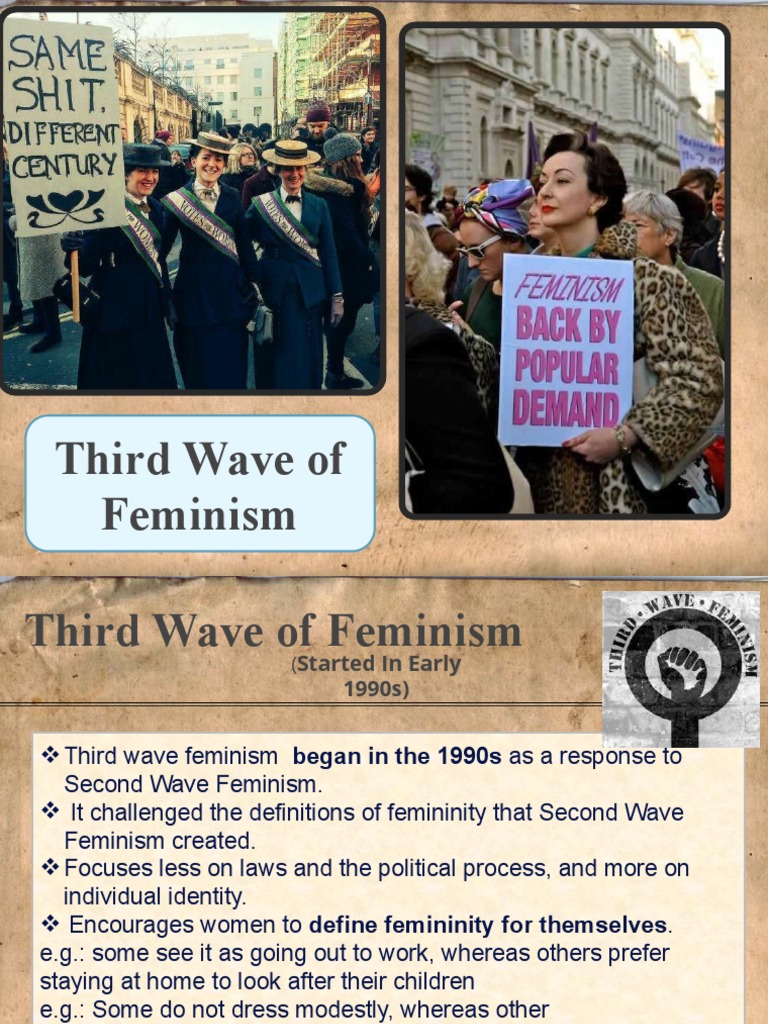
The first wave, primarily concerned with suffrage, focused on achieving basic political rights for women. They fought tooth and nail, endured imprisonment and ridicule, for the right to vote, to own property, and to be recognized as full citizens. The second wave, emerging in the 1960s and 70s, broadened the scope, tackling issues like reproductive rights, workplace discrimination, and the pervasive patriarchal structures embedded within society. They challenged the traditional roles assigned to women, advocating for equal pay, access to education, and freedom from domestic violence. But both these waves, while undeniably transformative, were often criticized for prioritizing the experiences of white, middle-class women. This is where the third wave enters the arena, with a battle cry of intersectionality.
Intersectionality. The linchpin of third-wave thought. Coined by Kimberlé Crenshaw, it acknowledges that gender isn’t experienced in a vacuum. It’s inextricably intertwined with race, class, sexuality, ability, and a myriad of other social categories. A Black woman’s experience of sexism, for instance, is fundamentally different from that of a white woman, shaped by the overlapping oppressions of racism and sexism. Third-wave feminists recognized this, dismantling the idea of a universal “woman” and embracing the multiplicity of female identities. This recognition led to a focus on the voices and experiences of marginalized women, ensuring that the feminist movement was truly inclusive.
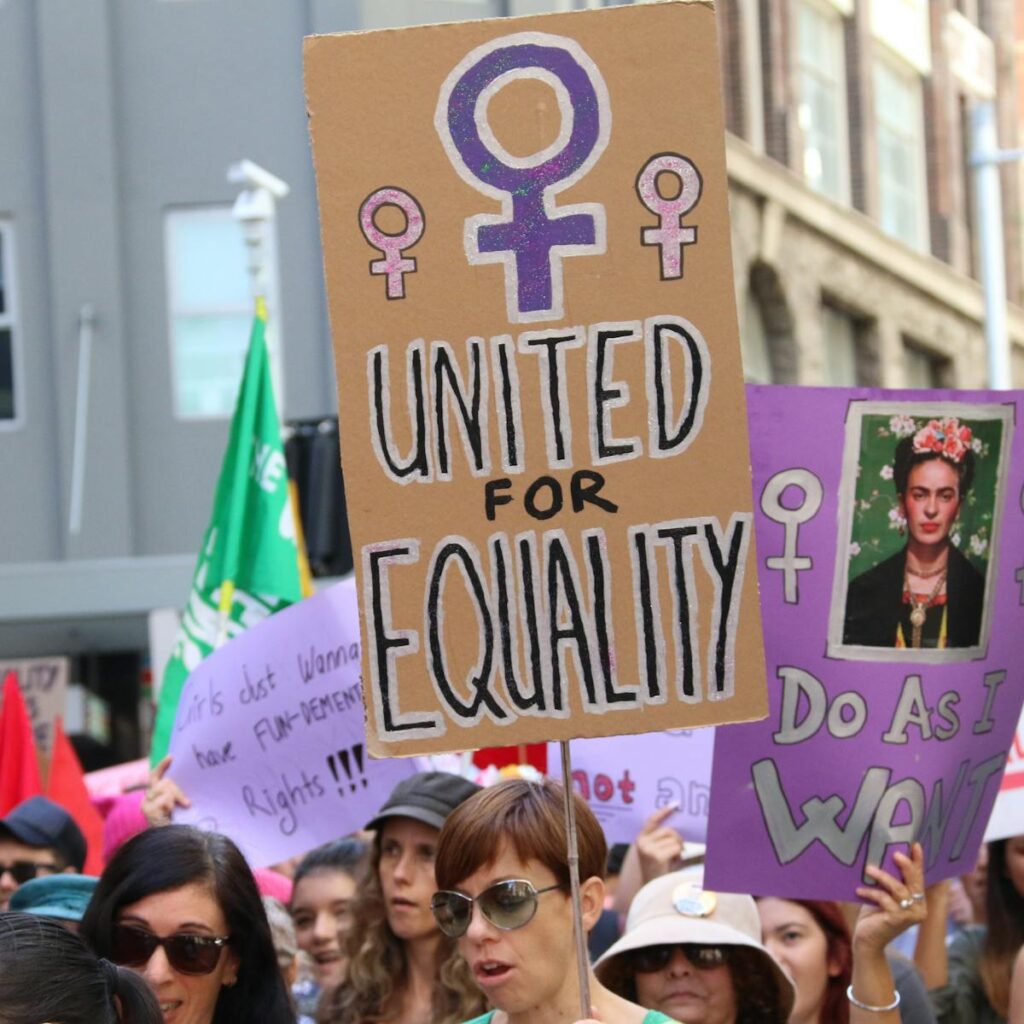
One of the most distinctive aspects of third-wave feminism is its embrace of individuality and self-expression. Unlike previous waves that often emphasized solidarity and collective action, the third wave celebrated personal agency. Women were encouraged to define feminism on their own terms, to reject prescriptive notions of what a “good” feminist should be. This manifested in a myriad of ways, from embracing traditionally “feminine” aesthetics while simultaneously challenging patriarchal norms, to reclaiming derogatory terms like “slut” and “bitch” as badges of honor. This emphasis on individual autonomy, however, has also been a source of criticism, with some arguing that it diluted the movement’s focus and led to a fragmentation of feminist goals.
Another defining characteristic of the third wave is its engagement with popular culture and media. Riot grrrl bands, zines, and independent films became powerful tools for disseminating feminist ideas and challenging mainstream representations of women. These platforms provided space for women to share their stories, express their anger, and create alternative narratives that challenged dominant ideologies. The internet, in its nascent stages, also played a crucial role, facilitating communication and collaboration among feminists across geographical boundaries.
The third wave also witnessed a renewed focus on issues of sexuality and reproductive rights. While second-wave feminists had fought for access to contraception and abortion, third-wave feminists sought to expand the conversation to include issues like sexual pleasure, consent, and the normalization of diverse sexual orientations. They challenged the slut-shaming culture, advocating for sex-positivity and the right for women to own their sexuality without judgment or fear of violence. This emphasis on sexual liberation, however, was not without its critics, with some arguing that it reinforced harmful stereotypes about women and contributed to the objectification of female bodies.
Now, let’s delve into the criticism that often shadows third-wave feminism. One of the most common criticisms is its perceived lack of cohesion and focus. Critics argue that the emphasis on individual identity and self-expression led to a fragmentation of the movement, making it difficult to identify clear goals and strategies. Some argue that the focus on micro-level activism, such as challenging sexist language or promoting body positivity, distracted from more systemic issues like economic inequality and political representation.
Another critique centers on the third wave’s engagement with consumer culture. Critics argue that the embrace of individual empowerment often translated into a celebration of consumerism, with feminist ideals being co-opted by corporations to sell products. This phenomenon, often referred to as “commodity feminism,” raises questions about the extent to which feminist values can be reconciled with capitalist imperatives. Is it possible to challenge patriarchal structures while simultaneously participating in a system that perpetuates inequality?
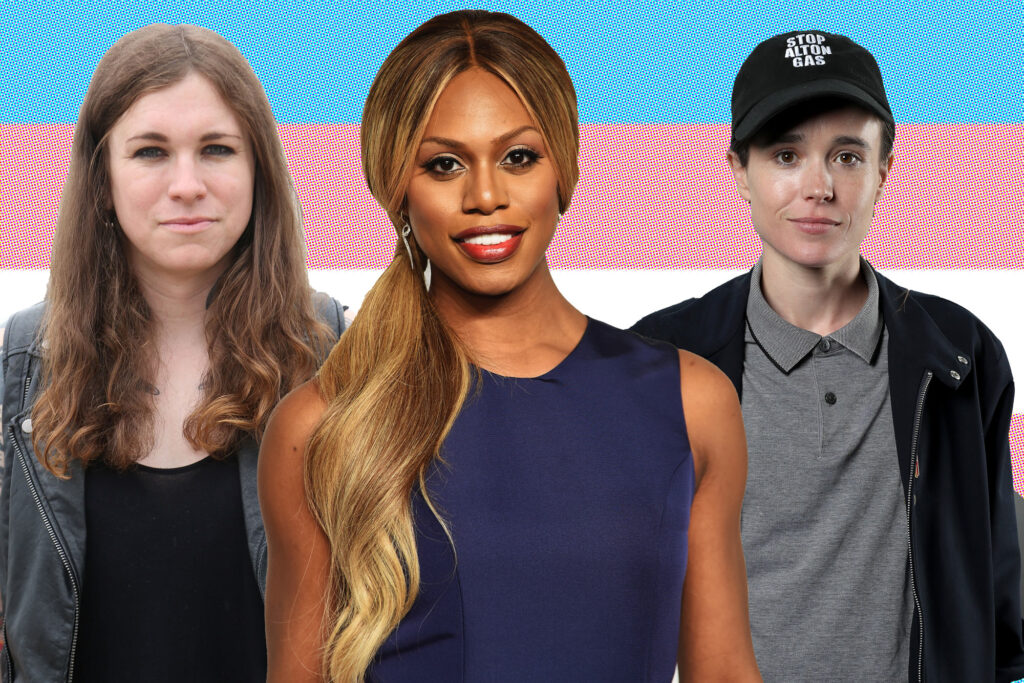
Despite these criticisms, the impact of third-wave feminism is undeniable. It broadened the scope of feminist discourse, challenged traditional power structures, and empowered a generation of women to embrace their individuality and demand equality. It paved the way for the fourth wave, which is characterized by its reliance on digital platforms and its focus on issues like online harassment, transgender rights, and the intersection of environmentalism and feminism. The legacy of the third wave is a complex and multifaceted one, but it remains a crucial chapter in the ongoing struggle for gender equality.
So, what *is* third-wave feminism? It’s a rejection of singular narratives, a celebration of diversity, a demand for intersectional justice, and an unwavering commitment to dismantling patriarchal structures. It’s messy, it’s complicated, and it’s constantly evolving. It is, in its own way, a mirror reflecting the multifaceted reality of womanhood in the late 20th and early 21st centuries. Perhaps the fascination stems from this very complexity, from the uncomfortable recognition that the fight for equality is far from over, and that the path forward is anything but clear. The journey continues, fueled by the audacity, the chutzpah, and the unwavering determination of those who refuse to be silenced.
Consider this: third-wave feminism, with its emphasis on individual agency, provided fertile ground for what some might call the “influencerification” of feminist ideals. Social media platforms became stages where personal narratives of empowerment, often intertwined with consumerism, flourished. This raises a provocative question: did the focus on individual empowerment unintentionally create a system where feminism became a personal brand, potentially overshadowing the collective action needed to address systemic inequalities? This is a question worth grappling with, as we navigate the complexities of contemporary feminism.







Leave a Comment