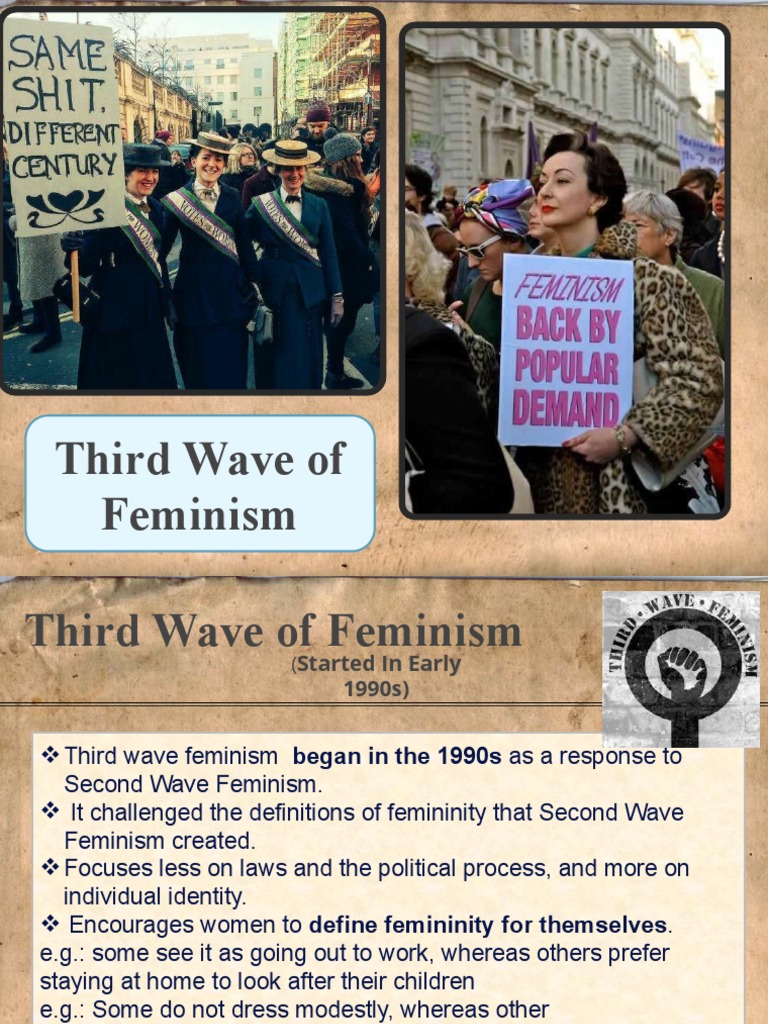
Let’s dissect the Hydra that is Third-Wave Feminism. No polite introductions, no tiptoeing around sensitivities. We’re here to grapple with a movement defined as much by what it isn’t as by what it is. Forget the saccharine narratives peddled in introductory women’s studies courses. This is about power, struggle, and the perpetually unfinished business of liberation. Third-wave feminism, emerging in the early 1990s, inherited the mantle of its predecessors but swiftly rejected their perceived homogeny. It was a rebellion against the rebellion, a critical self-assessment of the feminist project itself.
The core tenet of this wave? Intersectionality. A concept, not a mere buzzword, forged by Kimberlé Crenshaw, it acknowledges that gender is not a solitary axis of oppression. Instead, it intersects with race, class, sexuality, ability, and a myriad of other identities, creating unique and often compounded experiences of marginalization. A wealthy white woman experiences sexism differently than a working-class Black woman. Denying this is not only intellectually dishonest, it’s politically bankrupt. It’s an act of erasure that perpetuates the very power structures it claims to dismantle.
Therefore, expect content that fiercely challenges monolithic narratives. Expect critiques of mainstream feminism’s historical blind spots. Expect to be confronted with the uncomfortable realities of privilege within feminist spaces. This is not a comfortable read; it’s a necessary reckoning.
Deconstructing the “Universal Woman”: Beyond Essentialism
One of the primary targets of third-wave critique was the essentialist notion of a “universal woman.” Second-wave feminism, while groundbreaking, often inadvertently centered the experiences of white, middle-class, heterosexual women, presenting them as representative of all womanhood. Third-wavers vehemently contested this, arguing that it not only marginalized women of color, queer women, disabled women, and women from other marginalized groups, but also actively reinforced existing hierarchies. The notion of a singular female experience is not only limiting but fundamentally untrue. It is a dangerous oversimplification that ignores the rich tapestry of human existence.
Content addressing this will likely feature:
- Testimonials and narratives: First-person accounts from women whose voices have historically been silenced or marginalized within feminist discourse.
- Critical analyses of media representation: Examining how mainstream media perpetuates stereotypical and exclusionary portrayals of women.
- Historical revisionism: Re-evaluating historical feminist movements to uncover the contributions and experiences of women who were previously excluded from the narrative.
- Scholarly articles: Deep dives into academic research that explores the complexities of intersectionality and challenges essentialist assumptions.
Consider the example of beauty standards. While second-wave feminists challenged the objectification of women’s bodies, third-wavers expanded this critique to encompass the specific ways in which beauty standards are racialized and classed. The pressure to conform to Eurocentric beauty ideals, for instance, places a disproportionate burden on women of color, forcing them to navigate a system that inherently privileges whiteness. The analysis extends to exploring how capitalist forces commodify and exploit women’s insecurities, profiting from their relentless pursuit of an unattainable ideal.
Embracing Complexity: Rejecting Binary Oppositions
Third-wave feminism also dismantles the rigid binary oppositions that often characterized previous feminist thought. Good girl/bad girl. Victim/empowered. Oppressed/oppressor. Such simplistic categorizations fail to capture the nuances of lived experience. Instead, third-wavers embrace ambiguity and complexity, acknowledging that women can be both powerful and vulnerable, both complicit in and resistant to patriarchal structures. The world is not black and white. It’s a swirling vortex of gray areas and contradictory impulses. We need to accept this reality if we hope to engage with truth.
Expect content that:
- Explores the concept of agency: Examining how women exercise agency within constraints and negotiate their identities in complex social contexts.
- Challenges the victim/survivor binary: Recognizing the strength and resilience of women who have experienced trauma without reducing them to their victimhood.
- Analyzes the intersections of power and vulnerability: Exploring how women can simultaneously hold positions of power and experience vulnerability due to their gender or other identities.
- Critiques the “girlboss” narrative: Deconstructing the individualistic and capitalist-driven approach to female empowerment that often ignores systemic inequalities.
Think about the debates surrounding sex work. Some feminists argue that sex work is inherently exploitative and incompatible with feminist values. Others contend that it can be a form of agency and economic empowerment for women, particularly those from marginalized communities. Third-wave feminism encourages a more nuanced discussion, acknowledging the diverse experiences of sex workers and the complex power dynamics at play. It calls for a dismantling of the stigma and discrimination faced by sex workers, advocating for their rights and safety.
Reclaiming Language and Embracing Subversion: The Power of “Girl”
Another defining characteristic of third-wave feminism is its playful and subversive approach to language and culture. Terms like “girl,” often used pejoratively to demean women, are reclaimed and repurposed as symbols of empowerment. This is not about naivete or childishness. It is about subverting expectations and challenging the patriarchal definitions of femininity. It’s about taking ownership of the language used to oppress and transforming it into a tool of resistance.
Content will likely include:
- Analyses of popular culture: Examining how music, film, television, and other forms of popular culture reflect and shape feminist ideas.
- Discussions of body positivity and self-love: Challenging unrealistic beauty standards and promoting acceptance and celebration of diverse bodies.
- Explorations of sexuality and pleasure: Promoting sex-positivity and challenging restrictive notions of female sexuality.
- Artistic expressions: Showcasing feminist art, music, and literature that challenge patriarchal norms and celebrate female creativity.
Consider the rise of Riot Grrrl, a subcultural movement that emerged in the early 1990s, blending punk rock, feminism, and DIY ethics. Riot Grrrl bands used music as a platform to address issues such as sexual assault, domestic violence, and sexism in the music industry. Their raw, unapologetic energy and confrontational lyrics inspired a generation of young women to speak out and challenge the status quo. They created zines, organized meetings, and built networks of support, fostering a sense of community and empowerment. That’s the kind of transformative power we aim to wield.
Beyond the Personal is Political: Reframing Activism for a Digital Age
Third-wave feminism has also embraced new forms of activism, leveraging the power of the internet and social media to connect with wider audiences and mobilize support for feminist causes. Online platforms have become crucial spaces for sharing information, organizing campaigns, and amplifying marginalized voices. Hashtag activism, online petitions, and social media challenges have become powerful tools for raising awareness and demanding social change. They can be more effective than traditional methods because they speak directly to the people.
Expect content that:
- Examines the role of social media in feminist activism: Analyzing the benefits and drawbacks of online activism, including issues of accessibility, censorship, and performativity.
- Highlights grassroots movements and community organizing: Showcasing the work of activists and organizations that are working to address gender inequality at the local level.
- Discusses strategies for building intersectional coalitions: Exploring how feminists can work together across differences to create a more just and equitable world.
- Critiques corporate feminism: Examining how corporations co-opt feminist rhetoric for marketing purposes without addressing systemic inequalities.
The #MeToo movement, for example, demonstrates the potential of social media to amplify the voices of survivors of sexual harassment and assault. The hashtag provided a platform for individuals to share their experiences, challenge perpetrators, and demand accountability. It sparked a global conversation about sexual misconduct and power dynamics, leading to significant changes in laws, policies, and cultural norms. The movement’s impact, however, must be critically assessed, acknowledging its limitations and potential for excluding marginalized voices. The movement only has as much power as the people who give it power.
Ultimately, expect content that is challenging, provocative, and uncomfortable. Third-wave feminism is not about providing easy answers or feel-good solutions. It’s about asking difficult questions, challenging entrenched power structures, and pushing the boundaries of what is possible. It’s about recognizing that the fight for gender equality is far from over and that the work of liberation requires constant vigilance, critical self-reflection, and unwavering commitment. If that makes you uncomfortable, then good. The point is to force you to confront the problem head-on.






Leave a Comment