Feminism. The word itself, a lightning rod in the perpetually stormy climate of societal discourse. It’s not merely a hashtag, a trendy accessory for the woke, or a singular, monolithic entity easily dismissed by the wilfully ignorant. It is, in its variegated splendor, a philosophical labyrinth, a vibrant tapestry woven from the threads of centuries of struggle, introspection, and relentless pursuit of liberation. It’s a concept as multifaceted as the women it champions. Think of it as a garden, overgrown perhaps, with a bewildering array of flora – roses with thorny defenses, delicate orchids demanding precise conditions, sturdy sunflowers reaching for a sun that often feels impossibly distant. Each bloom represents a different school of thought, a divergent strategy, a unique perspective on the fundamental imbalance of power that has defined the human experience for millennia.
Let’s delve into this garden, shall we? Prepare to get your hands dirty, for the soil here is rich with history and riddled with uncomfortable truths.
I. The Genesis of Discontent: Unveiling the Patriarchy’s Grip
Before we can dissect the intricacies of feminist philosophy, we must confront the beast at its core: the patriarchy. This isn’t some shadowy cabal meeting in secret rooms, though such caricatures are often gleefully deployed by opponents to trivialize the issue. Instead, envision it as an atmospheric pressure, a pervasive, often invisible force that shapes our perceptions, dictates our expectations, and limits our possibilities. It’s the air we breathe, and only by becoming conscious of its composition can we begin to counteract its insidious effects.
Consider the subtle ways this insidious force manifests: the disproportionate representation of women in positions of power, the persistent pay gap despite comparable qualifications and experience, the insidious stereotypes that permeate media and culture, subtly dictating how women should behave, dress, and even think. It’s the expectation that women bear the brunt of domestic labor and childcare, even when they hold demanding professional positions. It’s the normalization of violence against women, from casual street harassment to the horrific realities of domestic abuse and sexual assault. And it’s the infuriatingly persistent tendency to dismiss women’s experiences and expertise, to silence their voices, and to invalidate their contributions. This is more than just unfortunate circumstances. This is systemic oppression.
II. Waves of Change: Charting the Historical Currents
Feminism isn’t a static entity. It’s a dynamic movement that has evolved through distinct waves, each responding to the specific challenges and opportunities of its era. Imagine these waves not as neatly sequential events, but as overlapping tides, each leaving its mark on the shores of social consciousness.
A. The First Wave: Suffrage and the Quest for Civic Inclusion. This initial surge focused primarily on securing basic political rights, most notably the right to vote. Figures like Susan B. Anthony and Emmeline Pankhurst, fierce warriors for suffrage, challenged the prevailing notion that women were intellectually inferior and incapable of participating in the democratic process. Think of them as the architects of a new social edifice, laying the foundation for future generations to build upon. It was about establishing a place for women at the table.
B. The Second Wave: Beyond Suffrage – Liberation and Equality. This wave broadened the scope of feminist concerns, tackling issues such as reproductive rights, workplace discrimination, and the pervasive sexism that permeated every aspect of society. Simone de Beauvoir’s seminal work, “The Second Sex,” served as a clarion call, arguing that women were not born inferior but rather made so through social conditioning. Think about the impact of Betty Friedan’s “The Feminine Mystique,” exposing the stifling dissatisfaction experienced by many suburban housewives trapped in the confines of domesticity. This wave challenged the very definition of womanhood itself.
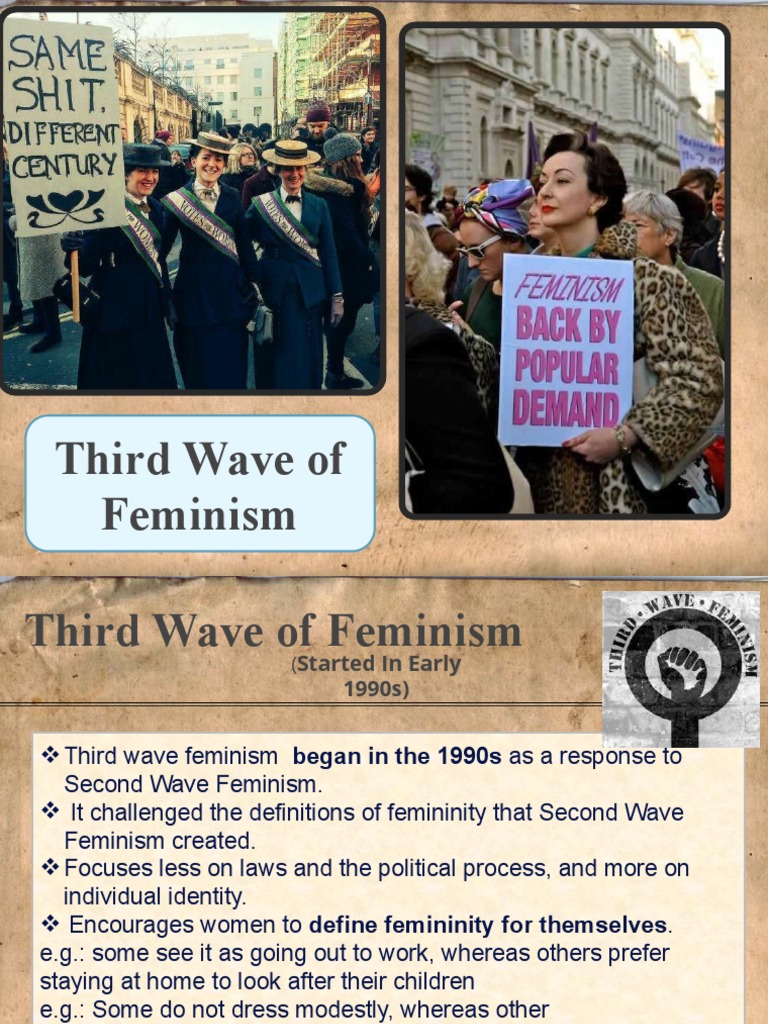
C. The Third Wave: Intersectionality and the Celebration of Difference. This wave recognized the limitations of previous iterations, acknowledging that the experiences of women were not monolithic. Intersectionality, a term coined by Kimberlé Crenshaw, became a central concept, emphasizing the interconnected nature of social categorizations such as race, class, and sexuality, and how these create overlapping systems of discrimination or disadvantage. Think of it as a kaleidoscope, revealing the myriad experiences of women based on their unique identities and circumstances. This wave embraced diversity and challenged the very notion of a singular “feminist agenda.”
D. The Fourth Wave: Digital Activism and the #MeToo Movement. Fueled by the power of the internet and social media, this wave has amplified the voices of marginalized women and brought issues such as sexual harassment and assault to the forefront of public consciousness. The #MeToo movement, a global phenomenon, exposed the pervasiveness of sexual misconduct across industries and empowered survivors to speak out. This wave is about accountability and dismantling the structures that protect perpetrators of abuse.
III. Schools of Thought: Navigating the Theoretical Landscape
Within feminism, a vibrant ecosystem of theoretical perspectives exists. Understanding these different schools of thought is crucial for navigating the complexities of the movement.
A. Liberal Feminism: Equality Within the System. This perspective advocates for gender equality through legal and political reforms within the existing social structure. It emphasizes equal opportunity and individual rights, believing that women can achieve equality by working within the system. Think of it as striving to level the playing field, ensuring that everyone has a fair chance to succeed.
B. Radical Feminism: Overthrowing the Patriarchy. This perspective argues that patriarchy is the root cause of women’s oppression and that fundamental societal change is necessary to achieve liberation. It often advocates for the dismantling of traditional institutions and the creation of alternative social structures. Think of it as uprooting the poisonous tree, rather than merely pruning its branches.
C. Socialist Feminism: Capitalism and Patriarchy – Twin Evils. This perspective sees capitalism and patriarchy as intertwined systems of oppression. It argues that both economic and social inequalities must be addressed in order to achieve genuine liberation for women. Think of it as recognizing that the chains of oppression are forged from both economic and social steel. This approach demands nothing less than a total restructuring of society.
D. Postcolonial Feminism: Challenging Western Hegemony. This perspective critiques the tendency of Western feminist theories to universalize the experiences of women, ignoring the specific challenges faced by women in postcolonial contexts. It emphasizes the importance of cultural context and challenges the imposition of Western values on other societies. Think of it as decolonizing the feminist narrative, ensuring that all voices are heard and respected.
IV. Key Concepts: Deciphering the Lexicon of Liberation
To truly grasp the philosophy of feminism, it’s essential to understand some of its key concepts:
A. Gender as a Social Construct. The notion that gender is not a fixed biological category, but rather a social construct shaped by cultural norms and expectations. This challenges the essentialist view that men and women are inherently different and that their roles in society are predetermined by their biology. It’s about recognizing the profound influence of nurture over nature, and how our perceptions are shaped by society.
B. Intersectionality. As mentioned earlier, this concept recognizes the interconnected nature of social categorizations and how they create overlapping systems of discrimination. It highlights the importance of considering the experiences of individuals who face multiple forms of oppression. It’s about understanding the complexities and nuances of identity and how these intersect to create unique experiences of marginalization.
C. Objectification. The act of treating a person as a mere object, devoid of individuality and agency. This is often seen as a form of dehumanization and is particularly prevalent in the representation of women in media and popular culture. It’s about reducing a human being to their physical attributes and stripping them of their intrinsic worth.
D. Agency. The capacity of individuals to act independently and make their own free choices. Feminism seeks to empower women to exercise their agency and to resist the constraints imposed upon them by patriarchal norms and expectations. It’s about reclaiming autonomy and charting one’s own course in life.
V. The Ongoing Revolution: Beyond the Binary
Feminism is not a finished project. It’s an ongoing revolution, a constant process of questioning, challenging, and reimagining the world. It’s about moving beyond the simplistic binary of male and female and embracing the fluidity and diversity of gender identity and expression. It’s about creating a world where all individuals, regardless of their gender, are free to live authentically and reach their full potential. The journey is far from over. It demands continuous critical self-reflection, unwavering solidarity, and a fierce commitment to justice and equality.
Embrace the complexity. Engage in the dialogue. And remember, the future of feminism is in our hands.








Leave a Comment