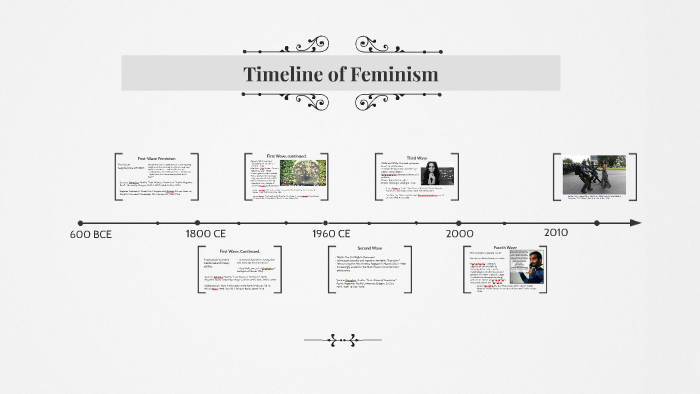
Darling, let’s excavate the bedrock of American feminism. Forget the watered-down narratives; we’re diving headfirst into the churning crucible where this audacious movement was forged. This isn’t just a recitation of dates and names; it’s a visceral journey into the hearts and minds of the audacious foremothers who dared to imagine a world where women weren’t mere chattel. Prepare to be enraged, inspired, and utterly transformed.
The Seed is Sown: Colonial Constraints and Proto-Feminist Whispers (1600s-1700s)
Imagine, if you will, a land where your very existence is predicated on the whims of men. Where your voice is muffled, your intellect dismissed, and your destiny predetermined. This was the suffocating reality for women in Colonial America. Yet, even within this oppressive milieu, whispers of dissent began to circulate like clandestine currents. Women like Anne Hutchinson, banished for her theological audacity, challenged the patriarchal power structures of the Puritan theocracy. Her “crime”? Daring to interpret scripture independently and question the authority of male ministers. She became a potent symbol of intellectual rebellion, a harbinger of the feminist storm brewing on the horizon. Her exile? A testament to the very real threat women posed to the established order when they dared to think for themselves.
Abigail Adams, through her eloquent correspondence with her husband John, became a voice of reason and a fierce advocate for women’s rights. Her famous plea to “Remember the Ladies” wasn’t merely a polite suggestion; it was a clarion call for future generations to dismantle the systemic inequalities that plagued women’s lives. It was an acknowledgement that even the Founding Fathers, in their grandiloquent pronouncements about liberty and equality, were conveniently overlooking half the population. Abigail’s words, steeped in pragmatic wisdom and revolutionary fervor, serve as a chilling reminder that the struggle for women’s liberation is as old as the nation itself.
The Crucible of Abolition: Feminism’s Unlikely Birthplace (1830s-1860s)
The abolitionist movement, a tempestuous crusade to eradicate the abhorrent institution of slavery, unwittingly became the unlikely incubator for American feminism. Women, largely excluded from mainstream political discourse, found a potent outlet for their activism in the fight for Black liberation. They organized, petitioned, and spoke out against the moral atrocity of slavery, honing their political skills and forging a sense of collective identity. But, the very movement that championed freedom for enslaved Africans revealed a glaring hypocrisy: the subjugation of women within its own ranks.
Figures like Sojourner Truth, a former slave and an electrifying orator, challenged both the racial and gender biases that permeated American society. Her legendary “Ain’t I a Woman?” speech, delivered at the 1851 Women’s Rights Convention in Akron, Ohio, dismantled the prevailing stereotypes of female fragility and intellectual inferiority. Truth’s powerful words, imbued with the raw reality of her lived experience, resonated deeply with women across racial and class lines, solidifying the inextricable link between racial justice and gender equality. Furthermore, it was a defiant rebuttal to the insidious notion that Black women were somehow less deserving of basic human rights than their white counterparts.
Lucretia Mott and Elizabeth Cady Stanton, two pioneering abolitionists, found themselves barred from participating fully in the 1840 World Anti-Slavery Convention in London solely because of their gender. This blatant act of discrimination sparked a firestorm of outrage and ultimately led them to organize the Seneca Falls Convention in 1848, a watershed moment in the history of American feminism. Seneca Falls wasn’t just a meeting; it was a declaration of independence for women, a bold assertion of their inherent rights to equality in all spheres of life: social, economic, and political.
Seneca Falls and the Declaration of Sentiments: A Feminist Manifesto (1848)
The Seneca Falls Convention, held in a small town in upstate New York, was a pivotal event that galvanized the women’s rights movement. The attendees, a diverse group of activists, intellectuals, and reformers, gathered to address the myriad injustices faced by women in American society. The centerpiece of the convention was the “Declaration of Sentiments,” a document modeled after the Declaration of Independence, which boldly proclaimed that “all men and women are created equal.” This audacious statement, a direct challenge to the patriarchal status quo, became the cornerstone of the burgeoning feminist movement.
The Declaration of Sentiments outlined a comprehensive list of grievances, including women’s lack of access to education, employment, and property rights, as well as their exclusion from the political process. The most controversial demand was the call for women’s suffrage, the right to vote. This seemingly radical idea was met with widespread ridicule and opposition, but it ultimately became the defining goal of the women’s rights movement for the next seven decades. The Declaration of Sentiments wasn’t just a list of complaints; it was a revolutionary blueprint for a more just and equitable society, a testament to the audacity and vision of the women who dared to dream of a world where their voices would be heard.
The Divisive Interlude: Civil War and the Suffrage Schism (1861-1890)
The Civil War, a cataclysmic conflict that ripped the nation apart, momentarily overshadowed the women’s rights movement. Many suffragists suspended their activism to support the Union cause, believing that the fight to end slavery took precedence over the struggle for women’s equality. However, the war also exposed deep divisions within the movement, particularly over the issue of Black suffrage. When the 15th Amendment, granting Black men the right to vote, was ratified, some suffragists, including Elizabeth Cady Stanton and Susan B. Anthony, vehemently opposed it because it did not extend the franchise to women.
This disagreement led to a schism within the movement, with two competing organizations emerging: the National Woman Suffrage Association (NWSA), led by Stanton and Anthony, which advocated for a broader range of women’s rights and opposed the 15th Amendment, and the American Woman Suffrage Association (AWSA), led by Lucy Stone and Henry Blackwell, which focused solely on suffrage and supported the 15th Amendment. This division, while painful, ultimately strengthened the movement in the long run, as it allowed for different approaches and strategies to be pursued simultaneously. The internal conflict, however, left scars and highlighted the complex intersections of race, class, and gender within the fight for equality.
A New Generation Rises: The Progressive Era and the Resurgence of Suffrage (1890-1920)
As the 19th century drew to a close, a new generation of feminist activists emerged, revitalizing the suffrage movement and broadening its appeal. The Progressive Era, a period of social and political reform, provided fertile ground for the advancement of women’s rights. Organizations like the National American Woman Suffrage Association (NAWSA), a merger of the NWSA and AWSA, adopted a more strategic and organized approach, employing tactics such as lobbying, petitioning, and public demonstrations to pressure lawmakers to grant women the right to vote.
Alice Paul and Lucy Burns, two fiery suffragists, brought a new level of militancy to the movement, drawing inspiration from the tactics of the British suffragettes. They formed the National Woman’s Party (NWP) and organized pickets, parades, and civil disobedience actions to draw attention to the suffrage cause. Their unwavering commitment, even in the face of arrest and imprisonment, galvanized public opinion and put immense pressure on President Woodrow Wilson to endorse suffrage. The NWP’s confrontational tactics, while controversial, proved to be highly effective in forcing the issue of women’s suffrage onto the national agenda.
The Crowning Victory: The 19th Amendment and Beyond (1920)
After decades of relentless struggle, the women’s suffrage movement finally achieved its crowning victory with the ratification of the 19th Amendment in 1920. This landmark amendment, which prohibited the denial of the right to vote based on sex, was a watershed moment in American history, marking a significant step towards gender equality. However, it is crucial to remember that the 19th Amendment did not enfranchise all women. Black women, Native American women, and other women of color continued to face significant barriers to voting, including discriminatory laws and practices.
The fight for full and equal suffrage for all women would continue for decades to come, highlighting the enduring legacy of racism and inequality in American society. Furthermore, the passage of the 19th Amendment did not signify the end of the feminist movement. On the contrary, it marked the beginning of a new chapter, as women turned their attention to other pressing issues, such as equal pay, reproductive rights, and the eradication of gender-based violence. The seeds of feminism, sown in the colonial era and nurtured through decades of struggle, had finally blossomed, but the fight for true gender equality was far from over. The 19th amendment was not the finish line, but the starting point for the marathon to a truly egalitarian society. The reverberations of these early struggles continue to shape our world today, reminding us that the pursuit of justice requires unwavering dedication and a willingness to challenge the status quo, no matter the cost.





Leave a Comment