Ever wonder why we’re still fighting for equal pay, reproductive rights, and an end to patriarchal bullshittery? Buckle up, buttercups, because the genesis of feminism wasn’t exactly a cakewalk. More like a marathon through misogynistic muck, uphill both ways, in heels, while being catcalled. But fear not, intrepid comrades, for this journey into the historical heart of the movement will arm you with the knowledge to dismantle the persistent power structures that seek to keep us subjugated. Are you ready to rumble?
I. Seeds of Discontent: Proto-Feminist Stirrings (Pre-18th Century)
Let’s dispel the myth that feminism sprang fully formed from the head of some enlightened goddess in the 18th century. Nay, my dears, the grumblings, the quiet rebellions, the subversive acts of dissent were brewing long before. Think of it as the slow simmer of societal resentment, eventually reaching a boil that would scald the status quo. These proto-feminist rumblings, while not explicitly labeled as such, planted the seeds for the organized movements to come. We’re talking centuries of women, often operating in the shadows, challenging the suffocating constraints imposed upon them.
A. Literary and Intellectual Sparks: Even in societies where women were largely denied formal education, the power of the pen proved formidable. Christine de Pizan, a 15th-century Venetian-French author, dared to defend women against misogynistic attacks with her book, *The Book of the City of Ladies*. Her work served as an early salvo against the ingrained sexism of the era. It questioned the intellectual inferiority assigned to women. Imagine the audacity! Similarly, writers like Marie de Gournay, a 17th-century French essayist, championed female education and equality, advocating for women’s access to knowledge as a path to liberation. These women, though exceptional for their time, exemplified a simmering discontent with the prevailing social order.
B. Religious Dissent and Mystical Autonomy: Religion, often used as a tool of oppression, ironically provided some women with a space to exert agency. Mystics like Hildegard of Bingen, a 12th-century German Benedictine abbess, wielded considerable influence through their visions, writings, and musical compositions. They carved out independent spheres of power within the confines of religious institutions. Their ability to interpret divine will allowed them to challenge patriarchal authority. Even within orthodox religious frameworks, women found ways to express their spiritual autonomy and challenge male dominance. Furthermore, movements of religious dissent, like the Beguines in the 13th century, offered women alternative communities outside of marriage and male control. They lived and worked together, pursuing spiritual and intellectual pursuits without the supervision of men. This early communal living foreshadowed later feminist efforts to create alternative social structures.
C. Challenging Marital Norms: Marriage, for centuries, served as the primary mechanism for controlling women’s bodies, labor, and reproductive capacities. Yet, even within this institution, women found ways to resist. Some challenged the legal and social constraints of marriage through acts of defiance, such as refusing to conform to expected wifely duties or seeking legal separations when possible. Others exerted influence through their management of households and family finances, demonstrating a quiet but persistent form of power. The very act of surviving and navigating the complexities of marital life in patriarchal societies was a form of resistance, a testament to women’s resilience and resourcefulness.
II. The Enlightenment and the Rise of Rational Feminism (18th Century)
The 18th century, with its emphasis on reason and individual rights, provided fertile ground for the burgeoning feminist movement. The Enlightenment, while ostensibly promoting universal ideals, often excluded women from its lofty pronouncements of liberty and equality. This hypocrisy did not go unnoticed. Women began to demand their inclusion in the social contract, arguing that reason and natural rights applied to them as well. This era marked a shift from proto-feminist stirrings to more explicitly articulated demands for social and political change.
A. Mary Wollstonecraft and *A Vindication of the Rights of Woman*: Arguably the most influential feminist text of the 18th century, Wollstonecraft’s *A Vindication of the Rights of Woman* (1792) made a powerful case for female education and intellectual equality. She argued that women were not inherently inferior to men but were made so by a lack of access to education. Wollstonecraft challenged the prevailing notion of women as ornaments or domestic servants, advocating for their participation in public life. Her work served as a foundational text for the feminist movement, inspiring generations of activists and thinkers to come. It was a declaration of intellectual independence.
B. The Salonnières: Intellectual Hubs and Female Agency: In France, women played a crucial role in the Enlightenment through their salons, which served as intellectual hubs where philosophers, writers, and artists gathered to discuss ideas. Salonnières like Madame de Staël and Madame Geoffrin wielded considerable influence, shaping intellectual discourse and promoting new ideas. Their salons provided a space for women to engage in intellectual pursuits and exercise agency in a society that otherwise restricted their participation in public life. These salons were not merely social gatherings; they were centers of power and influence, where women shaped the intellectual landscape of the era.
C. Olympe de Gouges and the Declaration of the Rights of Woman: In the midst of the French Revolution, Olympe de Gouges penned *The Declaration of the Rights of Woman and the Female Citizen* (1791), a direct response to the *Declaration of the Rights of Man and of the Citizen*. She argued that women should have the same rights as men, including the right to vote, own property, and participate in government. De Gouges’s declaration was a bold and radical statement, challenging the exclusion of women from the revolutionary ideals of liberty, equality, and fraternity. Her outspoken advocacy ultimately led to her execution, but her work remains a powerful testament to the feminist struggle for equality.
III. The First Wave: Suffrage and Social Reform (19th and Early 20th Centuries)
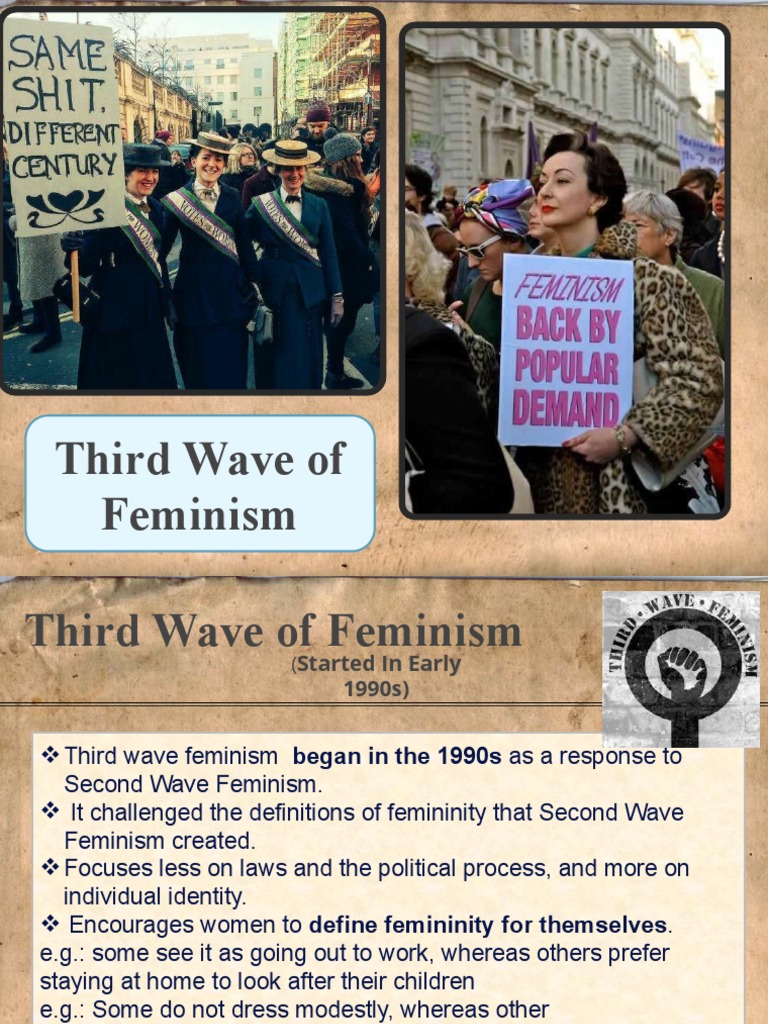
The 19th and early 20th centuries witnessed the rise of the first wave of feminism, characterized by a focus on suffrage, legal rights, and social reform. This era saw the emergence of organized feminist movements, advocating for women’s right to vote, access to education, and equal opportunities in employment and marriage. These movements were diverse, encompassing a range of ideologies and strategies, but they were united by a common goal: to challenge the patriarchal structures that limited women’s lives.
A. The Suffrage Movement: A Global Struggle: The fight for suffrage became the central focus of the first-wave feminist movement. Women in countries around the world organized to demand the right to vote, employing a variety of tactics, from peaceful protests and lobbying to civil disobedience and militant action. Figures like Susan B. Anthony and Elizabeth Cady Stanton in the United States, Emmeline Pankhurst in Britain, and Kate Sheppard in New Zealand led the charge, inspiring millions of women to join the cause. The suffrage movement was not merely about gaining the right to vote; it was about challenging the fundamental premise that women were not capable of participating in political life. It challenged the notion of female inferiority.
B. Education and Employment: Breaking Barriers: Access to education and employment was another key focus of the first-wave feminist movement. Women fought to gain admission to universities and professional schools, challenging the exclusion of women from intellectual and economic opportunities. They also advocated for equal pay and the right to work outside the home. Figures like Elizabeth Blackwell, the first woman to receive a medical degree in the United States, and Marie Curie, the first woman to win a Nobel Prize, shattered stereotypes and paved the way for future generations of women in science and medicine. These women proved that women are just as capable as men.
C. Social Reform: Temperance, Abolition, and Moral Purity: First-wave feminists also played a significant role in social reform movements, particularly the temperance movement, the abolition movement, and the movement for moral purity. They saw these movements as interconnected, arguing that alcohol abuse, slavery, and prostitution were all forms of oppression that disproportionately affected women. Women like Frances Willard, a leader in the temperance movement, and Harriet Tubman, a conductor on the Underground Railroad, demonstrated the power of women to effect social change. These women were fighting to create a more just and equitable society for all.
IV. Limitations and Critiques: The Exclusions of the First Wave
While the first wave of feminism achieved significant victories, it also faced criticism for its limitations and exclusions. The movement was largely dominated by white, middle-class women, and it often failed to address the concerns of women of color, working-class women, and women from marginalized communities. This exclusionary approach reflected the racial and class biases of the era, and it ultimately weakened the movement’s ability to achieve its goals.
A. Racial Exclusions: The Experiences of Black Women: Black women were often excluded from the mainstream feminist movement, despite their active participation in struggles for racial and social justice. Figures like Sojourner Truth, Ida B. Wells, and Anna Julia Cooper challenged the racism of white feminists and demanded that the movement address the specific concerns of Black women. Truth’s famous “Ain’t I a Woman?” speech powerfully articulated the intersectional oppressions faced by Black women, highlighting the ways in which race and gender intersected to create unique forms of discrimination. The experiences of Black women revealed the limitations of a feminist movement that failed to address the needs of all women. Black women were fighting for their own rights.
B. Class Bias: Ignoring the Needs of Working-Class Women: The first-wave feminist movement also tended to overlook the concerns of working-class women, focusing primarily on issues that affected middle-class women, such as access to education and professional opportunities. Working-class women faced different challenges, such as low wages, dangerous working conditions, and lack of access to childcare. Their needs were often ignored by the mainstream feminist movement, which failed to address the economic realities of their lives. They were forgotten and ignored.
C. The Problem of Essentialism: Defining “Woman”: The first-wave feminist movement often relied on essentialist notions of womanhood, assuming that all women shared a common experience and a common set of interests. This essentialist approach ignored the diversity of women’s lives and experiences, failing to recognize the ways in which race, class, sexuality, and other factors shaped women’s identities and realities. The problem of essentialism limited the movement’s ability to build solidarity across diverse groups of women and to address the complex challenges facing women in different communities. The idea that all women are the same is wrong.
V. The Legacy of the First Wave: Paving the Way for Future Generations
Despite its limitations, the first wave of feminism achieved significant victories that paved the way for future generations. The suffrage movement won women the right to vote in many countries, granting them political power and a voice in government. The movement also expanded access to education and employment for women, opening up new opportunities and challenging traditional gender roles. The legacy of the first wave continues to inspire feminists today, reminding us of the importance of fighting for equality and justice for all women. It gave women hope for the future.
So, there you have it: a whirlwind tour through the formative years of feminism. It was messy, complicated, and far from perfect. But it laid the groundwork for the ongoing struggle for liberation. Now, go forth and continue the fight! And remember, sisters, solidarity is our superpower.






Leave a Comment