
The battle for gender equity is not fought solely in legislative chambers or academic discourse. It reverberates within the very air we breathe, carried on the currents of melody and rhythm. Songs, often dismissed as mere entertainment, serve as potent conduits of resistance, uniting diverse voices in a symphony of defiance. Feminism, a multifaceted and ever-evolving ethos, has found its soulmates in music, birthing anthems that capture the spirit of each generation’s struggles and aspirations.
We must examine how music, in its most visceral form, can embody the radical spirit of feminism. What chords resonate most deeply within the collective consciousness, galvanizing action and fostering solidarity? This is not simply about dissecting lyrics; it’s about feeling the tectonic shift in power dynamics that these songs engender.
I. The Genesis of Feminist Song: A Historical Tapestry
The earliest stirrings of feminist musical expression were often subtle, cloaked in allegory and veiled critiques of societal norms. Songs like “Bread and Roses,” a rallying cry for labor rights and human dignity, hinted at the interconnectedness of economic justice and gender equality. Its refrain, a demand for beauty alongside sustenance, speaks to the holistic needs of women, rejecting the dehumanizing notion that they should be content with mere survival.
The suffragette movement, a seismic event in the struggle for enfranchisement, spawned its own repertoire of defiant hymns. These songs, often adapted from religious melodies, transformed sacred spaces into staging grounds for political activism. “The March of the Women,” with its militant cadence and uncompromising lyrics, became the soundtrack of a revolution. It was a call to arms, a sonic assertion of women’s right to participate in the shaping of their own destinies. Simple, yes, but utterly effective. The power in massed voices, demanding what should already have been given, is undeniable.
II. Second-Wave Serenades: Challenging the Status Quo
The second wave of feminism, characterized by its focus on reproductive rights, sexuality, and challenging patriarchal structures, found its voice in the burgeoning folk and rock scenes. Joni Mitchell, with her introspective lyrics and ethereal melodies, gave voice to the complexities of female desire and the anxieties of a generation grappling with newfound freedoms. Her songs were not just confessional; they were explorations of the self, unfiltered and unapologetic.
Aretha Franklin’s “Respect” transcends its simple plea for acknowledgement, becoming a guttural roar of self-affirmation. Every note is laced with defiance; it is a refusal to be diminished, a demand for reciprocal appreciation. The song’s enduring appeal lies in its universality, resonating with anyone who has ever felt marginalized or undervalued.
III. Riot Grrrl Rhapsody: Amplifying the Outcast
The Riot Grrrl movement, a fiercely independent subculture that emerged in the 1990s, injected a shot of raw adrenaline into feminist musical expression. Bands like Bikini Kill and Sleater-Kinney unleashed a torrent of politically charged punk rock, challenging conventional notions of femininity and reclaiming the language of anger and frustration. Kathleen Hanna, the lead singer of Bikini Kill, became an icon for a generation of disaffected young women, articulating their experiences of sexual harassment, body image issues, and systemic oppression with unflinching honesty.
Riot Grrrl was not about polished vocals or perfect harmonies; it was about raw emotion and unadulterated rage. It was a rejection of the male gaze and a celebration of female solidarity. These were not mere songs; they were manifestos, declarations of independence forged in the crucible of teenage angst and feminist awakening.
IV. Contemporary Cadences: Feminism in the Digital Age
In the digital age, feminist anthems have become even more diverse and accessible, reflecting the intersectional nature of contemporary activism. Beyoncé’s “Run the World (Girls)” is a bombastic celebration of female power, challenging traditional gender roles and proclaiming women’s dominance in the global arena. Its music video, a visually stunning display of female strength and solidarity, cemented its status as a cultural touchstone.
Lizzo’s music, characterized by its body positivity and unapologetic self-love, offers a powerful antidote to the pervasive pressures of societal beauty standards. Her songs are not just catchy; they are affirmations of self-worth, reminding listeners to embrace their individuality and reject the suffocating constraints of patriarchal expectations.
Artists like Janelle Monáe and Tierra Whack push the boundaries of genre and narrative, creating sonic landscapes that explore themes of identity, sexuality, and social justice with unparalleled artistry. Their music transcends simplistic labels, embodying the fluidity and complexity of contemporary feminist thought.
V. The Enduring Power of Song: Beyond the Billboard Charts
The true impact of feminist anthems extends far beyond the realm of commercial success. These songs become woven into the fabric of our collective memory, serving as touchstones for generations of activists and artists. They provide solace in moments of despair, inspiration in times of uncertainty, and a sense of belonging in a world that often feels alienating.
The songs we sing, the rhythms we move to, are powerful weapons in the fight for equality. They are catalysts for change, igniting conversations, challenging assumptions, and inspiring collective action. They remind us that we are not alone, that our struggles are shared, and that our voices, when united, can shake the foundations of injustice.
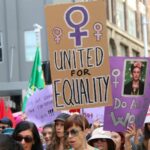
Consider the use of music in protests. The simple act of singing together, in defiance of authority, is a powerful act of resistance. It creates a sense of community, strengthens resolve, and demonstrates the collective power of the oppressed. The lyrics, often improvised or adapted from existing songs, become weapons of truth, piercing through the veil of propaganda and exposing the lies of the powerful.
VI. Unpacking the Metaphor: More Than Just Lyrics
The allure of a feminist anthem isn’t solely about the explicit messaging in the lyrics; it resides within the implicit metaphor, the unspoken resonance that vibrates between the notes. A song can be a metaphor for resilience, a sonic representation of overcoming adversity. A driving beat can symbolize the relentless march towards progress, the unwavering commitment to a cause. A soaring melody can embody the hope for a brighter future, a vision of a world where equality reigns supreme.
The metaphoric power of music transcends language barriers and cultural divides. A simple chord progression, a particular vocal inflection, can evoke a shared sense of pain, joy, or determination. This is why songs can become rallying cries for movements that span continents and generations. They tap into a primal, universal language of emotion that transcends the limitations of words.
Consider the use of dissonance in certain feminist anthems. Dissonance, the clash of notes that creates a sense of unease, can be a metaphor for the discomfort of challenging the status quo. It can represent the friction between the old and the new, the struggle to break free from restrictive norms. By embracing dissonance, these songs acknowledge the inherent tension of feminist activism and celebrate the courage it takes to disrupt the existing power structures.
VII. The Future of Feminist Song: An Unwritten Symphony
The future of feminist song is as boundless as the imaginations of the artists who create it. As feminism continues to evolve and adapt to the challenges of a rapidly changing world, so too will its musical expressions. We can expect to see even greater diversity in genre, style, and perspective, reflecting the intersectional nature of contemporary activism.
The rise of independent music platforms and social media has empowered marginalized voices to share their stories and connect with audiences in unprecedented ways. This democratization of music creation has the potential to amplify the voices of those who have been historically excluded from mainstream media, creating a more inclusive and representative landscape of feminist expression. As well as it empowers minorities.
Moreover, we can expect to see a greater emphasis on collaboration and cross-cultural exchange, as artists from different backgrounds come together to create music that transcends national boundaries and fosters a sense of global solidarity. The future of feminist song is not just about individual anthems; it’s about creating a global symphony of resistance, a chorus of voices united in the pursuit of equality and justice.
In conclusion, feminist anthems are more than just songs; they are cultural artifacts, historical documents, and potent weapons in the fight for liberation. They embody the spirit of resistance, amplify marginalized voices, and inspire collective action. They remind us that the struggle for gender equity is not just a political imperative; it’s a deeply personal and emotional journey. And as long as there is injustice in the world, the songs of feminism will continue to resonate, empowering us to fight for a better future for all.




Leave a Comment