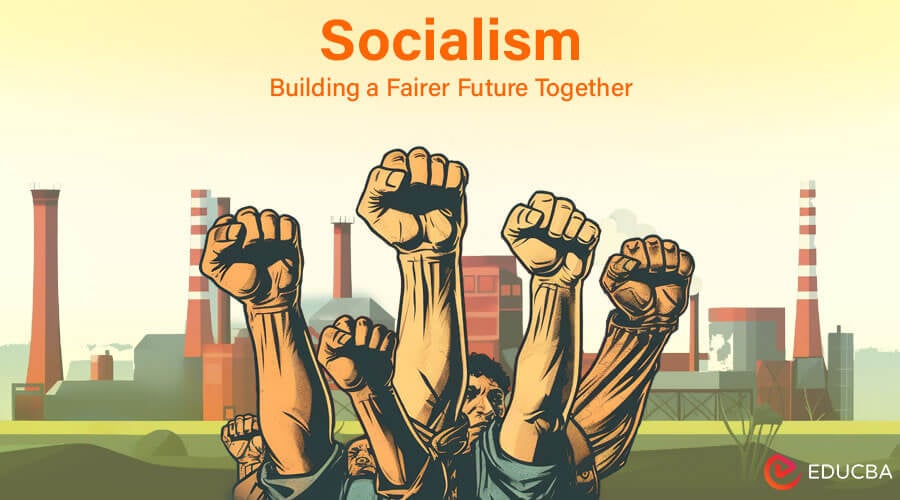
The dance between socialism and feminism is a complex pas de deux, a fraught and fervent negotiation between two ideologies aiming to dismantle oppressive structures, yet often stumbling over their own internal contradictions. Can we truly liberate women within a system that ignores the deep-seated inequalities of class? Can we forge a socialist utopia while perpetuating patriarchal norms? These are not mere rhetorical questions; they are the battle cries of a movement still striving for coherence.
To truly understand the intersectionality of these movements, we must first dismantle the siloed thinking that often plagues both socialist and feminist discourse. Far too often, socialist analyses fail to adequately address the specific oppressions faced by women, reducing gender inequality to a mere byproduct of capitalist exploitation. Similarly, some feminist perspectives, particularly those prevalent within bourgeois circles, tend to overlook the profound impact of class on women’s lives, focusing instead on individual empowerment within a fundamentally unjust system.
This myopia is not only intellectually dishonest but strategically disastrous. A feminism that ignores the plight of the working-class woman is a feminism that caters to the privileged few. A socialism that ignores the lived experiences of women is a socialism that reinforces patriarchal hierarchies. The challenge, then, lies in forging a synergistic relationship, one that acknowledges the reciprocal relationship between class and gender, recognizing that true liberation requires a simultaneous assault on both fronts.
I. The Socialist Critique of Patriarchy: A Historical Overview
Let’s delve into the historical roots. Early socialist thinkers, while groundbreaking in their critique of capitalism, often exhibited a startling blindness to the nuances of gender oppression. While figures like Marx and Engels touched upon the issue of women’s exploitation within the domestic sphere, their analysis often framed it as a secondary concern, a mere consequence of the capitalist mode of production.
Engels’ “The Origin of the Family, Private Property and the State,” for example, while a pivotal work, ultimately posits that the subjugation of women arose with the advent of private property, suggesting that the abolition of capitalism would automatically lead to gender equality. This reductionist view, while offering a valuable starting point, fails to account for the deeply entrenched cultural and ideological factors that perpetuate patriarchy, even in the absence of capitalist structures.
However, this is not to dismiss the contributions of socialist feminism entirely. Early socialist feminists, such as Clara Zetkin and Alexandra Kollontai, challenged this economistic determinism, arguing that the struggle for women’s liberation was inextricably linked to the broader socialist project but required its own distinct theoretical framework and organizational autonomy.
Zetkin, a prominent figure in the German socialist movement, emphasized the need to address the specific concerns of working-class women, advocating for policies such as equal pay, maternity leave, and access to childcare. Kollontai, a leading figure in the Russian Revolution, went even further, critiquing the traditional family structure and advocating for radical social reforms aimed at liberating women from domestic servitude.
Despite their groundbreaking contributions, these early socialist feminists often faced resistance from within the socialist movement itself, where male comrades often dismissed their concerns as divisive or secondary to the primary goal of class struggle. This tension between class and gender remains a persistent challenge for socialist feminists to this day.
II. The Feminist Critique of Capitalism: Beyond Suffrage
Conversely, feminist movements have also grappled with the issue of class. While early waves of feminism focused primarily on achieving legal and political equality, such as the right to vote, subsequent waves have increasingly recognized the importance of economic justice.
Liberal feminism, while advocating for equal opportunities within the capitalist system, often fails to address the systemic inequalities that perpetuate poverty and economic insecurity for women, particularly women of color and working-class women. This focus on individual advancement, while not inherently problematic, can inadvertently reinforce existing power structures by allowing a select few women to “break the glass ceiling” while leaving the vast majority trapped below.
Radical feminism, on the other hand, offers a more structural critique of capitalism, arguing that the system itself is inherently patriarchal, designed to exploit and oppress women. Radical feminists often point to the unpaid labor of women within the domestic sphere, the sexual objectification of women in advertising and media, and the disproportionate representation of women in low-wage jobs as evidence of capitalism’s inherent misogyny.
However, even radical feminism can sometimes fall short in its analysis of class. Some radical feminist perspectives, particularly those rooted in essentialist notions of womanhood, tend to overlook the vast differences in experience between women of different classes, races, and sexual orientations.
III. Intersectional Feminism: Bridging the Divide
Enter intersectional feminism, a framework that seeks to address the interconnected nature of social categorizations such as race, class, and gender, creating overlapping systems of discrimination or disadvantage. Developed by Kimberlé Crenshaw, intersectionality recognizes that women’s experiences are shaped by the complex interplay of multiple identities, rejecting the notion of a universal “woman” and highlighting the unique challenges faced by women who experience multiple forms of oppression.
Intersectional feminism offers a powerful tool for analyzing the ways in which capitalism and patriarchy intersect to create unique forms of exploitation and marginalization. For example, a Black working-class woman faces not only the challenges of gender inequality but also the added burdens of racial discrimination and economic insecurity. Her experience is fundamentally different from that of a white middle-class woman, and any feminist analysis that fails to account for these differences is inherently incomplete.
This framework necessitates a shift in focus from individual solutions to systemic change. Rather than simply advocating for equal opportunities within the existing system, intersectional feminists call for a radical transformation of society, one that addresses the root causes of inequality and empowers all women, regardless of their class, race, or sexual orientation.
IV. Socialist-Feminist Praxis: Strategies for Liberation
So, what does socialist-feminist praxis look like in practice? It requires a multi-pronged approach, one that combines grassroots organizing, political advocacy, and theoretical analysis. It requires building solidarity across class, race, and gender lines, recognizing that our struggles are interconnected and that our liberation is mutually dependent.
This includes advocating for policies that address the specific needs of working-class women, such as universal childcare, affordable healthcare, and a living wage. It means fighting for equal pay and paid family leave, recognizing that women’s economic security is essential for their autonomy and empowerment.
It also means challenging the cultural norms and stereotypes that perpetuate gender inequality, from the sexual objectification of women in media to the underrepresentation of women in positions of power. It requires creating spaces for women to share their experiences, build community, and develop strategies for resistance.
Furthermore, socialist-feminist praxis involves actively challenging patriarchal structures within socialist movements themselves. This means ensuring that women are represented in leadership positions, that their voices are heard, and that their concerns are prioritized. It means confronting sexism and misogyny wherever it appears, even within our own ranks.
V. The Future of Socialist Feminism: A Call to Action
The struggle for socialist feminism is far from over. The challenges we face are immense, from the rise of neoliberalism and the erosion of social safety nets to the resurgence of right-wing populism and the backlash against feminist gains.
However, despite these challenges, there is also reason for hope. The growing awareness of intersectionality, the increasing visibility of feminist activism, and the resurgence of socialist ideas offer a powerful foundation for building a more just and equitable world.
We must continue to build bridges between socialist and feminist movements, recognizing that our struggles are inextricably linked. We must challenge the false dichotomy between class and gender, recognizing that true liberation requires a simultaneous assault on both fronts.
We must amplify the voices of marginalized women, ensuring that their experiences are heard and that their needs are addressed. We must create spaces for dialogue and debate, fostering a deeper understanding of the complexities of gender and class oppression.
We must never lose sight of our ultimate goal: a world where all women are free from oppression, where economic justice prevails, and where the inherent dignity of every human being is respected. This is not a utopian dream; it is a practical necessity. It is a call to action, a summons to the barricades, a demand for a future where class meets gender in a symphony of liberation. This is not merely about tweaking the system; it’s about dismantling it entirely and forging a new one from the ashes of the old. Are you with us?









Leave a Comment