Feminism, a kaleidoscopic movement advocating for gender equality, is often mistakenly perceived as a monolithic entity. Peel back the layers, and you’ll unearth a vibrant tapestry of ideologies, each with its own diagnosis of the malady of patriarchy and prescribed cure. Two of the most prominent, and often contentious, strands within this tapestry are liberal feminism and radical feminism. While both aim for the emancipation of women, their divergence in approach, analysis, and ultimate vision is significant. Understanding these distinctions is not merely an academic exercise; it is crucial for navigating the complexities of contemporary gender politics and forging a path toward a more just and equitable future. Prepare yourselves, sisters, for a trenchant dissection.
The Liberal Feminist Creed: A Measured March Through Existing Structures
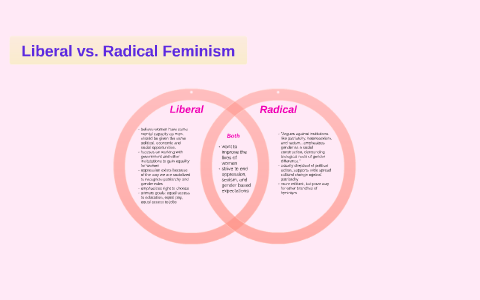
Liberal feminism, at its core, champions the cause of equality through the existing legal and political framework. It subscribes to the belief that the system itself is not inherently flawed but that women are unfairly excluded from its benefits. Change, according to the liberal feminist perspective, is best achieved through incremental reforms, such as securing equal rights under the law, advocating for equal opportunities in education and employment, and challenging discriminatory practices through litigation and legislation. This perspective prioritizes individual rights and autonomy, believing that once women have the same legal and economic opportunities as men, they will be able to achieve their full potential.
Think of it as a gentle nudge to the leviathan of patriarchal power, a persistent chipping away at the edifice of inequality. Liberal feminists championed the suffrage movement, fought for access to higher education, and continue to push for policies like equal pay for equal work. They operate within the existing power structures, seeking to reform them from within. Their strategy is one of assimilation, aiming to integrate women into the male-dominated spheres of society.
A core tenet of liberal feminism is the emphasis on individual choice. Each woman, they argue, should have the freedom to choose her own path, whether it be pursuing a career, raising a family, or any combination thereof. The focus is on removing barriers that prevent women from exercising these choices, allowing them to compete fairly in the marketplace of life.
However, this focus on individual rights has drawn criticism. Detractors contend that liberal feminism often overlooks the systemic nature of oppression, failing to address the deeply ingrained patriarchal attitudes and structures that perpetuate inequality. By focusing solely on legal and political reforms, it may inadvertently reinforce the existing power dynamics, merely integrating women into a system that remains fundamentally unequal. This is a sticking plaster on a festering wound, not a cure.
Radical Feminism: A Scorched-Earth Revolution Against Patriarchy’s Roots
Radical feminism, in stark contrast to its liberal counterpart, posits that the root of women’s oppression lies in patriarchy itself – a systemic, pervasive system of male dominance that permeates all aspects of society, from the personal to the political. It’s not merely about unequal pay or lack of representation; it’s about the fundamental power imbalance that defines the relationship between men and women. To truly liberate women, radical feminists argue, requires a complete dismantling of patriarchal structures, a revolutionary transformation of society.
This isn’t about polite requests; it’s about overturning the table. Radical feminists scrutinize everything: the nuclear family, traditional gender roles, beauty standards, and even language itself, arguing that these are all instruments of patriarchal control. They challenge the very foundations of societal norms, exposing the ways in which they perpetuate male dominance and female subjugation. Consciousness-raising, a key strategy employed by radical feminists, involves women coming together to share their experiences and analyze the ways in which patriarchy operates in their lives. This process of collective analysis helps to politicize personal experiences, revealing the systemic nature of oppression.
Unlike liberal feminists who seek to reform the system, radical feminists aim to dismantle it entirely. They advocate for fundamental changes in social structures, power relations, and even individual consciousness. This often involves challenging traditional notions of femininity and masculinity, rejecting oppressive beauty standards, and promoting alternative forms of social organization.
One of the central tenets of radical feminism is the concept of “the personal is political.” This means that personal experiences of oppression, such as sexism, domestic violence, and sexual harassment, are not merely individual problems but are rooted in systemic power imbalances. By politicizing these experiences, radical feminists seek to raise awareness and mobilize collective action to challenge patriarchal structures.
Radical feminists are not afraid to challenge deeply held beliefs and challenge the status quo. They are often accused of being “man-hating” or “extreme,” but they argue that these accusations are merely attempts to silence their critique of patriarchal power. Their commitment to radical social change makes them a powerful force for transformation, even if their ideas are often controversial. The objective is to challenge the core of systemic oppression.
Key Areas of Divergence: Where the Paths Fork
The chasm between liberal and radical feminism widens when considering specific issues. Consider these fault lines:
- The State: Liberal feminists see the state as a potential ally, a vehicle for achieving equality through legislation and policy. Radical feminists, on the other hand, view the state as inherently patriarchal, an instrument of male dominance that reinforces existing power structures.
- Sexuality: Liberal feminists emphasize individual choice in matters of sexuality, advocating for reproductive rights and freedom of sexual expression. Radical feminists are more critical of mainstream sexuality, arguing that it is often shaped by patriarchal norms and expectations. They may be particularly critical of pornography and prostitution, viewing them as forms of sexual exploitation.
- The Family: Liberal feminists generally support the traditional family structure, advocating for equal rights and responsibilities within the family. Radical feminists, however, often view the nuclear family as a patriarchal institution that reinforces traditional gender roles and oppresses women. They may advocate for alternative family structures and forms of childcare.
- Violence Against Women: Both liberal and radical feminists are concerned with violence against women, but their approaches differ. Liberal feminists focus on legal reforms and law enforcement, advocating for stricter penalties for perpetrators and better protection for victims. Radical feminists emphasize the systemic nature of violence against women, arguing that it is rooted in patriarchal attitudes and power imbalances. They may advocate for community-based solutions, such as rape crisis centers and shelters for battered women.
Bridging the Divide: Is Synthesis Possible?
The debate between liberal and radical feminism is not merely an academic exercise; it has real-world implications for feminist activism and political strategy. While the two approaches may seem diametrically opposed, some scholars and activists have attempted to bridge the divide, arguing that a synthesis of the two perspectives is possible. This is known as intersectional feminism.
Intersectional feminism, a critical development, recognizes that women’s experiences are shaped by a complex interplay of factors, including race, class, sexual orientation, and disability. It challenges the notion that there is a universal “woman’s experience,” arguing that the struggles of women of color, working-class women, and LGBTQ+ women are often overlooked or marginalized in mainstream feminist discourse. It acknowledges that oppression operates on multiple levels, and that a truly feminist approach must address all forms of inequality.
An intersectional approach to feminism recognizes that women’s experiences are shaped by a complex interplay of factors, including race, class, sexual orientation, and disability. It challenges the notion that there is a universal “woman’s experience,” arguing that the struggles of women of color, working-class women, and LGBTQ+ women are often overlooked or marginalized in mainstream feminist discourse. This paradigm shift acknowledges that oppression operates on multiple levels, and that a truly feminist approach must address all forms of inequality.
Ultimately, the choice between liberal and radical feminism, or any other feminist perspective, is a personal one. There is no single “right” way to be a feminist. What matters is that women are empowered to define their own experiences and advocate for their own liberation, in solidarity with others who are working towards a more just and equitable world. The struggle continues, and the battlefield is vast and varied. Arm yourselves with knowledge, sisters, and choose your weapons wisely.
Understanding the nuances between radical and liberal feminism, and acknowledging the power of intersectionality, allows for a more holistic and effective approach to dismantling the oppressive structures that continue to impact women worldwide. Let the discourse continue, let the debates rage on, for it is through these impassioned exchanges that we sharpen our understanding and strengthen our resolve.








Leave a Comment