Feminism, a kaleidoscope of ideologies, a maelstrom of dissent and dreams, continues to be a battleground where ideas clash and convictions collide. It’s not a monolithic entity, but a sprawling, ever-evolving discourse grappling with fundamental questions about power, gender, and liberation. It is a complex and ever-evolving ideology, but let’s dive into the heart of the tempest, dissecting the most contentious debates that rage within and around it.
The “Essentialism vs. Social Constructionism” Conundrum: Are We Born This Way, or Is It All a Performance?
At the heart of feminist theory lies a fundamental schism: the essentialism versus social constructionism debate. This is a debate that asks, are women inherently different from men, possessing unique qualities and capabilities rooted in biology, or is gender a purely social construct, a performance meticulously crafted and enforced by societal norms? This is a complex question that can drastically change the way we see the world.
Essentialists posit that women possess inherent qualities, often linked to their reproductive capacity, that shape their experiences and perspectives. They might argue that women are naturally more nurturing, empathetic, or community-oriented. These perspectives, while sometimes used to celebrate feminine strengths, can also be wielded to justify traditional gender roles and expectations, effectively trapping women within pre-defined molds.
Social constructionists, on the other hand, argue that gender is a learned behavior, a performance dictated by cultural scripts and societal expectations. They contend that there’s no inherent difference between men and women beyond biological sex, and that any perceived differences are the result of socialization and the insidious power of patriarchy. This perspective empowers us to challenge and dismantle the rigid structures that constrain us, freeing individuals to express themselves authentically, irrespective of gender norms. It is liberating to see the power of social constructionism.
The tension between these two viewpoints is palpable. Can we acknowledge the biological realities of sex without falling into the trap of essentialism? Can we deconstruct gender without denying the lived experiences of women who identify with certain feminine traits? This is a balancing act, a tightrope walk over the chasm of ideological division. Failure to find that balance will lead to the same stagnation that feminism sought to combat.
Intersectionality: The Unfolding Layers of Oppression.
Kimberlé Crenshaw’s concept of intersectionality has revolutionized feminist thought, illuminating the complex interplay of various forms of oppression. This framework recognizes that individuals experience oppression not as isolated entities, but as a confluence of intersecting identities – race, class, sexuality, disability, and more. Each identity carries its own baggage of power dynamics and societal biases, creating a unique tapestry of disadvantage for those who occupy multiple marginalized positions.
Imagine a Black woman navigating a predominantly white, male-dominated workplace. She faces not only sexism, but also racism and the unique challenges that arise from being a double minority. Her experiences are distinct from those of a white woman or a Black man, highlighting the limitations of a one-size-fits-all approach to feminist activism. Failing to recognize these intersecting layers of oppression risks perpetuating the very inequalities feminism seeks to dismantle.
Intersectionality demands that we move beyond simplistic binaries and embrace a nuanced understanding of power dynamics. It challenges us to amplify the voices of those who are often silenced, to center the experiences of marginalized communities, and to build a more inclusive and equitable movement. Only through this intricate interplay can feminism achieve its ultimate goal.
Sex-Positivity vs. Anti-Pornography: Navigating the Minefield of Sexuality.
The debate surrounding sex work and pornography is perhaps one of the most fiercely contested within feminist circles. It is an extremely sensitive topic that can be easily misunderstood. On one side, sex-positive feminists advocate for the right to sexual autonomy and expression, arguing that sex work can be a legitimate form of labor and that pornography, when created ethically and consensually, can be a source of pleasure and empowerment. They champion the idea that women should be free to explore their sexuality without shame or judgment, and that condemning sex work only further marginalizes those involved.
On the other side, anti-pornography feminists view pornography as inherently exploitative and harmful to women. They argue that it perpetuates rape culture, objectifies women, and contributes to violence against women. They see sex work as a product of patriarchal oppression, a system that forces women to sell their bodies for survival. This faction believes that normalizing pornography and sex work only reinforces harmful stereotypes and perpetuates the cycle of exploitation.
This ideological divide underscores the complexities of navigating sexuality within a patriarchal society. How do we reconcile the desire for sexual liberation with the very real risks of exploitation and abuse? How do we ensure that sex work is truly consensual and empowering, rather than a product of coercion and economic desperation? These are not easy questions, and they demand a thoughtful and nuanced approach that prioritizes the safety and well-being of all individuals. We need to analyze the ethics with a keen eye.
Trans-Exclusionary Radical Feminism (TERF) vs. Trans-Inclusive Feminism: The Battle for Belonging.
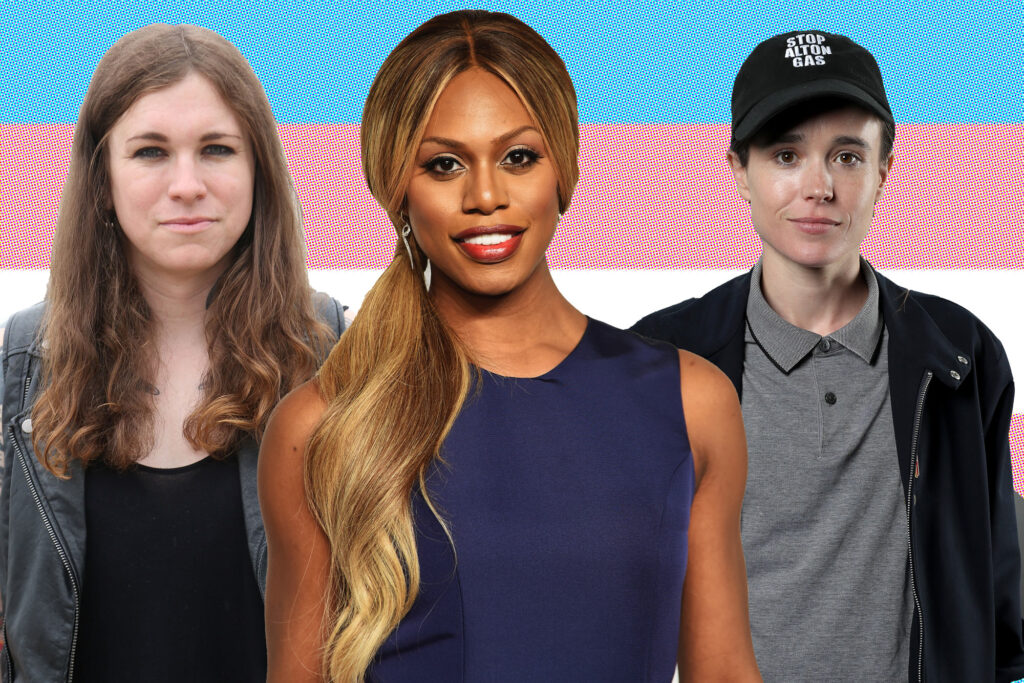
The inclusion of transgender women in feminist spaces has sparked intense debate, exposing deep divisions within the movement. Trans-exclusionary radical feminists (TERFs) argue that trans women are not “real” women, and that their inclusion undermines the experiences and rights of cisgender women. They often focus on biological essentialism, defining womanhood based on reproductive capacity and dismissing the lived experiences of trans women.
Trans-inclusive feminists, on the other hand, believe that trans women are women, and that their experiences are integral to the feminist struggle. They recognize that gender is a social construct, and that trans women face unique forms of oppression that warrant solidarity and support. They argue that excluding trans women from feminist spaces not only perpetuates transphobia but also weakens the movement as a whole.
This debate is not merely academic; it has real-world consequences for trans women who face discrimination and violence in all aspects of their lives. To deny trans women their womanhood is to deny their very existence, to erase their identities, and to perpetuate the harmful notion that gender is fixed and immutable. Feminism, at its core, is about liberation, and that liberation must extend to all women, regardless of their gender identity or expression. It’s about creating a more inclusive and equitable world for everyone.
The Patriarchy: Phantom Menace or Concrete Oppressor?
The very concept of patriarchy is under scrutiny. Is it a tangible system of oppression, or a convenient scapegoat for individual failings? The answer, unsurprisingly, resides in a complex middle ground. Patriarchy isn’t a singular, monolithic entity with a centralized command center. Instead, it’s a diffuse network of power relations, embedded in our institutions, our language, and our very ways of thinking. It manifests in subtle biases, in unequal pay, in the disproportionate burden of caregiving placed on women, and in the pervasive threat of violence.
Some argue that focusing solely on dismantling the patriarchy overlooks the agency of individuals and the complexities of human behavior. They contend that people, regardless of gender, make choices that perpetuate inequality, and that blaming the system absolves individuals of responsibility. While individual agency is undeniable, it exists within a context shaped by patriarchal structures. To ignore those structures is to deny the very real constraints that limit women’s choices and opportunities.
Dismantling the patriarchy requires a multi-pronged approach, one that addresses both systemic inequalities and individual biases. It requires challenging harmful stereotypes, promoting gender equality in education and the workplace, and holding perpetrators of violence accountable. It also requires introspection, a willingness to examine our own complicity in perpetuating patriarchal norms. It is a constant battle against the subtle but effective power of outdated systems.
The Future of Feminism: A Tapestry of Possibilities.
Feminism is not a destination, but a journey, a continuous process of questioning, challenging, and reimagining. As society evolves, so too must feminism, adapting to new challenges and embracing new perspectives. The debates outlined above are not merely academic exercises; they are vital conversations that shape the direction of the movement. They force us to confront our own biases, to refine our understanding of power dynamics, and to build a more inclusive and equitable future.
The rise of social media has amplified feminist voices, connecting activists across borders and facilitating the rapid dissemination of information. However, it has also created new challenges, including the spread of misinformation, the proliferation of online harassment, and the increasing polarization of political discourse. Navigating these challenges requires a critical and discerning approach, a willingness to engage in respectful dialogue, and a commitment to amplifying the voices of those who are most marginalized.
The future of feminism is not predetermined. It is a tapestry woven from the threads of countless individual actions, collective struggles, and ongoing debates. It is a story that is still being written, and each of us has a role to play in shaping its outcome. Embrace the complexities, engage in the debates, and never stop questioning. The future of feminism depends on it.







Leave a Comment