So, darlings, ever find yourselves wondering if the patriarchy’s grip on the ballot box is as suffocating as it seems? Do you dare to ask: if we can truly predict where a woman casts her vote based on the messy, beautiful, infuriating tapestry of her political ideology and her lived feminist experience?
Let’s dive headfirst into the swirling vortex of political ideology and feminism to dissect what exactly influences a woman’s voting behavior. Forget the platitudes; we’re here for the grit, the nuance, and the uncomfortable truths.
I. The Gordian Knot of Political Ideology: Untangling the Threads
Political ideology, that nebulous collection of beliefs, values, and principles about how society *should* be organized, is rarely a straightforward beast. It’s more like a hydra, sprouting new heads every time we think we’ve lopped one off. And for women, this hydra is often particularly complex.
A. The Usual Suspects: Liberalism, Conservatism, Socialism, and Beyond
We all know the standard categories: liberalism with its emphasis on individual rights and social justice, conservatism with its reverence for tradition and hierarchical structures, socialism with its focus on economic equality and collective ownership. But these labels are leaky vessels, aren’t they? They fail to capture the fluid, ever-evolving reality of individual beliefs.
Liberalism, generally associated with feminist goals, may clash with some women’s views on, say, sex work or certain reproductive technologies. Conservatism, often seen as antithetical to feminism, might appeal to women who prioritize traditional family values or who feel alienated by some aspects of contemporary feminist discourse. Socialism, while advocating for economic justice, might overlook the specific challenges faced by women in the workplace and at home.
B. The Intersectional Imperative: Acknowledging the Multiplicity of Experience
Here’s where it gets interesting. Class, race, ethnicity, sexual orientation, disability—these are not mere add-ons to a woman’s political ideology; they are intrinsic components that shape her understanding of power, oppression, and liberation. A Black woman’s experience of systemic racism will undoubtedly influence her political priorities in ways that differ from a white woman’s experience of gender discrimination.
This is the crux of intersectionality, a term coined by Kimberlé Crenshaw. It’s not just about adding up different forms of oppression; it’s about recognizing how they interact and reinforce each other, creating unique and often marginalized experiences.
C. Beyond the Binary: The Rise of Post-Ideological Feminism?
Are we witnessing the emergence of a post-ideological feminism, one that transcends traditional political labels and focuses on pragmatic solutions to gender inequality? Perhaps. There’s a growing sense among some feminists that rigid adherence to any single ideology can be limiting, hindering coalition-building and preventing us from addressing the multifaceted challenges facing women today. What if, gasp, we collaborated with those who *differ* from us?
II. Feminism: A Spectrum of Beliefs, A Riot of Action
Feminism, like political ideology, is not a monolith. It’s a vast and vibrant ecosystem encompassing a multitude of perspectives, strategies, and goals. To understand how feminism influences voting behavior, we need to delve into its diverse currents.
A. First, Second, Third (and Fourth?) Waves: Tracing the Evolution of Feminist Thought
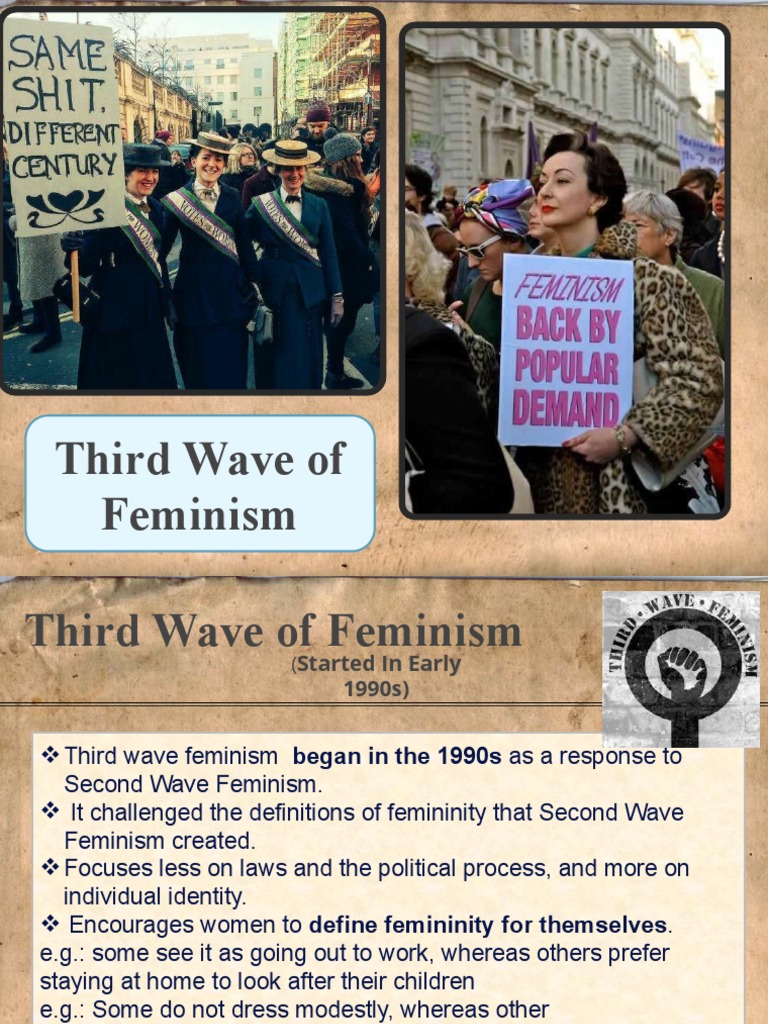
Each wave of feminism has brought its own unique contributions and challenges. First-wave feminism focused on suffrage and legal rights; second-wave feminism tackled issues of sexuality, reproductive rights, and workplace equality; third-wave feminism embraced intersectionality and challenged essentialist notions of womanhood. And fourth-wave feminism, fueled by the internet and social media, is confronting issues of sexual harassment, online misogyny, and body image with unprecedented ferocity.
Understanding these historical contexts is crucial. A woman who identifies as a second-wave feminist might prioritize issues differently than a woman who identifies as a fourth-wave feminist. The lens through which they view the political landscape is shaped by the specific battles fought and won (or lost) by their predecessors.
B. Radical, Liberal, Socialist, and Beyond: Mapping the Feminist Terrain
Within each wave, we find a spectrum of feminist perspectives. Radical feminists challenge the very foundations of patriarchal society, advocating for fundamental social transformation. Liberal feminists focus on achieving gender equality through legal and political reforms. Socialist feminists emphasize the interconnectedness of capitalism and patriarchy, arguing that both systems must be dismantled to achieve true liberation. And then there are ecofeminists, transfeminists, and a myriad of other feminist orientations, each offering a unique lens through which to understand and address gender inequality.
C. Feminist Consciousness and Political Engagement: Bridging the Gap
Feminist consciousness, that deep-seated awareness of gender inequality and the desire to challenge it, is not always a direct predictor of political engagement. Some women who identify as feminists may be disillusioned with the political system or may feel that their individual actions are more effective than collective action. Others may prioritize other social justice issues or may simply lack the time or resources to engage in political activism.
III. The Interplay: How Political Ideology and Feminism Collide (and Collude)
So, how do these two forces—political ideology and feminism—interact to shape a woman’s voting behavior? It’s not a simple equation. It’s a complex dance, a delicate balancing act, a constant negotiation between competing priorities and values.
A. The “Feminist Vote”: Myth or Reality?
Is there such a thing as a “feminist vote”? Can we assume that all women who identify as feminists will vote for the same candidates or support the same policies? Of course not. The diversity of feminist perspectives and the influence of other factors, such as class, race, and religion, mean that there is no single “feminist” voting bloc.
However, it is undeniable that feminist consciousness can influence voting behavior. Women who are aware of gender inequality are more likely to support candidates and policies that address issues such as equal pay, reproductive rights, and violence against women. But even then, other factors can come into play.
B. The Role of Party Affiliation: A Complicating Factor
Party affiliation often acts as a powerful filter through which women interpret political information and make voting decisions. A woman who identifies as a conservative Republican, for example, may prioritize her party’s platform on issues such as economic policy or national security, even if she disagrees with its stance on certain feminist issues. Conversely, a woman who identifies as a liberal Democrat may be more willing to support candidates and policies that align with her feminist values, even if she has reservations about other aspects of the party’s platform.
C. Issue Salience: What Matters Most?
The salience of specific issues also plays a critical role. During an election year dominated by debates over reproductive rights, for example, feminist consciousness may be a stronger predictor of voting behavior than during an election year focused primarily on economic issues. A woman’s personal experiences—for example, experiencing sexual harassment in the workplace or struggling to balance work and family responsibilities—can also increase the salience of feminist issues and influence her voting decisions.
IV. Beyond Prediction: Empowering Women, Transforming Politics
Ultimately, the question of whether we can predict a woman’s voting behavior based on her political ideology and her feminist beliefs is less important than the question of how we can empower women to engage more fully in the political process. Instead of simply trying to predict their votes, we should be working to create a more just and equitable society where all women have the opportunity to exercise their political power.
A. Education and Awareness: Building Feminist Consciousness
Promoting feminist education and raising awareness of gender inequality are crucial steps in empowering women to engage politically. By understanding the historical and systemic roots of gender inequality, women can develop a stronger sense of their own agency and become more effective advocates for change.
B. Amplifying Women’s Voices: Breaking the Silence
Creating platforms for women to share their stories and perspectives is essential. Too often, women’s voices are marginalized or silenced in political discourse. By amplifying women’s voices, we can challenge dominant narratives and create a more inclusive and representative political landscape.
C. Challenging the Patriarchy: Dismantling the Structures of Oppression
Ultimately, the most effective way to empower women politically is to dismantle the patriarchal structures that perpetuate gender inequality. This requires a multifaceted approach, including challenging discriminatory laws and policies, promoting gender equality in education and employment, and confronting harmful stereotypes and cultural norms.
So, can we definitively predict a woman’s vote based solely on her political ideology and feminist leanings? Perhaps not with absolute certainty. But what we *can* do is continue to agitate, educate, and organize. After all, the ballot box is just one battlefield in the ongoing war for liberation.







Leave a Comment