Is feminism communism? The very question might elicit a scoff from some, a clenched fist from others, and perhaps, a sliver of genuine curiosity from the intellectually honest. Prepare yourselves, because we are about to delve into a morass of misunderstanding, deliberate obfuscation, and the occasional scintilla of truth. The assertion that feminism is merely communism in disguise is a trope, a rhetorical cudgel wielded by those who fear the erosion of patriarchal structures. But tropes, however tiresome, often contain a grain of something…digestible. Let us dissect this claim with the precision of a surgeon and the fire of a revolutionary.
I. The Accusation: A Red Scare Redux
The genesis of this comparison lies in the perceived radicalism inherent in both ideologies. Both feminism and communism, at their core, challenge the status quo. They question established power dynamics and advocate for a redistribution of resources – be it economic wealth or social capital. Opponents of feminism frequently point to feminist critiques of capitalism, the focus on systemic inequalities, and the advocacy for collective action as evidence of a latent communist agenda. Furthermore, the emphasis on dismantling traditional family structures, a common (though often misinterpreted) thread in certain strands of feminist thought, is often equated with the communist ideal of communal living and the abolition of private property within the family unit. They see a conspiracy, a hidden agenda, a creeping subversion of all that is “sacred.” But is this fear justified? Or is it merely a convenient way to dismiss legitimate concerns about gender inequality?
II. Unpacking the Foundational Tenets: Apples and Oranges?
To understand the chasm – or bridge – between feminism and communism, we must deconstruct their core principles. Communism, at its theoretical zenith, envisions a classless society where the means of production are collectively owned and controlled. The goal is economic equality, achieved through the abolition of private property and the establishment of a planned economy. Feminism, conversely, is a multifaceted sociopolitical movement that seeks to achieve gender equality. While some feminist perspectives advocate for economic reforms, the primary focus remains on challenging patriarchal structures that perpetuate gender-based discrimination and oppression. This includes addressing issues such as equal pay, reproductive rights, ending gender-based violence, and promoting female representation in leadership positions. The divergence lies in the primary axis of oppression. Communism focuses on class; feminism, on gender. This distinction is crucial.
However, to simply dismiss the connection as purely coincidental would be intellectually dishonest. Both ideologies grapple with questions of power, exploitation, and liberation. Both challenge hierarchical structures and seek to empower marginalized groups. The shared vocabulary of “oppression,” “revolution,” and “liberation” is undeniable. But the substance of these concepts, when applied to the specific contexts of class and gender, reveals fundamental differences.
III. The Spectrum of Feminist Thought: A Kaleidoscope of Perspectives
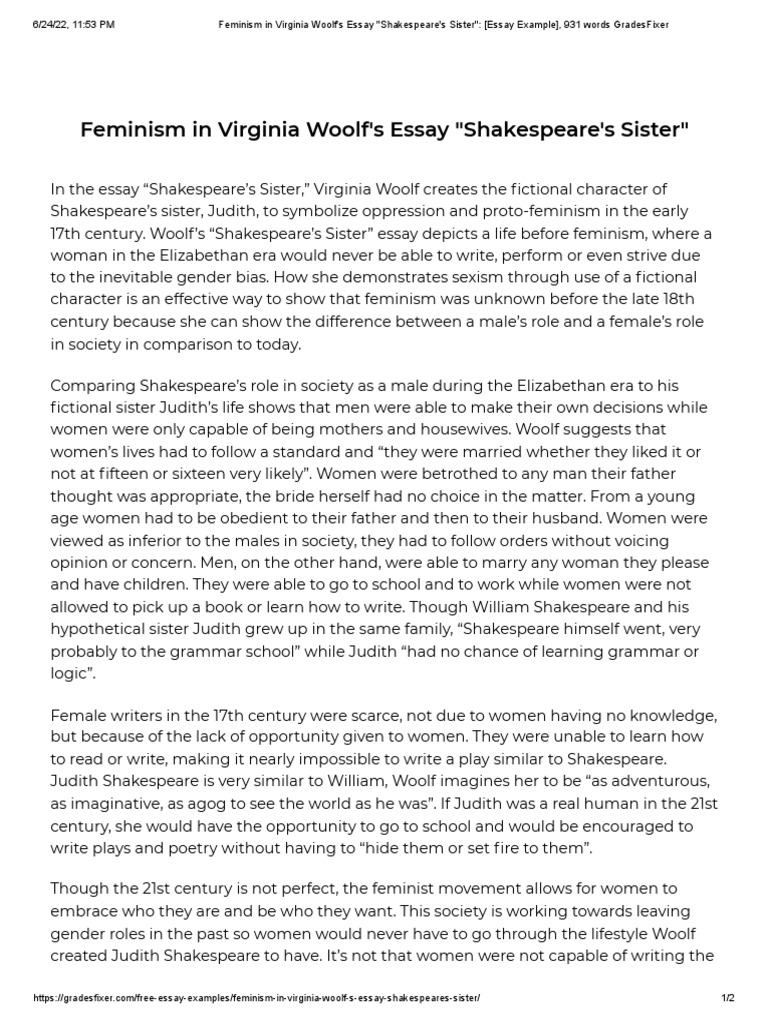
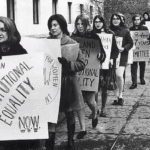
Feminism is not a monolithic entity. It encompasses a vast spectrum of perspectives, ranging from liberal feminism, which seeks equality within existing societal structures, to radical feminism, which advocates for a fundamental transformation of those structures. Socialist feminism, in particular, bridges the gap between feminist and Marxist analysis, arguing that gender inequality is inextricably linked to capitalist exploitation. These feminists recognize that patriarchal structures are reinforced by economic systems that disproportionately benefit men and exploit women’s labor. They advocate for reforms that address both gender and class inequality, such as universal childcare, equal pay for equal work, and paid parental leave. This intersectional approach acknowledges the complex interplay of various forms of oppression and recognizes that gender inequality cannot be fully addressed without addressing economic inequality. This is where the lines begin to blur, where the accusations of “communism” gain some (albeit skewed) traction. But even socialist feminism does not necessarily advocate for the abolition of private property or the establishment of a fully planned economy.
IV. Capitalism, Patriarchy, and the Feminine Mystique: A Tangled Web
Many feminists argue that capitalism and patriarchy are mutually reinforcing systems. Capitalism, with its emphasis on competition and individual accumulation of wealth, often perpetuates gender stereotypes that limit women’s opportunities and reinforce their economic dependence on men. The “feminine mystique,” as Betty Friedan famously described it, confined women to the domestic sphere, limiting their aspirations and reinforcing the idea that their primary role was to be wives and mothers. This ideology served to both exploit women’s unpaid labor in the home and to suppress their potential in the workforce. The commodification of women’s bodies in advertising and media further reinforces patriarchal power structures and perpetuates harmful stereotypes. Critiques such as these, which expose the inherent inequalities within capitalist systems, are often misconstrued as anti-capitalist (and therefore, implicitly communist) pronouncements. However, questioning the status quo does not equate to advocating for its complete overthrow. It simply signifies a desire for a more just and equitable society.
V. The Misuse of Language: Rhetorical Warfare
The accusation that feminism is communism is often a rhetorical tactic employed to discredit and silence feminist voices. By associating feminism with a historically unpopular ideology, opponents seek to delegitimize feminist arguments and dismiss them as radical or extreme. This tactic relies on a deliberate misinterpretation of feminist goals and a distortion of communist principles. It is a form of intellectual dishonesty that serves to obfuscate the real issues at stake. It is important to recognize this tactic for what it is: a desperate attempt to maintain the status quo by demonizing those who challenge it. The conflation of “socialism” with “communism” is also a common rhetorical trick. Socialists advocate for a mixed economy with a strong social safety net, while communists advocate for the abolition of private property and a fully planned economy. By blurring these distinctions, opponents of feminism can paint all feminist proposals as radical and unrealistic. We must be vigilant against these forms of linguistic manipulation and insist on clear and accurate definitions.
VI. Where the Ideologies Converge: A Shared Vision of Justice?
Despite their fundamental differences, feminism and communism share certain common goals. Both ideologies aspire to create a more just and equitable society, where all individuals have the opportunity to thrive. Both challenge existing power structures and advocate for the empowerment of marginalized groups. Both recognize the importance of collective action in achieving social change. The pursuit of these goals can lead to overlaps in specific policy proposals. For example, both feminists and communists might support universal healthcare, affordable childcare, and paid parental leave. However, the rationale behind these proposals may differ. Feminists might advocate for these policies as a means of addressing gender inequality and promoting women’s economic empowerment. Communists might advocate for them as a means of redistributing wealth and reducing class disparities. It is crucial to distinguish between shared goals and shared motivations. The fact that two ideologies converge on a particular policy does not necessarily mean that they are fundamentally aligned.
VII. Beyond the Binary: A Nuanced Understanding
The question of whether feminism is communism is ultimately a false dichotomy. It is a simplistic and reductive way of understanding two complex and multifaceted ideologies. A more nuanced approach recognizes the differences and similarities between feminism and communism, acknowledging the overlaps and divergences in their goals and strategies. It is essential to move beyond the binary and embrace a more intersectional and holistic perspective. This requires a willingness to engage in critical thinking, to challenge assumptions, and to recognize the complexities of social justice movements. It requires a commitment to intellectual honesty and a rejection of simplistic generalizations. It requires us to understand that fighting for gender equality does not automatically make one a communist, just as advocating for economic justice does not automatically make one a feminist. The fight for a better world requires solidarity and collaboration across movements, but it also requires a recognition of the distinct challenges and perspectives that each movement brings to the table.
VIII. The Future of Feminism: Beyond the Red Scare
Feminism is evolving. It is adapting to the challenges of the 21st century and incorporating new perspectives and insights. The rise of intersectional feminism, in particular, has broadened the scope of feminist analysis and challenged the narrow focus on gender as the sole axis of oppression. Intersectional feminists recognize that gender inequality is intertwined with other forms of oppression, such as racism, classism, and homophobia. They advocate for a more inclusive and equitable approach to social justice that addresses the needs of all marginalized groups. As feminism continues to evolve, it is important to resist the attempts to pigeonhole it into outdated and simplistic categories. The accusation that feminism is communism is a relic of the Cold War, a red herring designed to distract from the real issues at stake. We must reject this tired trope and embrace a more nuanced and sophisticated understanding of the complexities of gender inequality and the ongoing struggle for a more just and equitable world. Let us not be distracted by spectral anxieties, but instead, focus our energies on dismantling the very real systems of oppression that continue to plague our world.







Leave a Comment