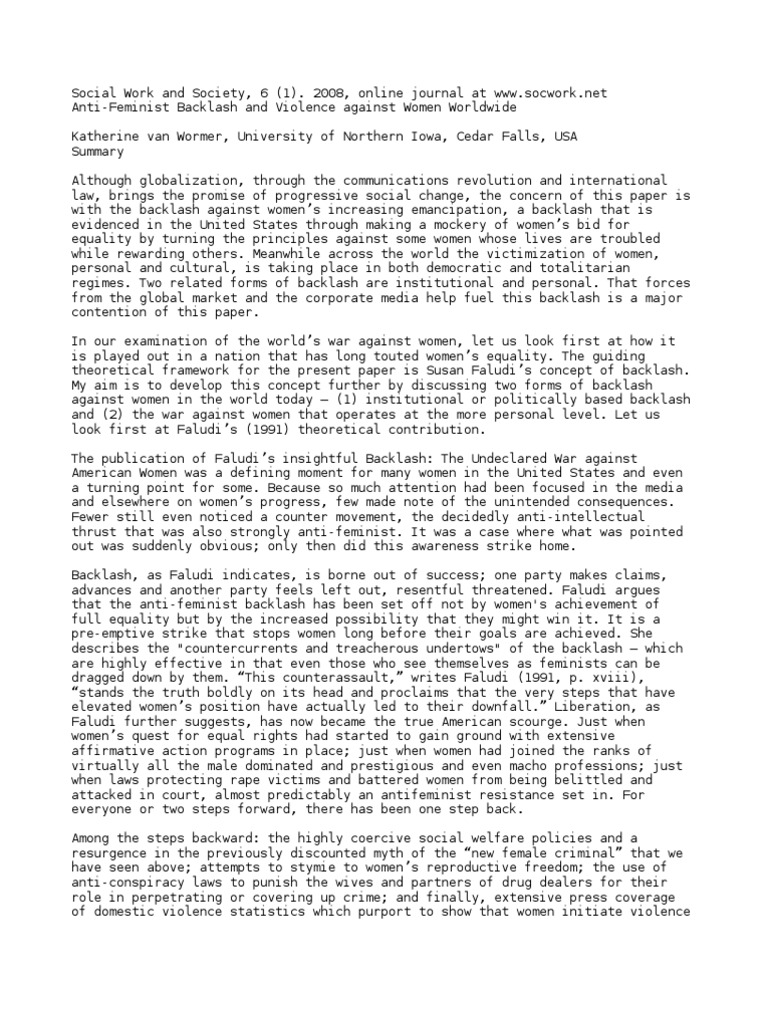
The spectacle is familiar, isn’t it? A woman, often conventionally attractive, draped in the trappings of perceived empowerment, declaring herself “not a feminist.” It titillates, it polarizes, it generates clicks. But beyond the superficial shock value, this phenomenon—the so-called “anti-feminist” woman—warrants a far more critical interrogation. It’s not merely a disagreement with semantics or a rejection of outdated caricatures. It’s a symptom, a manifestation of deeper societal anxieties and a cunningly deployed strategy to undermine the very foundations of gender equity. Why are these narratives so compelling? Why do they resonate with a segment of the population, often at the expense of collective liberation?
This isn’t simply about women “choosing” to align themselves with traditional roles. It’s about a complex interplay of factors, including the insidious creep of neoliberal individualism, the weaponization of identity politics, and a profound misunderstanding of what feminism *actually* strives to achieve. Let’s dissect this quagmire, shall we?
I. The Allure of the “Pick-Me” Paradigm: Internalized Misogyny and the Scarcity Mentality
At its most primal level, the “anti-feminist” narrative often hinges on a carefully cultivated “pick-me” strategy. Women who vociferously distance themselves from feminism frequently do so by positioning themselves as “different” from other women. They are “not like those crazy feminists,” they proclaim, implying that they are somehow more reasonable, more amenable to male approval, and therefore, more deserving of societal rewards. This, my friends, is internalized misogyny at its most flagrant.
It operates on the scarcity mentality—the belief that there are limited resources and opportunities, and that women must compete with each other to secure them. By denigrating other women, the “anti-feminist” attempts to elevate her own perceived value in the eyes of the patriarchal power structure. It’s a transactional exchange: “I will disavow feminism, and in return, I will be granted access to privilege and validation.”
This strategy, while seemingly self-serving, is profoundly damaging to collective progress. It reinforces the notion that women are inherently in competition, undermining solidarity and hindering the development of a unified front against systemic oppression. Consider, for example, the common refrain that feminists are “man-haters.” This is a deliberate attempt to paint feminists as irrational and angry, making it easier to dismiss their concerns and undermine their legitimacy. The “anti-feminist” aligns herself with this narrative, seeking to benefit from the perceived contrast.
II. Neoliberal Individualism: The “Self-Made” Myth and the Rejection of Collective Responsibility
Neoliberalism, with its relentless emphasis on individual responsibility and meritocracy, has profoundly shaped the landscape of contemporary discourse. It promotes the idea that success is solely the result of individual effort, and that anyone can achieve their dreams if they simply work hard enough. This narrative, while seductive, ignores the systemic barriers that continue to disproportionately disadvantage marginalized groups, including women.
The “anti-feminist” narrative often aligns perfectly with this neoliberal ethos. She emphasizes her own individual achievements, attributing them to her own hard work and determination, while simultaneously dismissing the role that systemic factors may have played in her success. “I didn’t need feminism to get where I am,” she declares, effectively erasing the struggles and sacrifices of countless women who paved the way for her. This dismissal of collective responsibility allows her to distance herself from the perceived “victimhood” of feminism, reinforcing the myth of the “self-made” woman who has overcome all obstacles through sheer grit and determination.
However, this perspective ignores the fundamental reality that individual success is rarely achieved in a vacuum. Social structures, historical contexts, and inherited privilege all play a significant role in shaping individual outcomes. To deny these factors is not only disingenuous, but it also perpetuates the cycle of inequality by obscuring the systemic barriers that continue to hold women back.
III. The Weaponization of Identity: Selective Outrage and the Erosion of Intersectionality
The discourse surrounding identity politics has become increasingly polarized in recent years, and the “anti-feminist” narrative often capitalizes on this division. She selectively focuses on certain aspects of identity, typically those that align with her own privileged position, while ignoring or downplaying the experiences of marginalized women.
For example, a white, cisgender, heterosexual “anti-feminist” might argue that feminism focuses too much on issues of race or sexuality, and not enough on the concerns of “ordinary” women like herself. This argument effectively erases the experiences of women of color, LGBTQ+ women, and other marginalized groups, who often face unique and intersecting forms of oppression. It represents a deliberate attempt to divide and conquer, undermining the solidarity of the feminist movement by pitting different groups of women against each other.
Intersectionality, the understanding that different forms of oppression are interconnected and cannot be addressed in isolation, is often a target of the “anti-feminist” critique. By rejecting intersectionality, she can selectively focus on issues that benefit her own group, while ignoring the needs of those who are more marginalized. This allows her to maintain her privileged position while simultaneously claiming to be advocating for women’s rights.
This selective outrage is a powerful tool for dismantling feminist solidarity. By focusing on perceived divisions and disagreements within the movement, the “anti-feminist” can undermine its legitimacy and weaken its ability to effect meaningful change.
IV. Misunderstanding and Misrepresentation: The Straw Man Argument and the Deliberate Distortion of Feminist Ideals
Perhaps the most pervasive tactic employed by “anti-feminists” is the deliberate misrepresentation of feminist ideals. They often construct a “straw man” argument, creating a distorted and exaggerated version of feminism that is easily refuted. This allows them to attack a caricature of feminism, rather than engaging with the complex and nuanced reality of the movement.
For example, they might argue that feminists are all about female supremacy, seeking to replace patriarchal structures with a matriarchal society. This is a blatant misrepresentation of feminist goals, which are centered on equality and justice, not on the reversal of existing power dynamics. Other common straw man arguments include the claim that feminists are anti-family, anti-marriage, or anti-men.
These misrepresentations serve to scare and alienate potential allies, preventing them from engaging with the movement and understanding its true goals. They also allow “anti-feminists” to position themselves as defenders of traditional values and common sense, appealing to a segment of the population that may be wary of radical social change. This deliberate distortion of feminist ideals is a key strategy for undermining the movement’s credibility and hindering its progress.
The fascination with the “anti-feminist” woman is not merely a matter of differing opinions. It’s a reflection of deep-seated societal anxieties about gender roles, power dynamics, and the very definition of equality. It’s a calculated strategy, designed to divide and conquer, to undermine solidarity and perpetuate the status quo. Recognizing the insidious nature of this narrative is crucial to dismantling its power and reclaiming the true essence of feminism: a movement for liberation, justice, and the empowerment of all.
Let’s not be seduced by the siren song of the “anti-feminist.” Let’s instead amplify the voices of those who are working tirelessly to dismantle the systems of oppression that continue to marginalize women around the world. Let’s build a future where equality is not a privilege, but a fundamental right for all.








Leave a Comment