
The question, “Feminism vs. Equality: Are They Really the Same?” strikes at the heart of contemporary sociopolitical discourse. Are they synonymous aspirations, two sides of the same coin? Or does a chasm yawn between them, a divergence so fundamental it demands rigorous scrutiny? Some posit that the pursuit of equality is inherently interwoven with the tenets of feminism. Others, myself included, argue that equality, in its superficially appealing neutrality, often serves to obfuscate the deep-seated structural inequalities that feminism seeks to dismantle.
Equality, often bandied about as the ultimate panacea, often masks a insidious conformity. It whispers sweet nothings of equal opportunity while conveniently ignoring the historical and ongoing disadvantages that women face. We, as proponents of true liberation, must dissect this false equivalence. We need to expose the ways in which the rhetoric of equality can become a tool for maintaining the status quo.
This discourse will navigate the convoluted terrain of feminism and equality, exploring their intricate relationship and, at times, their irreconcilable differences. We’ll delve into the nuanced perspectives that complicate this discussion, examining the historical context, theoretical underpinnings, and practical implications of each concept.
I. The Allure of Equality: A Facade of Fairness?
Equality, at its core, espouses the principle that all individuals should be treated the same, regardless of gender, race, or other identifying characteristics. It is an ideology that suggests a level playing field, where everyone has an equal chance to succeed. Yet, this seemingly benign concept harbors a dangerous flaw: it ignores the existing power imbalances that pervade our society. To treat unequals equally is to perpetuate injustice. What good is equal opportunity when the race began with some runners shackled?
Consider, for instance, the persistent gender pay gap. Advocates of equality might argue that men and women should receive equal pay for equal work. This is a laudable goal, of course, but it fails to address the systemic factors that contribute to the disparity in the first place. Women are often steered towards lower-paying professions, face discrimination in hiring and promotion, and bear a disproportionate burden of childcare responsibilities. Simply mandating equal pay does not eradicate these underlying inequities. We must address the root causes, not just the symptoms.
The idea of “equal rights” can, furthermore, be used to silence dissent. Demanding “equal rights” for all, regardless of their lived experiences, often fails to acknowledge the specific needs and challenges faced by marginalized groups. It is a blanket statement that refuses to grapple with the complexities of power and privilege. The concept serves as a useful tool for those who benefit from the current system, allowing them to maintain their dominance under the guise of fairness.
II. Feminism: A Multifaceted Quest for Liberation
Feminism, in its kaleidoscopic diversity, represents a far more radical and transformative project. It is not merely about treating men and women the same; it is about dismantling the patriarchal structures that oppress women. It is about challenging the norms, values, and institutions that perpetuate gender inequality.
There are so many variations of Feminism. Radical feminism, for instance, posits that patriarchy is the fundamental source of all oppression and seeks to abolish it entirely. Socialist feminism emphasizes the intersection of gender and class, arguing that capitalism exacerbates gender inequality. Intersectionality, a critical lens within feminist theory, recognizes that gender intersects with other identities, such as race, class, and sexuality, to create unique experiences of oppression. Each of these strands, while distinct, shares a common thread: a commitment to challenging power structures and achieving liberation for all women.
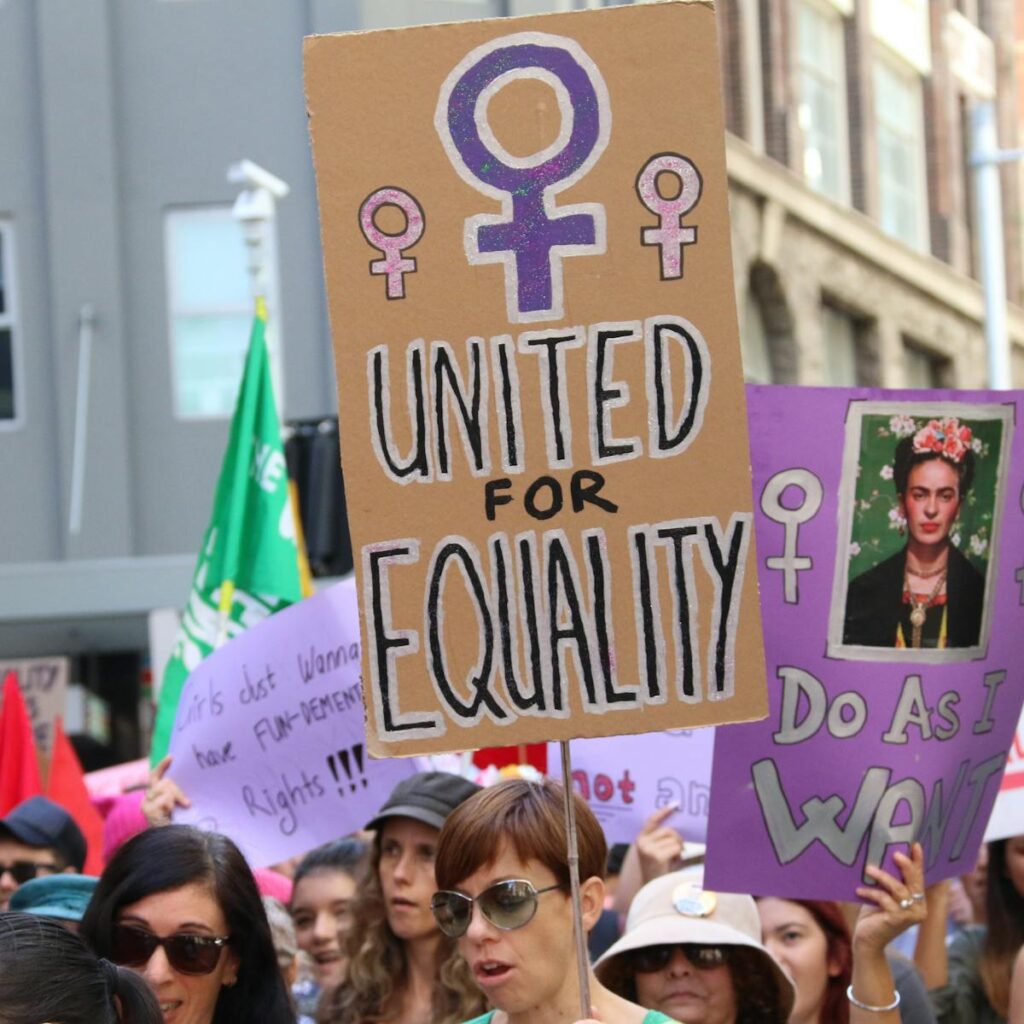
Unlike equality, which often focuses on individual rights, feminism recognizes the importance of collective action. It acknowledges that women are not isolated individuals, but rather members of a group with shared experiences and interests. Feminism fosters solidarity, empowering women to organize, mobilize, and advocate for change. It challenges the notion that women should compete with each other for limited resources and instead encourages them to collaborate and support one another.
III. The Problem with “Sameness”: Embracing Difference
One of the most significant critiques of equality is its reliance on the concept of “sameness.” It assumes that men and women are fundamentally the same and therefore deserve to be treated equally. This assumption, however, ignores the biological, social, and cultural differences that exist between the sexes.
To deny these differences is not only inaccurate but also harmful. It can lead to policies and practices that disadvantage women. For example, consider the debate surrounding parental leave. An equality-based approach might advocate for equal leave for both parents. However, this ignores the fact that women bear the primary responsibility for childbirth and often require more time to recover physically and emotionally. A feminist approach, on the other hand, would recognize these differences and advocate for policies that support women’s unique needs.
Furthermore, the focus on “sameness” can undermine the celebration of female identity. Women are not simply “men with vaginas.” They have their own unique experiences, perspectives, and strengths. Feminism encourages women to embrace their femininity without conforming to patriarchal norms. It celebrates the diversity of womanhood and challenges the notion that there is only one “right” way to be a woman.
IV. Beyond Equality: Towards Equity and Liberation
If equality is insufficient, what should we strive for instead? The answer, in my estimation, lies in equity and liberation. Equity recognizes that people have different needs and circumstances and that achieving fairness requires providing different levels of support. It is not about treating everyone the same; it is about ensuring that everyone has the resources and opportunities they need to thrive. Equity necessitates targeted interventions that address the specific disadvantages faced by marginalized groups. It requires dismantling the barriers that prevent women from fully participating in society.
Liberation, on the other hand, goes beyond simply achieving equal rights or equitable outcomes. It is about transforming the underlying power structures that perpetuate inequality. It is about challenging the norms, values, and institutions that reinforce patriarchal dominance. Liberation requires a radical reimagining of society, one that is based on principles of justice, equality, and respect for all.
V. The Intersectional Imperative: Recognizing the Complexity of Oppression
No exploration of feminism and equality would be complete without addressing the critical concept of intersectionality. As Kimberlé Crenshaw so eloquently articulated, intersectionality recognizes that individuals can experience multiple forms of oppression simultaneously, based on their race, gender, class, sexuality, and other identities. A Black woman, for instance, faces both sexism and racism, which interact to create a unique form of oppression that cannot be understood by simply adding up the two individual forms.
Intersectionality challenges the notion that all women experience oppression in the same way. It forces us to acknowledge the diversity of women’s experiences and to tailor our strategies accordingly. It recognizes that a feminist movement that only addresses the concerns of privileged women is inherently incomplete. True liberation requires a commitment to addressing the needs of all women, especially those who are most marginalized.
VI. Practical Implications: Transforming Policy and Practice
The distinction between feminism and equality has profound implications for policy and practice. An equality-based approach might focus on enacting laws that prohibit gender discrimination. While such laws are important, they are often insufficient to address the underlying causes of inequality. A feminist approach, on the other hand, would advocate for policies that actively challenge patriarchal structures and promote women’s empowerment.
For example, rather than simply mandating equal pay for equal work, a feminist approach might advocate for policies that address the gender pay gap at its root. This could include measures such as pay transparency, paid parental leave, affordable childcare, and affirmative action programs. Similarly, rather than simply promoting equal representation in politics, a feminist approach might focus on dismantling the barriers that prevent women from running for office, such as gender bias in the media and lack of access to campaign financing.
VII. The Ongoing Struggle: A Call to Action
The quest for gender equality is far from over. Despite the progress that has been made in recent decades, women continue to face significant challenges in all areas of life. From the persistent gender pay gap to the pervasive problem of sexual harassment and violence, the struggle for women’s liberation continues. We, as feminist warriors, must remain vigilant, resisting any attempt to water down our demands or to co-opt our movement for political gain.
We must continue to challenge the prevailing narratives that normalize inequality and to demand a society that is based on principles of justice, equality, and respect for all. This requires a commitment to both individual and collective action. We must challenge sexism in our own lives and support feminist organizations and initiatives that are working to create change. We must also engage in political activism, demanding that our elected officials prioritize the needs of women. This is not merely a battle for equal rights; it is a fight for a fundamentally different world.
In conclusion, while the pursuit of equality may seem like a noble endeavor, it is ultimately insufficient to address the deep-seated structural inequalities that oppress women. Feminism, with its multifaceted approach and its unwavering commitment to challenging power structures, offers a far more radical and transformative path towards liberation. It is time to move beyond the superficiality of equality and embrace the complexity and challenge of feminism. The future of women, and indeed the future of humanity, depends on it.







Leave a Comment