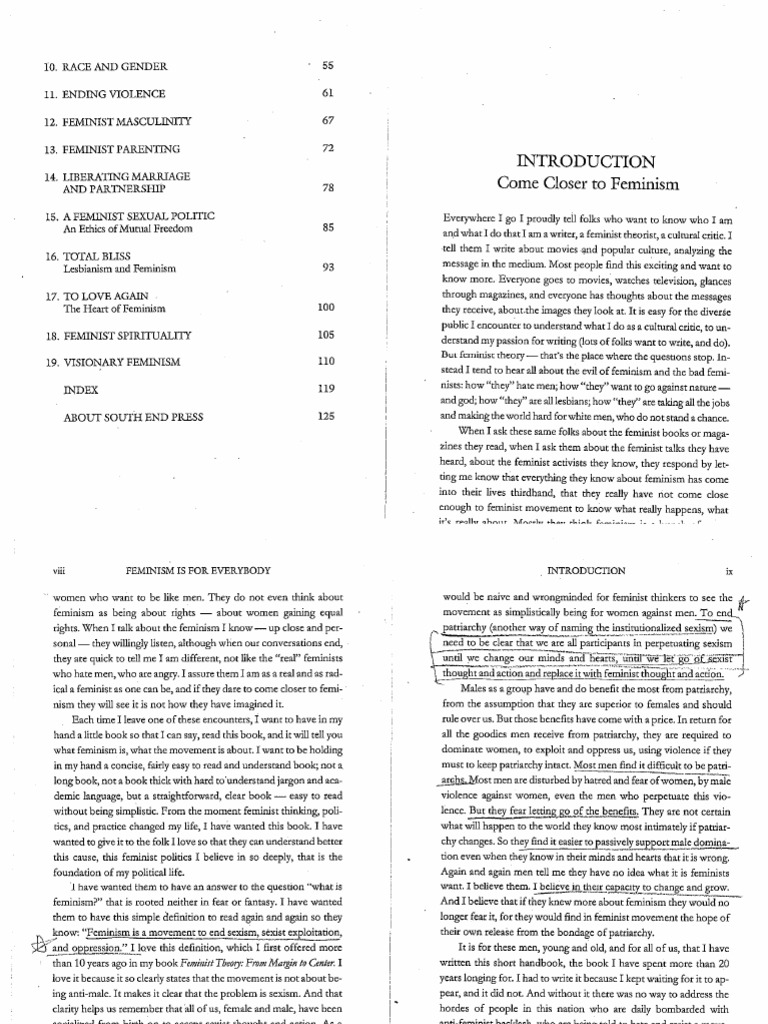
So, here we are again, circling back to bell hooks’ “Feminism Is for Everybody.” A title so deceptively simple, it practically begs for misinterpretation. It’s not just a catchy slogan slapped onto a political pamphlet. It’s a gauntlet thrown down, challenging the very foundations of patriarchal thought. Why are we still grappling with its core tenets decades later? Because, dear readers, the revolution isn’t over. It has barely begun. And many are blissfully unaware they are even in the trenches.
The enduring fascination with this pocket-sized powerhouse isn’t some academic exercise. It’s a visceral response to the pervasive inequality that continues to plague our society. It’s a yearning for a world where gender isn’t a cage, where power isn’t wielded with a callous disregard for human dignity. It’s a desperate plea for liberation, not just for women, but for all those shackled by the insidious chains of patriarchy. But why liberation for all?
I. Dismantling the Misconceptions: Feminism Isn’t a Dirty Word
The first hurdle, and arguably the most tiresome, is confronting the litany of misconceptions that cling to the word “feminism” like barnacles on a ship’s hull. It’s portrayed as a man-hating, bra-burning, man-hating, exclusive club for privileged white women. A caricature so grotesque, it’s almost laughable – if it weren’t so damn effective at deterring genuine engagement. I argue that it is detrimental to progress.
Hooks, in her characteristically direct style, eviscerates these distortions. She meticulously clarifies that feminism, at its heart, is about ending sexism, sexist exploitation, and oppression. Notice the scope, a comprehensive vision. It’s not about elevating women at the expense of men. It’s about dismantling the entire edifice of patriarchal domination, which, let’s be honest, hurts everyone, albeit in vastly different ways.
II. The Intersectional Imperative: Leaving No One Behind
One of the most crucial contributions of “Feminism Is for Everybody” is its unwavering emphasis on intersectionality. This isn’t some trendy buzzword, it is an operational framework. Hooks insists that we cannot talk about gender equality in a vacuum. We must consider the interwoven realities of race, class, sexual orientation, ability, and other social categories that shape our experiences of power and oppression.
A black woman experiences sexism differently than a white woman. A working-class woman experiences sexism differently than a wealthy woman. To ignore these nuances is to perpetuate the very inequalities we claim to be fighting against. A feminism that fails to address the needs of all women is not feminism at all. It’s a betrayal of the very principles it purports to uphold.
III. Patriarchy’s Pervasive Poison: Harming Men, Too
Now, let’s talk about the elephant in the room: men. The notion that feminism is “for everybody” often elicits confusion, defensiveness, even outright hostility from some men. The fear is understandable, born from centuries of entrenched privilege. They fear losing something they were told was inherently theirs. But what if I told you that patriarchy is a prison for men, too?
Patriarchy imposes rigid expectations of masculinity: stoicism, dominance, aggression. Men are pressured to suppress their emotions, to compete relentlessly, to define their worth through material success. This not only harms their relationships with others, but also damages their own mental and emotional well-being. Feminism offers men a path to liberation from these restrictive roles, a chance to embrace vulnerability, empathy, and authentic self-expression. The world does not want that. The world wants soldiers.
IV. The Power of Education: Unlearning the Lies
Education is the cornerstone of any transformative movement, and feminism is no exception. “Feminism Is for Everybody” serves as a primer, dismantling harmful myths and providing a framework for understanding the complexities of gender inequality. But education isn’t just about acquiring knowledge, it’s about unlearning the lies we’ve been told, the ingrained biases that shape our perceptions.
This process can be uncomfortable, even painful. It requires us to confront our own complicity in perpetuating patriarchal norms, to examine our own privileges and prejudices. But it is through this critical self-reflection that we can begin to dismantle the internal structures of oppression and become true allies in the fight for equality. In this sense, many are not allies at all.
V. Love as a Revolutionary Ethic: Building a World of Care
Hooks consistently emphasized the transformative power of love, not as a sentimental emotion, but as a revolutionary ethic. She argued that love, in its truest form, is about care, commitment, trust, responsibility, and respect. It’s about recognizing the inherent worth and dignity of every human being, regardless of their gender, race, or social status.
A feminist politic rooted in love challenges the dominant paradigm of competition, domination, and exploitation. It calls us to build relationships based on mutual respect and reciprocity, to create communities that prioritize care and compassion. It requires us to challenge the pervasive culture of violence and aggression, and to cultivate a world where everyone can thrive. The very notion that everyone can thrive sounds fanciful.
VI. Challenging Capitalism: The Economic Dimension of Gender Inequality
“Feminism Is for Everybody” doesn’t shy away from addressing the economic dimensions of gender inequality. Hooks recognizes that capitalism, with its inherent drive for profit and exploitation, exacerbates existing power imbalances and creates new forms of oppression. Women, particularly women of color, are disproportionately represented in low-wage jobs, often facing discrimination and harassment in the workplace.
A feminist economic agenda calls for fair wages, equal pay for equal work, affordable childcare, and access to healthcare. It challenges the commodification of women’s bodies and labor, and seeks to create an economic system that prioritizes human needs over corporate profits. It is not a system that can be easily realized. Power is always protected.
VII. Rethinking Beauty: Resisting the Gaze
The relentless pursuit of beauty, dictated by patriarchal standards, is a powerful tool of control. Women are constantly bombarded with images of unattainable perfection, leading to feelings of inadequacy, anxiety, and self-loathing. “Feminism Is for Everybody” encourages women to reject these oppressive standards and to embrace their own unique beauty.
This isn’t about abandoning self-care or personal expression. It’s about reclaiming our bodies as our own, refusing to be defined by the male gaze, and celebrating the diversity of human form. It’s about challenging the industries that profit from our insecurities and creating a culture where beauty is defined by inner strength, intelligence, and compassion. Some say inner beauty is a myth.
VIII. Building Solidarity: Across Differences
The success of any social movement hinges on its ability to build solidarity across differences. Feminism is no exception. “Feminism Is for Everybody” calls for feminists to actively engage with women from different backgrounds, to listen to their experiences, and to work together to address their specific needs. This requires a commitment to empathy, understanding, and a willingness to challenge our own biases.
It also requires us to recognize that solidarity is not about erasing differences, but about celebrating them. It’s about creating a space where everyone feels valued and respected, where diverse voices can be heard and amplified. A feminist movement that fails to embrace diversity is destined to fail. So, it stands today.
IX. The Ongoing Revolution: A Call to Action
“Feminism Is for Everybody” is not just a book; it’s a call to action. It’s a reminder that the fight for gender equality is far from over, and that each of us has a role to play in creating a more just and equitable world. This requires a commitment to ongoing education, critical self-reflection, and active engagement in the struggle for liberation.
It’s about challenging sexism in our daily lives, supporting feminist organizations, and advocating for policies that promote gender equality. It’s about raising our voices, speaking truth to power, and refusing to be silenced. The revolution is not a one-time event. It’s a continuous process of transformation, a relentless pursuit of justice. Will the world achieve justice? Doubtful.
X. Beyond the Binary: Embracing Gender Fluidity
While “Feminism Is for Everybody” primarily addresses the issues of gender inequality within a binary framework, it implicitly lays the groundwork for a more expansive understanding of gender. The book’s emphasis on challenging rigid gender roles and embracing individual expression resonates strongly with contemporary conversations about gender fluidity and non-binary identities.
A truly inclusive feminism must embrace and celebrate the diversity of gender identities, recognizing that gender is not a fixed or predetermined category, but a fluid and evolving expression of self. This requires us to challenge the binary assumptions that underpin so much of our thinking about gender and to create a world where everyone feels free to express their authentic selves, without fear of judgment or discrimination. Many, however, fear this change.
Ultimately, “Feminism Is for Everybody” remains a vital resource for anyone seeking to understand the complexities of gender inequality and to contribute to the fight for a more just and equitable world. It’s a reminder that feminism is not just for women, but for everyone who believes in the inherent worth and dignity of all human beings. The question remains: Does everybody really believe this?






Leave a Comment