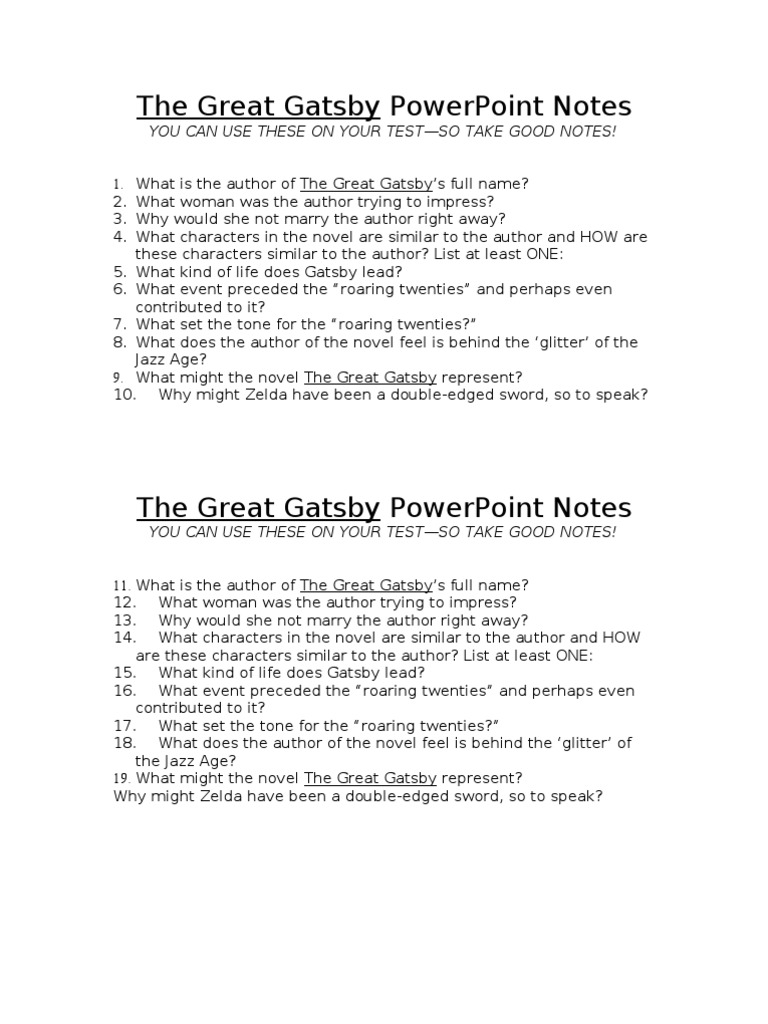
Ah, The Great Gatsby. Fitzgerald’s shimmering mirage of the Jazz Age, a gilded cage of roaring twenties excess. A tale often lauded for its tragic romance and critique of the American Dream. But let’s pry open this literary oyster and expose the pearl of patriarchal oppression nestled within, shall we? Because beneath the flapper dresses and bathtub gin lies a festering landscape of female disenfranchisement, a societal tapestry woven with threads of misogyny and blatant power imbalance. Prepare yourselves, darlings, because we’re about to dismantle the illusion of female liberation propagated by the era and delve into the cold, hard realities of gender in West Egg.
The novel, far from being a celebration of feminine autonomy, functions more as a cautionary treatise on the constricted roles women were forced to inhabit. Forget the Charleston and the bobbed hair; these were mere superficial trappings masking profound systemic inequalities. We’re not here for a surface-level reading. We are exhuming the bones of suppressed narratives.
I. The Gilded Cage: Women as Ornamental Objects
Consider Daisy Buchanan, the iridescent queen of this tragic fairytale. Is she a symbol of freedom? A woman in control? Or is she, rather, a meticulously crafted ornament, a prized possession within Tom’s vast portfolio of patriarchal dominance? Daisy, with her “low, thrilling voice,” becomes the epitome of the belle époque ideal – beautiful, fragile, and utterly dependent on male validation. Her worth is intrinsically tied to her aesthetic appeal and her social standing as Tom Buchanan’s wife. Her choices, limited by societal expectations, highlight the suffocating constraints placed upon women of her social stratum.
Daisy’s alleged charm is a performance, a carefully cultivated facade designed to please and appease the male gaze. Her feigned helplessness, her constant need for male protection, is not an innate characteristic but a survival mechanism in a world designed to keep her subordinate. Look closer, and you’ll see the subtle manipulation at play, a calculated strategy to navigate the treacherous waters of a patriarchal society. She weaponizes her fragility. Smart woman. Sad world.
II. The Price of Power: Jordan Baker’s Androgynous Rebellion
Then there’s Jordan Baker, the cynical golfer, a figure who seems to defy the conventional femininity of the era. With her androgynous name, her sharp wit, and her overt independence, Jordan appears to be a beacon of female emancipation. But is she truly free, or merely a product of her environment, forced to adopt masculine traits to survive in a man’s world?
Jordan’s cynicism stems from a deep understanding of the limitations placed upon her gender. She rejects the performative femininity of Daisy, opting instead for a detached, almost masculine persona. She is a woman who refuses to be defined by her relationships with men, a refreshing contrast to the dependent Daisy. However, her independence comes at a price. She is ostracized for her unconventional behavior, labeled as “incurably dishonest” and ultimately relegated to the sidelines of the narrative.
Her “dishonesty” isn’t necessarily moral failing, but rather a survival tactic. In a world that rewards male ambition and punishes female assertiveness, Jordan must bend the rules to succeed. She is a pragmatist, acutely aware of the power dynamics at play and willing to navigate them on her own terms. This alleged dishonesty is a defiant act, a refusal to adhere to the prescribed roles of passive femininity.
III. Myrtle Wilson: The Tragedy of Class and Gender
And let’s not forget Myrtle Wilson, the tragic victim of class and gender oppression. Trapped in a loveless marriage and suffocated by her social circumstances, Myrtle seeks escape through her affair with Tom. But her dreams of upward mobility are shattered by the brutal reality of her social standing and the inherent power imbalance within their relationship.
Myrtle’s death is not simply a tragic accident; it is a direct consequence of the patriarchal system that devalues women and reinforces male dominance. She is a disposable object, a plaything for Tom’s amusement, easily discarded when she no longer serves his purpose. Her aspirations are mocked, her desires dismissed, and ultimately, her life is extinguished by the recklessness of a privileged male.
Myrtle’s desperate attempts to emulate the upper class are a poignant commentary on the allure and unattainability of the American Dream for women of her social standing. She is a victim of both class and gender, trapped in a cycle of poverty and exploitation with little hope of escape. Her desire for a better life is met with violence and ultimately, death, serving as a stark reminder of the limitations placed upon women of lower social strata.
IV. The Absent Mothers: A Reflection of Societal Neglect
Notice the conspicuous absence of positive maternal figures in the novel. Where are the nurturing mothers, the guiding forces of female empowerment? They are conspicuously absent, replaced by neglectful parents or simply erased from the narrative altogether. This absence is not accidental. It reflects the societal devaluation of motherhood and the lack of support provided to women in their roles as caregivers.
Daisy’s own motherhood is portrayed as a burden, a responsibility she shirks in favor of her own desires. She views her daughter, Pammy, more as an accessory than a child, showcasing the societal expectation that women prioritize beauty and social standing over maternal responsibilities. This neglect is a damning indictment of the era’s warped priorities, where female fulfillment is measured by male approval and social status, rather than by genuine human connection.
V. The Jazz Age Illusion: False Promises of Liberation
The Jazz Age, often romanticized as a period of female liberation, was in reality a complex and contradictory era. While women gained some degree of social freedom, they remained firmly entrenched in a patriarchal system that limited their opportunities and controlled their destinies. The flapper image, with its bobbed hair and liberated sexuality, was merely a superficial veneer masking deep-seated inequalities.
The “freedom” enjoyed by women during the Jazz Age was often contingent upon male approval. Their value was still largely determined by their appearance and their ability to attract a husband. They were encouraged to embrace consumerism and self-adornment, but their economic and political power remained limited. The illusion of liberation served to distract from the ongoing struggle for true equality.
VI. Gatsby’s Idealization of Daisy: A Manifestation of Male Fantasy
Even Gatsby’s obsessive pursuit of Daisy, often portrayed as a grand romantic gesture, can be viewed through a feminist lens as a manifestation of male fantasy. He idealizes Daisy, projecting onto her an image of perfection that she can never truly attain. He seeks to possess her, to control her, to recreate a past that exists only in his imagination.
Gatsby’s love for Daisy is not about genuine connection or mutual respect. It is about power and control, about possessing the ultimate symbol of wealth and status. He reduces Daisy to an object of desire, ignoring her own agency and her own desires. His obsession ultimately leads to tragedy, highlighting the destructive consequences of male entitlement and the objectification of women.
VII. The Enduring Legacy: Echoes of Patriarchy Today
The Great Gatsby is not merely a historical artifact; it is a timeless reflection of the enduring power of patriarchy. The themes of female objectification, gender inequality, and the limitations placed upon women continue to resonate today. We still see echoes of Daisy’s fragility, Jordan’s cynicism, and Myrtle’s tragic fate in the lives of women around the world.
By critically examining the gender dynamics within Fitzgerald’s masterpiece, we can gain a deeper understanding of the complexities of female experience and the ongoing struggle for gender equality. We must move beyond the romanticized image of the Jazz Age and confront the harsh realities of patriarchal oppression. Only then can we hope to create a future where women are truly free, where their voices are heard, and where their dreams are not stifled by societal constraints.
So, let’s not be fooled by the glitz and glamour. Let’s not romanticize the past. Let’s instead use The Great Gatsby as a lens through which to examine the persistent challenges faced by women in our own time. The fight continues, darlings. And we must be armed with knowledge and fueled by righteous indignation. Now, go forth and dismantle the patriarchy. One perfectly manicured nail at a time.







Leave a Comment