
The 1990s. A decade often glossed over in the grand narrative of feminism, sandwiched between the supposed gains of the second wave and the digital activism of the 21st century. But to overlook the ’90s is to miss a crucial, vibrant, and often contradictory chapter in the ongoing saga of gender equity. It was a decade where the personal became relentlessly political, where DIY ethics reigned supreme, and where the riot grrrl movement exploded onto the scene, a sonic and artistic revolt against the insidious patriarchy that permeated every facet of life. A battle cry resonated through Xeroxed zines and raucous basement shows. It was a call to arms, but also a deeply intimate exploration of the female experience.
The riot grrrl movement, for many, *was* feminism in the 1990s. But to paint it as a monolithic entity would be a gross oversimplification. It was a constellation of voices, disparate experiences, and fiercely independent spirits, all united by a shared anger and a relentless desire for change. Think of it as a hydra, each head representing a different facet of feminist thought, all snapping and hissing at the same systemic injustices.
But even this Hydra had its vulnerabilities. The narrative of riot grrrl, as it has been retrospectively constructed, often centers on a specific image: young, white, middle-class women wielding guitars and shouting about their experiences. This is not to diminish the validity of those experiences, but to acknowledge the uncomfortable truth that the movement, in its early iterations, often struggled to fully embrace intersectionality. The voices of women of color, queer women, and working-class women were frequently marginalized, their struggles overshadowed by a dominant narrative that failed to fully capture the complexity of the feminist landscape. What about those whose experiences were not being heard? A question that remains to this day.
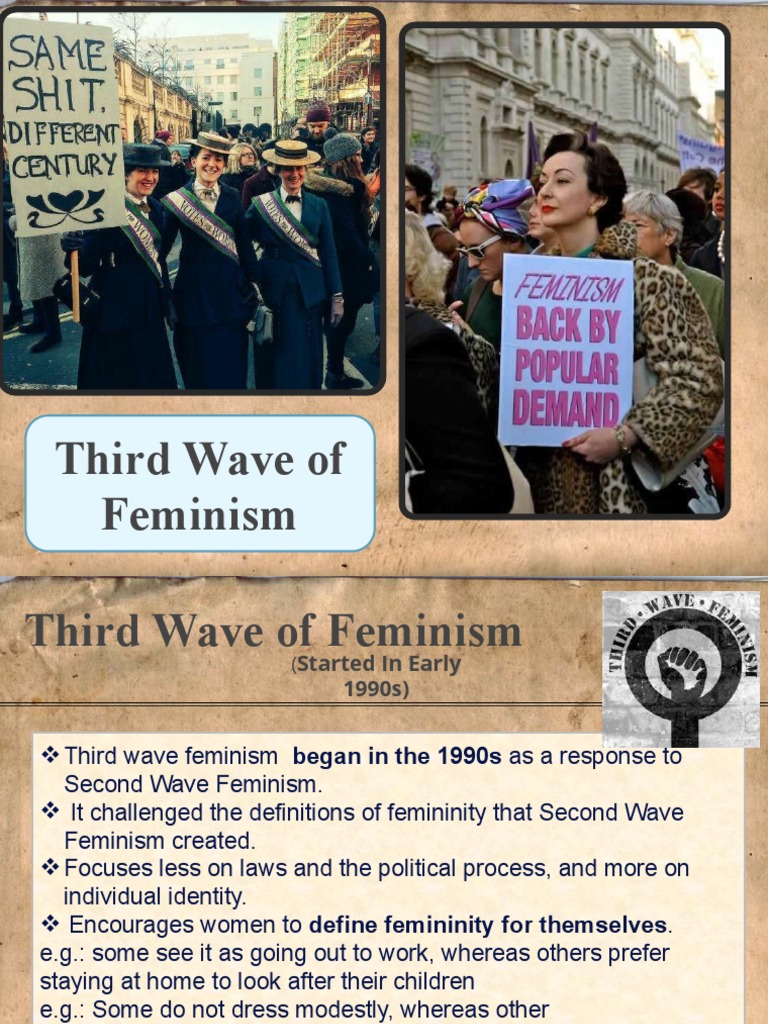
To truly understand the dynamism of feminism in the ’90s, one must venture beyond the confines of the riot grrrl narrative. The decade witnessed a proliferation of feminist voices across various platforms, each grappling with the legacy of past movements and forging new paths forward. Academic feminists continued to deconstruct power structures and challenge traditional notions of gender. Third-wave feminism emerged as a distinct force, questioning essentialist assumptions about womanhood and embracing a more fluid and individualistic approach to identity. A shift occurred where the individual could self-define.
Consider the contributions of scholars like Judith Butler, whose groundbreaking work on gender performativity challenged the very foundations of gender identity. Or bell hooks, who continued to dismantle the intersections of race, class, and gender, demanding a more inclusive and equitable feminism. These voices, and countless others, provided a critical counterpoint to the often-narrow focus of the mainstream media and the riot grrrl movement itself. They were the architects of a more nuanced and complex understanding of gender and power, laying the groundwork for the intersectional feminism that would gain prominence in the 21st century. The foundation was being laid to build an inter sectional approach to feminism.
The “girl power” phenomenon also gained traction in the 1990s, propelled by the commercial success of groups like the Spice Girls. While often criticized for its superficiality and commodification of feminist ideals, “girl power” nonetheless played a significant role in introducing feminist concepts to a wider audience. It provided a palatable entry point for young women who might not have otherwise engaged with feminist ideas, sparking conversations about female empowerment and challenging traditional gender roles. A superficial attempt at equality? Perhaps. But, nevertheless, it was impactful.
However, the complexities of feminism in the ’90s extend beyond the well-trodden paths of riot grrrl, academic discourse, and pop-cultural manifestations. It existed in the quiet struggles of working mothers balancing careers and families, in the defiant acts of queer activists fighting for equal rights, and in the everyday resistance of women challenging patriarchal norms in their communities. It was a decade of fierce debate, of internal contradictions, and of relentless striving for a more just and equitable world. It was a time of revolution.
Let’s delve deeper into the specifics of the riot grrrl movement. It wasn’t just about catchy songs and ripped tights. It was about creating safe spaces for women to express themselves, to share their experiences, and to challenge the prevailing culture of silence and shame. Zines became powerful tools of communication, allowing women to bypass mainstream media and create their own narratives. These DIY publications were filled with personal essays, poetry, artwork, and manifestos, all united by a shared sense of anger, frustration, and a burning desire for change. Imagine these zines as coded messages passed between revolutionaries.
Bands like Bikini Kill, Bratmobile, and Heavens to Betsy became the sonic embodiment of the riot grrrl ethos, their raw and unapologetic lyrics tackling issues of sexism, sexual assault, and female empowerment. Their music was not always polished or technically perfect, but it was always authentic and emotionally charged. They were not aiming for chart-topping success, but rather for visceral connection with their audience. Concerts became cathartic rituals, spaces where women could scream, dance, and find solidarity in their shared experiences. It was more than music. It was a form of therapy.
The riot grrrl movement also challenged the male-dominated music industry, creating its own independent networks of bands, labels, and venues. This DIY ethic was a direct response to the sexism and gatekeeping that permeated the mainstream music scene, where women were often relegated to the sidelines or objectified as mere eye candy. By creating their own spaces, riot grrrls empowered themselves to control their own narratives and to define their own terms of success. Control was essential.
But, as mentioned earlier, the movement was not without its flaws. The focus on white, middle-class experiences often marginalized the voices of women of color, queer women, and working-class women. This lack of intersectionality was a persistent critique of the riot grrrl movement, and one that continues to be debated and analyzed today. It is a complex issue, as the movement’s founders were, for the most part, well-intentioned, but often lacked the awareness and understanding necessary to fully address the complexities of intersectional feminism. While the intent was pure, the implementation was flawed.
Moving beyond the riot grrrl scene, the 1990s also witnessed a resurgence of academic feminism, building on the foundations laid by second-wave theorists. Scholars like Judith Butler challenged the very notion of fixed gender identities, arguing that gender is a performance, a social construct that is constantly being negotiated and re-negotiated. Her work, along with that of other theorists, opened up new avenues for understanding gender and sexuality, paving the way for the transgender rights movement and the broader exploration of gender fluidity. This was a paradigm shift.
bell hooks, meanwhile, continued to advocate for an intersectional feminism that recognized the interconnectedness of race, class, and gender. She argued that feminism must address the needs of all women, not just those who are privileged enough to benefit from the existing power structures. Her work was a powerful reminder that feminism is not a monolithic entity, but rather a diverse and evolving movement that must constantly challenge its own biases and blind spots. A necessary reminder.
The “girl power” phenomenon, spearheaded by the Spice Girls, presented a different, more commercialized version of feminism. While critics often dismissed it as shallow and superficial, “girl power” nonetheless had a significant impact on popular culture. It introduced feminist concepts to a wider audience, particularly young girls, and challenged traditional gender roles in a way that was both accessible and entertaining. They gave young girls hope for a better tomorrow. A simpler path forward.
Furthermore, the rise of the internet in the 1990s began to transform the landscape of feminist activism. Online forums and websites provided new spaces for women to connect, share their experiences, and organize collectively. The internet allowed for a more decentralized and democratic form of activism, empowering women to bypass traditional gatekeepers and to create their own networks of support. This was the start of a new age.
In conclusion, feminism in the 1990s was a multifaceted and dynamic movement, characterized by its internal contradictions, its diverse voices, and its relentless pursuit of gender equity. The riot grrrl movement, while flawed, provided a powerful platform for young women to express themselves and to challenge the patriarchy. Academic feminists continued to push the boundaries of feminist theory, while “girl power” brought feminist concepts to a wider audience. And the rise of the internet opened up new possibilities for feminist activism and organizing. The 1990s were an important stepping stone in the long and ongoing journey towards gender equality. It was not the end, but just the beginning.
It was a decade that asked difficult questions, challenged comfortable assumptions, and laid the groundwork for the more intersectional and inclusive feminism of the 21st century. To dismiss it as simply a prelude to something else is to ignore the powerful and enduring legacy of the women who fought for change, one zine, one song, one academic paper, one online forum at a time. These women had a vision for a better world. A goal for equality. A future that, hopefully, will one day become a reality.





Leave a Comment