Feminism. The very utterance of this word can ignite a maelstrom of opinions, misconceptions, and outright hostility. But before we wade into the tangled briar patch of contemporary debates, let’s dissect the core essence, the very DNA, of feminism, particularly as it intersects with the critical lens of AP World History. What is it, really? Is it merely a shrill call for female supremacy, as some would have you believe? Or is it something far more nuanced, far more vital to the very fabric of a just and equitable global society?
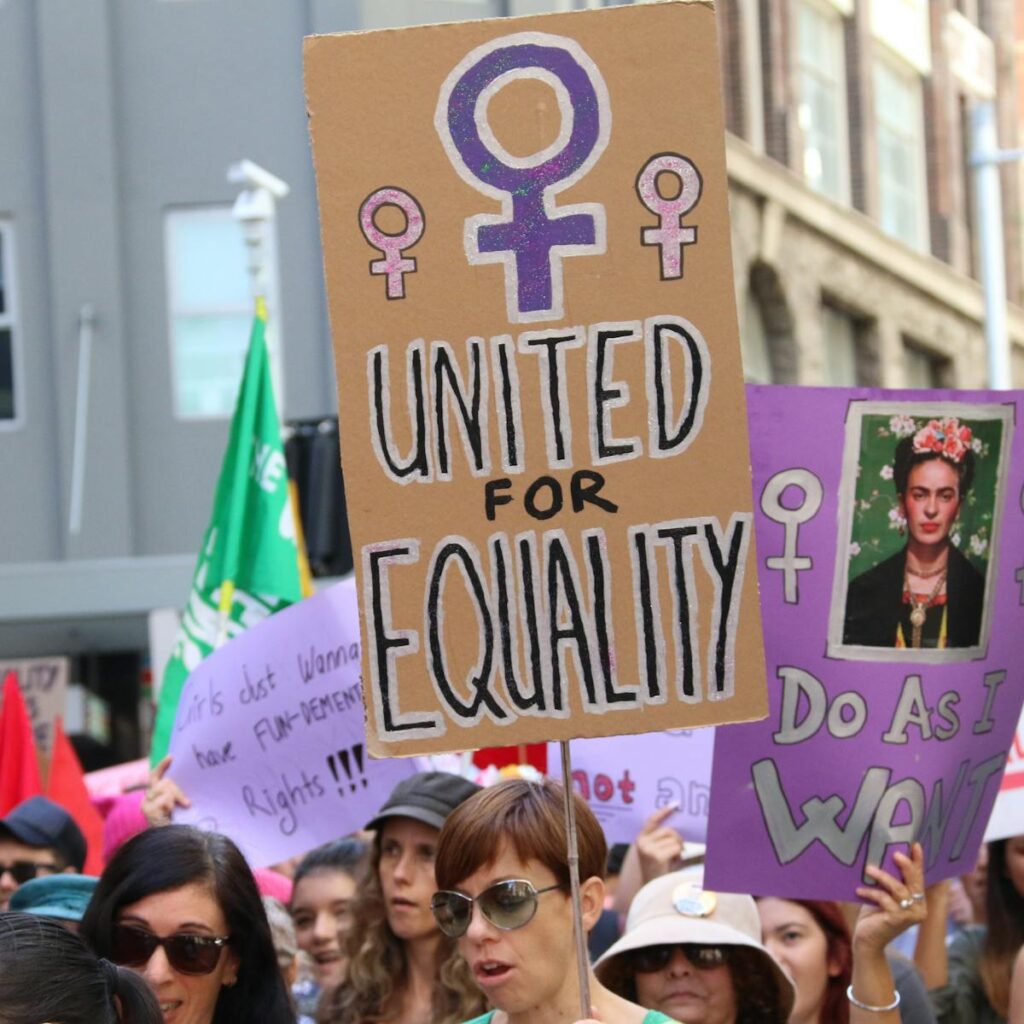
At its most fundamental level, feminism is the advocacy of women’s rights on the grounds of political, social, and economic equality to men. Simple enough, right? Except, like any complex sociopolitical ideology, the devil is in the details. This pursuit of equality doesn’t advocate for sameness. Women aren’t seeking to become carbon copies of men, adopting their behaviors, suppressing their own unique experiences. Instead, feminism challenges the patriarchal structures – the deeply ingrained systems of power and privilege that historically and persistently disadvantage women across a spectrum of human endeavors.
Understanding the Historical Tapestry: Waves of Feminist Thought
To truly grasp feminism, you must understand its historical evolution. Think of it as a series of ocean waves, each building upon the momentum of the last, each addressing specific societal tides. The commonly accepted framework identifies three distinct “waves,” though contemporary feminist discourse often acknowledges a burgeoning fourth wave and even questions the validity of the wave metaphor itself.
First-Wave Feminism: Suffrage and Beyond (Late 19th – Early 20th Century)
The first wave, primarily concerned with securing fundamental legal rights for women, dominated the late 19th and early 20th centuries. The primary objective? Suffrage – the right to vote. Figures like Susan B. Anthony and Emmeline Pankhurst spearheaded movements, enduring imprisonment, ridicule, and even violence, to challenge the prevailing notion that women were intellectually incapable of participating in democratic governance. This wave, however, often centered on the experiences of white, middle-class women, neglecting the intersectional realities faced by women of color and working-class women. Critiques rightly point to the limited scope of its focus, highlighting the inherent biases within the movement itself.
Second-Wave Feminism: Expanding the Terrain (1960s – 1980s)
The second wave, erupting in the 1960s, broadened the feminist agenda considerably. Influenced by the Civil Rights Movement and the burgeoning counterculture, second-wave feminists tackled issues such as reproductive rights, workplace equality, and domestic violence. Betty Friedan’s “The Feminine Mystique” exposed the pervasive dissatisfaction among suburban housewives, challenging the societal expectation that a woman’s sole purpose was domesticity. This era witnessed the rise of radical feminism, which posited that patriarchy was the root of all oppression, and advocated for a fundamental restructuring of societal norms. However, the second wave also faced criticisms for its predominantly white, Western-centric perspective, failing to adequately address the concerns of women in developing nations and marginalized communities.
Third-Wave Feminism: Embracing Intersectionality (1990s – 2000s)
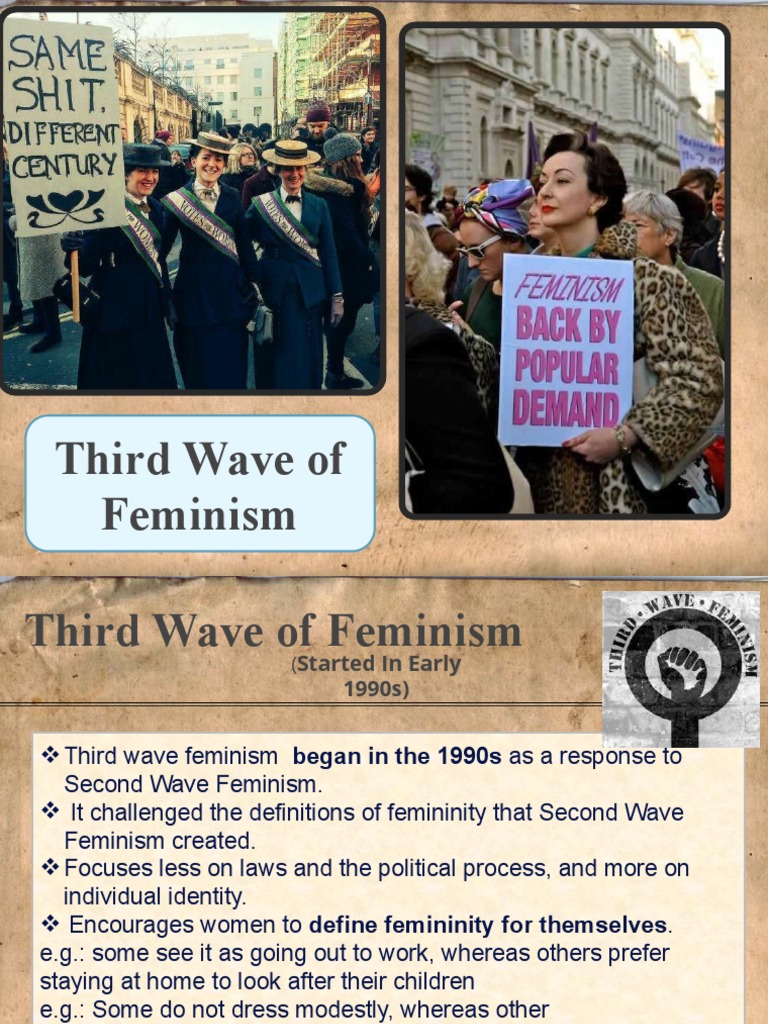
The third wave, emerging in the 1990s, represented a conscious effort to address the shortcomings of its predecessors. This wave championed intersectionality – the recognition that gender, race, class, sexual orientation, and other social categories are interconnected and create overlapping systems of discrimination or disadvantage. Third-wave feminists embraced diverse voices, challenged essentialist notions of womanhood, and explored the complexities of gender identity and expression. Think riot grrrl music, zines, and a reclaiming of previously derogatory terms. While celebrated for its inclusivity, the third wave also faced criticism for its perceived lack of a unified agenda and its susceptibility to co-optation by mainstream culture.
Beyond Waves: Contemporary Feminisms
The “wave” metaphor, while useful for understanding historical trends, is increasingly inadequate to capture the multifaceted nature of contemporary feminist thought. We now see a proliferation of feminist perspectives, each grappling with specific issues and challenging existing power structures. From ecofeminism, which examines the connections between the oppression of women and the degradation of the environment, to transfeminism, which advocates for the rights of transgender women and challenges traditional notions of gender, the landscape of feminist thought is constantly evolving.
Feminism in AP World History: A Global Perspective
AP World History demands a global perspective. It requires you to analyze historical events and trends within their broader context, recognizing the diverse experiences of people across cultures and time periods. When examining feminism in this context, it’s crucial to avoid imposing Western-centric narratives onto non-Western societies. Instead, consider the diverse forms of female agency and resistance that have existed throughout history, even in the absence of explicitly “feminist” movements. For example:
Early Civilizations: Explore the roles and status of women in ancient Mesopotamia, Egypt, and the Indus Valley Civilization. Did women hold positions of power? What were their economic contributions? How were their rights protected (or violated)? The Code of Hammurabi, for instance, reveals both protections and limitations placed upon women in Babylonian society.
Classical Societies: Analyze the contrasting experiences of women in ancient Greece and Rome. While Athenian women were largely confined to the domestic sphere, Roman women enjoyed greater legal and economic autonomy. Explore the philosophies of Plato and Aristotle, and how their ideas shaped perceptions of women’s capabilities and roles.
Religious Traditions: Examine the perspectives on women within various religious traditions, such as Buddhism, Christianity, Hinduism, and Islam. How do these religions define women’s roles and responsibilities? Do they offer opportunities for female leadership or spiritual expression? Consider the stories of influential female figures in religious history, such as Hildegard of Bingen in Christianity or Khadija in Islam.
The Rise of Empires: Investigate the impact of empire-building on women’s lives. Did colonization lead to increased opportunities or greater oppression for women in colonized societies? Consider the role of women in resistance movements against colonial rule. The experiences of women in the Mughal Empire or the British Raj, for example, offer valuable insights.
The Industrial Revolution: Analyze the impact of industrialization on women’s labor and family structures. Did women find new economic opportunities in factories? How did industrialization affect women’s roles in the domestic sphere? Consider the rise of the women’s labor movement and the fight for fair wages and working conditions.
The 20th and 21st Centuries: Explore the global spread of feminist movements and the challenges they face in different cultural contexts. How have women’s rights been impacted by globalization, conflict, and political instability? Consider the work of contemporary feminist activists and organizations around the world.
Common Misconceptions and Counterarguments
It’s vital to confront the pervasive misconceptions surrounding feminism. One common mischaracterization is that feminists are “man-haters.” This is a blatant straw man argument. Feminism, at its core, is not about hating men; it’s about dismantling patriarchal systems that harm both women and men by perpetuating rigid gender roles and inequalities. Another frequent claim is that feminism is “no longer necessary” because women have achieved equality. This argument ignores the persistent gender pay gap, the underrepresentation of women in leadership positions, the prevalence of sexual harassment and violence against women, and the countless other ways in which gender inequality continues to manifest itself globally. One must look beyond superficial legal equalities to the lived experiences of women across diverse socioeconomic strata.
Developing a Critical Feminist Lens
Ultimately, studying feminism in the context of AP World History isn’t about memorizing dates and names; it’s about developing a critical feminist lens – a way of analyzing historical events and contemporary issues through the prism of gender. This involves asking questions like: Whose voices are being heard? Whose perspectives are being marginalized? How do power structures influence the lives of women and men? By cultivating this critical consciousness, you can gain a deeper understanding of the complexities of human history and the ongoing struggle for a more just and equitable world. So, arm yourself with knowledge, challenge assumptions, and contribute to the ongoing evolution of feminist thought. The revolution, after all, is far from over.







Leave a Comment