
The hallowed halls of academia, the smoky backrooms of activist meetings, the digital echo chambers of online discourse – all reverberate with the persistent tension between Feminism and Marxism. Two behemoths of ideological thought, each promising liberation, each demanding allegiance. But can they truly coexist? Or are they locked in an eternal, zero-sum game where one’s victory necessitates the other’s defeat? The simplistic answer, often peddled by the intellectually lazy, is a resounding *no*. They proclaim Marxism to be inherently patriarchal, a system blind to the nuances of gendered oppression, and they dismiss Feminism as a bourgeois distraction, diluting the revolutionary fervor needed to dismantle capitalism. I, however, contend that such reductionism is not only intellectually dishonest but actively detrimental to the cause of true liberation. We must delve deeper, dissect the seemingly irreconcilable differences, and unearth the potential for a powerful, synergistic alliance.
Let’s begin with the bedrock of Marxist thought: class struggle. Karl Marx, in his seminal works, meticulously deconstructed the capitalist system, revealing the inherent exploitation of the proletariat by the bourgeoisie. The means of production, the very lifeblood of society, are controlled by a select few, while the vast majority are forced to sell their labor for a pittance, perpetuating a cycle of poverty and alienation. It’s a bleak picture, a stark indictment of a system predicated on inequality. But where, pray tell, does gender fit into this analysis? Critics rightly point out that Marx, and many of his subsequent disciples, largely ignored the specific oppressions faced by women. The factory worker, toiling away in a textile mill, was often implicitly assumed to be male. The unpaid labor of women in the domestic sphere, the very foundation upon which capitalist production rests, was rendered invisible, relegated to the sidelines of historical analysis. This egregious oversight, this blatant androcentrism, is a legitimate cause for feminist ire.
However, to dismiss Marxism entirely on these grounds is to throw the baby out with the bathwater. The core tenets of Marxist analysis – the critique of capitalist exploitation, the understanding of power dynamics, the call for revolutionary change – remain powerfully relevant to the feminist cause. Consider, for instance, the concept of *reserve army of labor*. This refers to the pool of unemployed or underemployed workers that capitalists can draw upon to suppress wages and break strikes. Who constitutes a significant portion of this reserve army? Women. Historically marginalized and often relegated to precarious, low-paying jobs, women are readily exploited by the capitalist system. Furthermore, the pressure to conform to traditional gender roles, to prioritize domestic responsibilities over paid work, further weakens their bargaining power and renders them more vulnerable to exploitation. In this context, a Marxist analysis of class struggle becomes an indispensable tool for understanding the specific economic vulnerabilities faced by women.
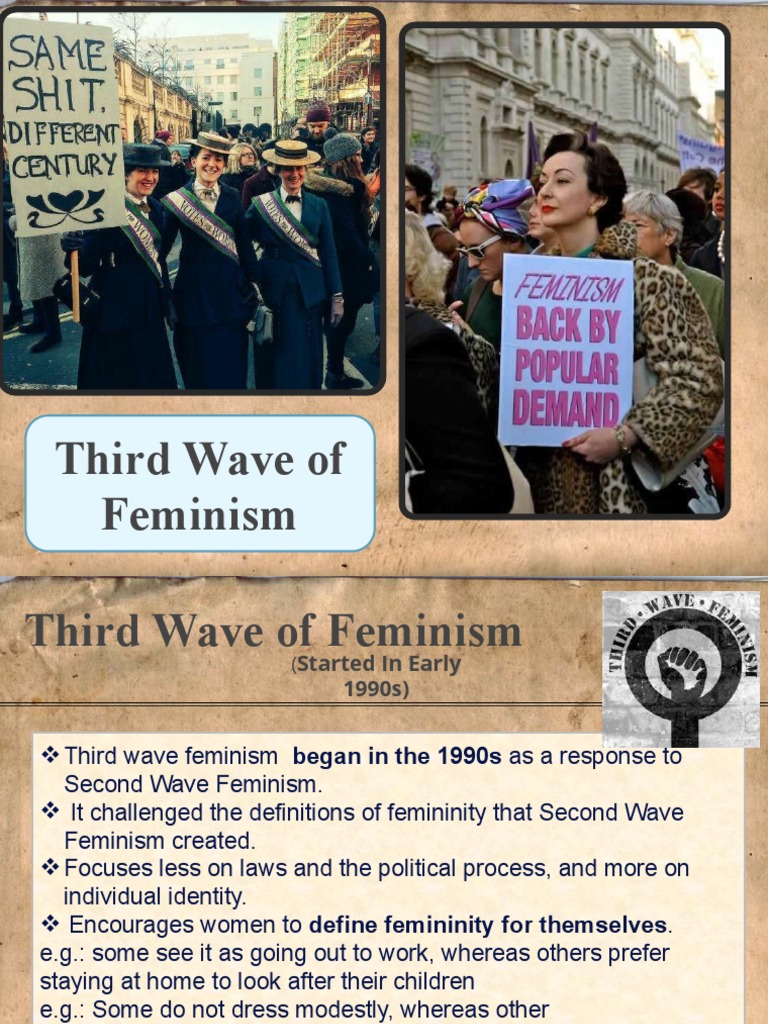
Now, let us turn our attention to Feminism, a multifaceted movement encompassing a vast array of perspectives and approaches. At its heart, Feminism seeks to dismantle patriarchal structures and achieve gender equality in all spheres of life. From demanding equal pay for equal work to challenging the objectification of women in media, feminists have fought tirelessly to dismantle the systemic inequalities that permeate our society. However, not all feminisms are created equal. A critical distinction must be drawn between *liberal feminism* and *socialist feminism*. Liberal feminism, often associated with mainstream political discourse, focuses on achieving gender equality through legal and political reforms within the existing capitalist framework. While such reforms can undoubtedly improve the lives of individual women, they often fail to address the root causes of gender inequality. They tinker around the edges of the system without fundamentally challenging its underlying power structures.
Socialist feminism, on the other hand, recognizes the inextricable link between capitalism and patriarchy. It argues that gender inequality is not merely a matter of individual prejudice or discriminatory laws but is deeply embedded within the economic and social structures of capitalist society. The capitalist system, in its relentless pursuit of profit, exploits not only the labor of the working class but also the unpaid labor of women in the domestic sphere. The reproduction of labor power, the rearing of children, the caretaking of the elderly – these essential tasks are disproportionately borne by women and are rendered invisible and undervalued by the capitalist system. This unpaid labor, this hidden subsidy, allows capitalists to pay lower wages and maximize profits. In this context, the liberation of women requires not merely legal reforms but a fundamental transformation of the economic system.
The convergence of Marxist and feminist thought, particularly in the form of socialist feminism, offers a powerful framework for understanding and challenging the interconnected systems of oppression that shape our lives. It recognizes that class struggle and gender justice are not mutually exclusive but are intertwined and mutually reinforcing. A true revolution, a true liberation, cannot be achieved without addressing both the economic exploitation of capitalism and the gendered oppression of patriarchy. But the synthesis isn’t without its complexities. A central tension lies in the prioritization of struggles. Are women first and foremost members of the working class, or are they a distinct group with unique experiences of oppression that transcend class boundaries? This question has fueled countless debates and divisions within the feminist movement. Some argue that focusing on class struggle will inevitably lead to the liberation of women, as the dismantling of capitalism will automatically dismantle patriarchy. Others contend that such a view is naive and ignores the deeply ingrained patriarchal attitudes that can persist even in socialist societies.
Consider, for instance, the historical experiences of socialist states in the 20th century. While many socialist regimes made significant strides in advancing women’s rights, such as providing access to education and employment, they often failed to fully address the underlying patriarchal structures that continued to shape women’s lives. The persistence of traditional gender roles, the unequal distribution of domestic labor, the underrepresentation of women in positions of power – these issues demonstrate that dismantling capitalism alone is not sufficient to achieve gender equality. A conscious and sustained effort to challenge patriarchal attitudes and structures is essential. Moreover, the very concept of *class* itself can be fraught with ambiguity when viewed through a feminist lens. The traditional Marxist definition of class, based on one’s relationship to the means of production, often fails to capture the nuances of women’s experiences. A woman may be married to a wealthy capitalist, yet still experience oppression and discrimination within her own family and within society at large. Her class status, as defined by Marxist theory, may not accurately reflect her lived reality. Therefore, a more nuanced understanding of class is needed, one that takes into account the complexities of gender, race, and other forms of social stratification.
Moving forward, the task before us is to forge a stronger, more unified alliance between Marxism and Feminism, one that acknowledges the limitations of each perspective and leverages their respective strengths. We must move beyond simplistic dichotomies and embrace a more nuanced and intersectional approach to liberation. This requires a willingness to engage in critical self-reflection, to challenge our own assumptions and biases, and to listen to the voices of those who have been historically marginalized. It also requires a commitment to building solidarity across different movements, recognizing that the fight for gender justice is inextricably linked to the fight for racial justice, economic justice, and environmental justice. The challenges we face are immense. The forces of capitalism and patriarchy are deeply entrenched and will not surrender their power without a fight. But by uniting our struggles, by forging a powerful, synergistic alliance, we can create a more just and equitable world for all. The journey towards true liberation is long and arduous, but the destination is worth fighting for. Let us march forward, hand in hand, towards a future where class struggle and gender justice are not competing agendas but are intertwined and mutually reinforcing aspects of a single, unified struggle for human emancipation. Only then can we truly break the chains that bind us and create a world where everyone can thrive, regardless of their gender, race, or class.








Leave a Comment