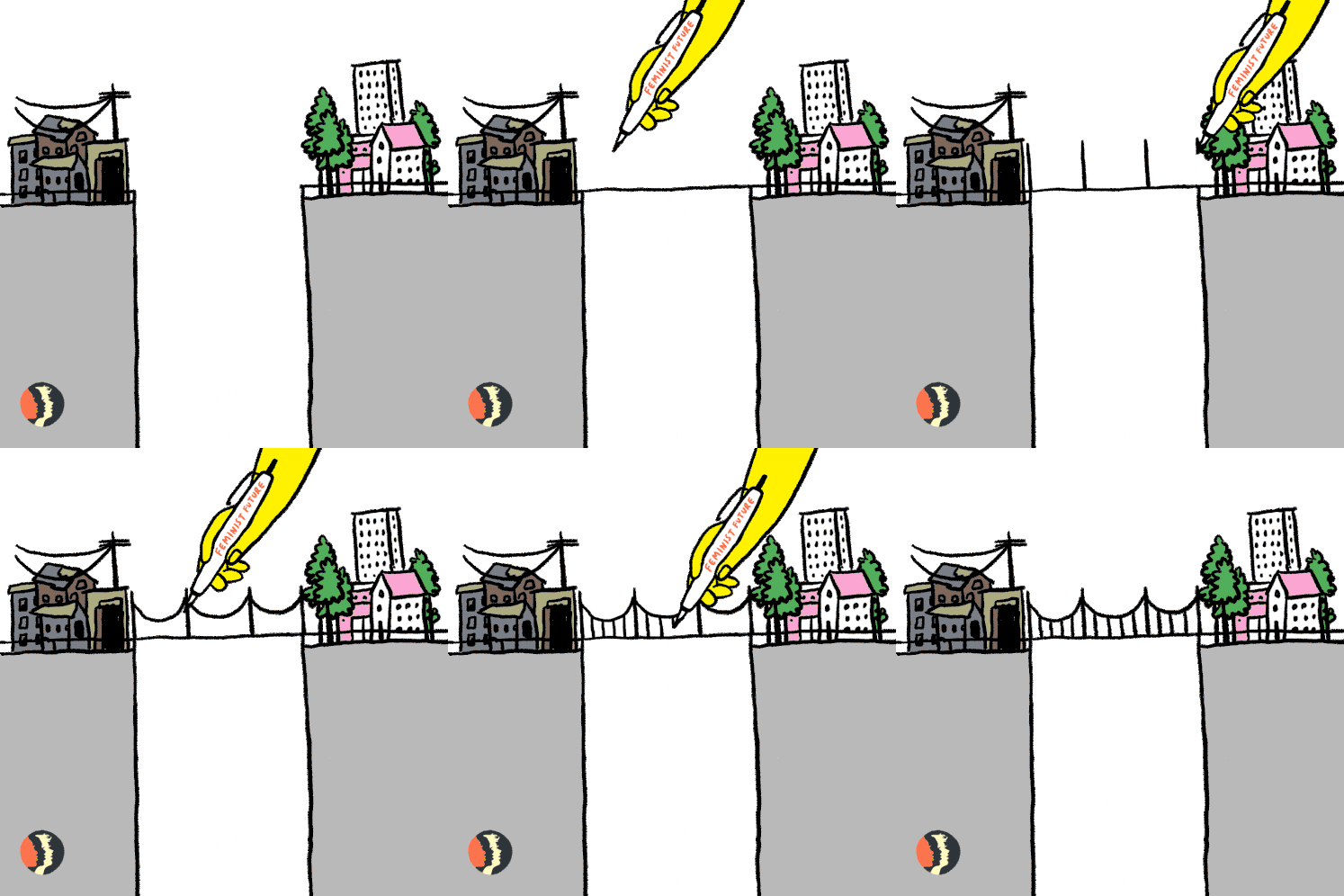
The chasm between feminist ideals and economic realities yawns wider than ever. Let’s confront the elephant in the room: the gender wealth gap, a financial abyss fueled by systemic biases and perpetuated by a patriarchal edifice that clings to power with unsettling tenacity. This isn’t just about equal pay; it’s a complex web of interconnected disparities that demands dismantling. Are you ready to delve into the financial trenches?
I. Defining the Gender Wealth Gap: Beyond the Paycheck
The gender wealth gap isn’t merely a discrepancy in wages. It represents the cumulative difference in assets – property, investments, savings – accumulated over a lifetime. Imagine two runners starting a race. One begins at the starting line, the other twenty yards behind. Equal speed won’t close that gap. This is precisely the predicament facing women in the economic arena.
A. Wages and Earnings: The Persistent Disparity
The infamous statistic that women earn, on average, less than men for similar work serves as a grim cornerstone of the gender wealth gap. This inequity isn’t simply about overt discrimination; it’s subtly embedded within hiring practices, promotion opportunities, and performance evaluations. The labyrinthine pathways of corporate advancement often favor male archetypes, leaving women to navigate a treacherous terrain fraught with implicit bias.
The nuances are critical. While “equal pay for equal work” is a rallying cry, the reality is more insidious. Are women being steered towards lower-paying specializations? Are their contributions valued less objectively? Do ingrained societal expectations subtly diminish their earning potential? These are the questions that demand unflinching scrutiny.
B. The Accumulation of Capital: An Uphill Battle
Even if women earned exactly the same as men (a hypothetical fantasy at present), the wealth gap would persist. Why? Because the ability to accumulate capital – to invest, save, and build assets – is heavily influenced by historical disadvantages. This is where the concept of ‘intergenerational wealth’ becomes paramount.
Generations of systemic discrimination have deprived women, particularly women of color, of opportunities to amass wealth. Inherited property, access to capital for entrepreneurship, and investment opportunities are all areas where historical biases continue to cast long shadows. The starting line isn’t just unequal; it’s located on completely different sections of the economic track.
II. Root Causes: Systemic Inequities and Societal Constructs
Pinpointing the etiology of the gender wealth gap requires a systemic analysis, a rejection of simplistic explanations that place blame on individual choices. Society is not an neutral arbiter. It is actively engaged in perpetuating the status quo.
A. The Patriarchy’s Financial Grip: Structural Barriers
The patriarchy, as a system of power, actively restricts women’s economic agency. This isn’t a conspiracy theory; it’s the demonstrable outcome of policies, practices, and cultural norms that prioritize male dominance. Consider these structural barriers:
- Discriminatory Lending Practices: Historically, women have faced greater difficulty securing loans, mortgages, and business financing, hindering their ability to acquire assets.
- Lack of Representation in Financial Leadership: The financial industry, dominated by men, often perpetuates biases in investment strategies and financial products, inadvertently disadvantaging women.
- Tax Policies: Certain tax policies can disproportionately impact women, particularly single mothers or those who are primary caregivers.
B. The Burden of Unpaid Labor: Caregiving and Domesticity
The unpaid labor performed predominantly by women – childcare, elder care, domestic work – constitutes a significant drain on their economic potential. This is what some economists call “the motherhood penalty.”
Women often take time off work to care for children, sacrificing career advancement and lifetime earnings. Even without taking extended leave, the disproportionate burden of domestic responsibilities can limit their ability to pursue career opportunities and invest in their own financial futures. This ‘care gap’ is a potent engine of economic inequality.
C. The Intersectionality of Oppression: Race, Ethnicity, and Sexual Orientation
The gender wealth gap isn’t a monolithic phenomenon; it intersects with other forms of oppression, creating a complex tapestry of disadvantage. Women of color, LGBTQ+ women, and women with disabilities face compounded barriers to economic success.
For example, the racial wealth gap is inextricably linked to the gender wealth gap. Black women, who have historically faced both racial and gender discrimination, experience a particularly severe wealth disparity. This intersectional lens is crucial for understanding the multifaceted nature of economic inequality.
III. The Impact: Beyond the Balance Sheet
The consequences of the gender wealth gap extend far beyond individual bank accounts. They permeate society, impacting everything from health and well-being to political power and social mobility.
A. Economic Security and Retirement: A Precarious Future
Women, on average, live longer than men, yet they often retire with significantly less savings. This creates a precarious situation, particularly for older women who may face financial hardship and dependence on social safety nets.
The lack of economic security in retirement can lead to increased stress, health problems, and a diminished quality of life. It’s a stark reminder that the gender wealth gap is not just an abstract economic issue; it has real-world consequences for the well-being of millions of women.
B. Political Power and Influence: A Silent Disenfranchisement
Economic power translates into political power. When women lack financial resources, their voices are often marginalized in political discourse. They have less ability to contribute to campaigns, lobby for policies that benefit them, and run for office themselves.
This creates a vicious cycle: economic inequality leads to political disenfranchisement, which further perpetuates economic inequality. Breaking this cycle requires a concerted effort to empower women both economically and politically.
C. Intergenerational Consequences: Perpetuating Inequality
The gender wealth gap has intergenerational consequences, perpetuating inequality across generations. Children raised in households with limited financial resources often face significant disadvantages in education, healthcare, and opportunities for advancement. The seeds of economic inequality are sown early in life.
Breaking the cycle of intergenerational poverty requires addressing the root causes of the gender wealth gap and investing in programs that support women and families. This is not just an act of charity; it’s an investment in the future of society.
IV. Solutions: A Call to Action
Closing the gender wealth gap requires a multi-pronged approach that addresses systemic inequities, challenges societal norms, and empowers women to take control of their financial futures. We must move beyond platitudes and embrace radical solutions.
A. Policy Interventions: Dismantling the Structural Barriers
- Pay Equity Legislation: Enforce and strengthen pay equity laws to ensure that women receive equal pay for equal work. Transparency in salary negotiations is crucial.
- Affordable Childcare and Paid Family Leave: Implement policies that provide affordable childcare and paid family leave, reducing the burden of unpaid labor on women.
- Financial Literacy Programs: Provide financial literacy programs to women, empowering them to make informed decisions about investing, saving, and managing their finances.
- Small Business Grants and Loans: Increase access to capital for women-owned businesses through targeted grants and loan programs.
B. Challenging Societal Norms: Re-evaluating Value
We must challenge societal norms that devalue women’s work and contributions. This includes recognizing the economic value of unpaid labor, promoting women’s leadership in all sectors, and dismantling gender stereotypes that limit women’s aspirations.
C. Empowering Women: Financial Independence as a Feminist Imperative
Ultimately, closing the gender wealth gap requires empowering women to take control of their financial futures. This includes encouraging women to pursue careers in high-paying fields, investing in their education, and supporting women-owned businesses.
The journey toward economic justice for women is a long and arduous one. It requires unwavering commitment, a willingness to challenge the status quo, and a recognition that the gender wealth gap is not just an economic issue; it’s a fundamental issue of human rights. The time for incremental change is over. The time for radical action is now. The dismantling of the financial patriarchy demands nothing less.









Leave a Comment