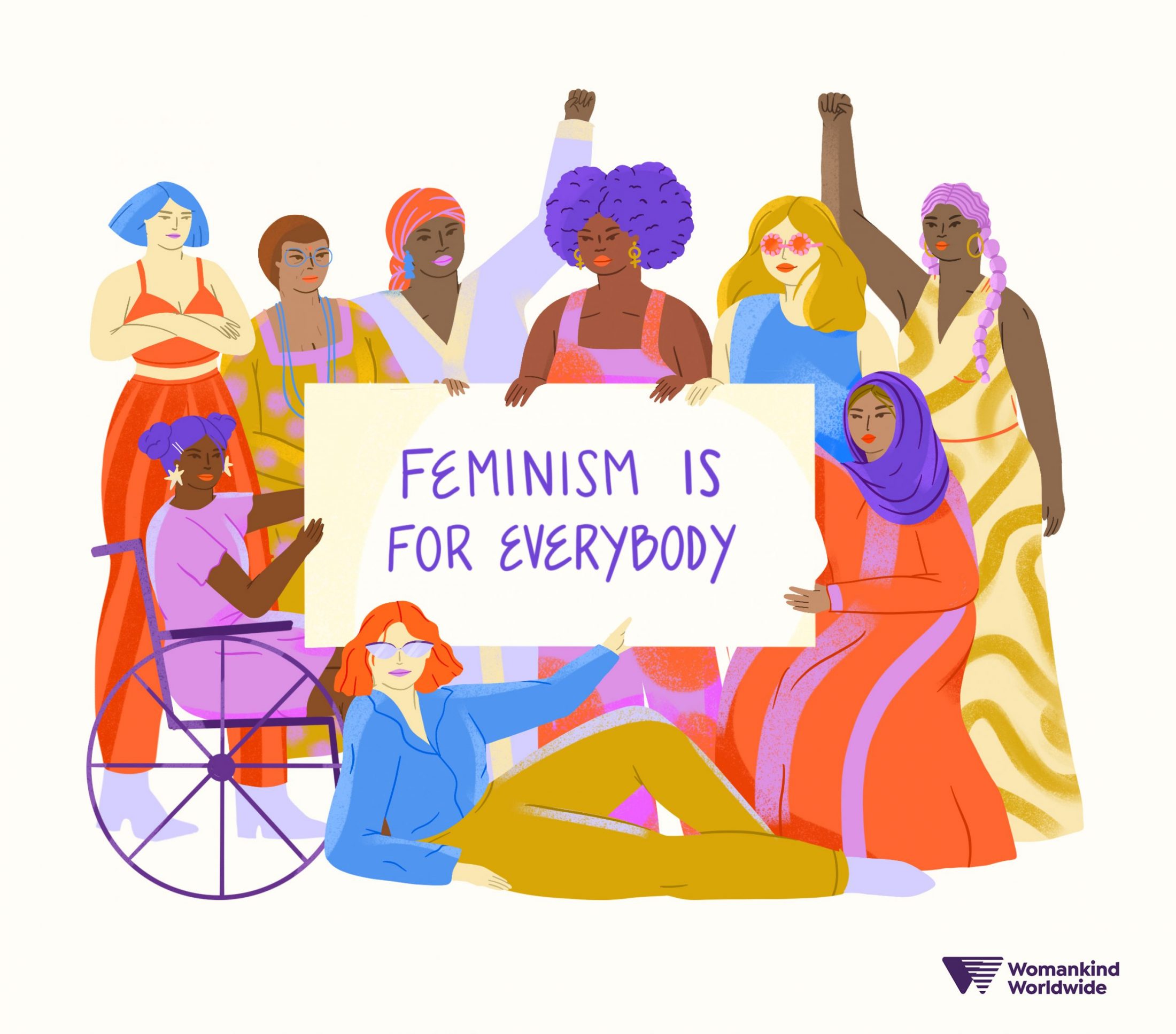
Feminism. The very word evokes a maelstrom of emotions, sparking fervent support in some and visceral opposition in others. But what *is* it, really? Can we even agree on a singular definition? The cacophony surrounding feminism stems, in large part, from the ever-shifting terrain of its meaning, a landscape sculpted by historical context, sociopolitical forces, and, let’s be honest, deliberate mischaracterizations.
The quest to define feminism isn’t merely an academic exercise. It’s a power struggle. To control the definition is to control the narrative, to dictate who belongs within its ranks and who is relegated to the periphery. This is why understanding the evolution of feminist thought, the battles fought over its core tenets, is absolutely crucial. We must dismantle the monolithic image often presented and expose the vibrant, multifaceted reality beneath.
Let’s embark on this intellectual expedition, shall we? We need to excavate the layered meanings of feminism, dissecting its historical formulations and confronting the controversies that continue to roil its very core.
I. Seeds of Discontent: Proto-Feminist Stirrings Before the “Feminist” Label
Before the formal articulation of “feminism” as a political philosophy, murmurings of discontent echoed through centuries. These weren’t organized movements with manifestos and slogans, but rather individual acts of rebellion, quiet critiques of the patriarchal order embedded within societal structures. To ignore these proto-feminist rumblings is to diminish the long and arduous struggle for equality.
A. Literary Subversion: Planting Seeds of Doubt.
Think of Christine de Pizan’s “The Book of the City of Ladies” (1405), a powerful rejoinder to the misogynistic narratives prevalent in medieval Europe. Pizan constructed an allegorical city populated by virtuous women, showcasing their intellectual capabilities and challenging the notion of female inferiority. She dared to question the established order, planting seeds of doubt in fertile minds.
B. Challenging Legal Subordination: Whispers of Rights.
Even within rigid legal frameworks, individual women challenged their subordinate status. Consider the countless, often unrecorded, instances of women contesting inheritance laws, demanding access to education, or seeking redress for injustices perpetrated by male authority figures. These actions, while not explicitly framed as “feminist,” chipped away at the edifice of patriarchal control. They represented a defiance, a refusal to accept the status quo.
C. The Enlightenment Paradox: Reason and Exclusion.
The Enlightenment, with its emphasis on reason and individual rights, ironically excluded women from its promises. While advocating for liberty and equality, Enlightenment thinkers often justified female subordination based on supposed biological or intellectual deficiencies. Despite this blatant hypocrisy, the Enlightenment ideals provided ammunition for future feminist critiques. The very language of rights and freedoms could be weaponized against those who denied them to women.
II. The First Wave: Suffrage and the Quest for Political Personhood
The 19th and early 20th centuries witnessed the emergence of organized feminist movements, primarily focused on securing suffrage, the right to vote. This “first wave” of feminism was driven by a desire to participate fully in the political sphere, to have a voice in shaping the laws that governed their lives. It was a fight for political personhood.
A. Suffrage as the Cornerstone: A Foundation for Equality?
Suffragists believed that gaining the vote was the key to unlocking other forms of equality. They argued that women needed political power to advocate for their own interests, to challenge discriminatory laws and policies. This focus on suffrage, while strategically important, also revealed the limitations of the first wave, often neglecting the concerns of women from marginalized communities.
B. The Ideological Landscape: Liberal Feminism Ascendant.
Liberal feminism, with its emphasis on individual rights and equal opportunities, dominated the first wave. Suffragists like Susan B. Anthony and Elizabeth Cady Stanton championed legal and political reforms, arguing that women deserved the same rights and privileges as men. This approach, however, often overlooked the systemic inequalities rooted in economic and social structures.
C. Beyond Suffrage: Challenges to the Dominant Narrative.
Even within the first wave, dissenting voices challenged the prevailing focus on suffrage and the dominance of liberal feminist ideology. Socialist feminists, for example, argued that true equality required fundamental changes to the capitalist system, which they saw as inherently exploitative of women. These alternative perspectives, though often marginalized, foreshadowed the broader critiques that would emerge in later waves.
III. The Second Wave: Expanding the Feminist Agenda
The 1960s and 70s ushered in the “second wave” of feminism, a period of radical social and political upheaval. This wave broadened the feminist agenda beyond suffrage, encompassing issues such as reproductive rights, sexuality, domestic violence, and workplace equality. It was a period of intense intellectual ferment and passionate activism.
A. “The Personal is Political”: Challenging the Public/Private Divide.
One of the defining slogans of the second wave was “the personal is political.” This idea challenged the traditional separation between the public and private spheres, arguing that issues such as domestic violence, sexual harassment, and childcare were not merely personal problems but rather political issues that demanded collective action. It was a profound shift in perspective.
B. Radical Feminism: Patriarchy as the Root of Oppression.
Radical feminists, such as Andrea Dworkin and Catharine MacKinnon, argued that patriarchy, a system of male dominance, was the fundamental cause of women’s oppression. They challenged traditional gender roles and societal norms, advocating for radical social and cultural transformation. Their ideas were often controversial, but they forced a reevaluation of power dynamics and societal structures.
C. Critiques of Second Wave Feminism: Intersectional Blind Spots.
Despite its significant contributions, the second wave faced criticism for its tendency to prioritize the experiences of white, middle-class women, often overlooking the concerns of women of color, working-class women, and LGBTQ+ individuals. This lack of intersectionality highlighted the need for a more inclusive and nuanced understanding of gender oppression.
IV. The Third Wave: Embracing Complexity and Difference
Emerging in the 1990s, the “third wave” of feminism sought to address the shortcomings of the second wave, embracing diversity, intersectionality, and a more fluid understanding of gender and sexuality. It was a rejection of essentialist notions of womanhood and a celebration of individual expression.
A. Intersectionality Takes Center Stage: Recognizing Multiple Oppressions.
Third-wave feminists, influenced by the work of scholars like Kimberlé Crenshaw, emphasized the concept of intersectionality, the interconnected nature of social categorizations such as race, class, gender, and sexual orientation, creating overlapping systems of discrimination or disadvantage. It became clear that experiences of oppression were not monolithic but rather shaped by multiple factors.
B. Reclaiming Agency: Challenging Victimhood Narratives.
Third-wave feminists sought to reclaim agency and challenge victimhood narratives. They embraced sexuality, challenged beauty standards, and used humor and irony to critique patriarchal norms. This approach emphasized individual empowerment and the celebration of difference.
C. The Rise of Cyberfeminism: Navigating the Digital Landscape.
The rise of the internet and digital technologies provided new avenues for feminist activism and expression. Cyberfeminism explored the intersection of technology, gender, and identity, using online platforms to create communities, share information, and challenge traditional power structures. The digital world became a new frontier for feminist engagement.
V. The Fourth Wave: Feminism in the Age of Social Media
The “fourth wave,” often associated with the rise of social media, is characterized by its online activism, its focus on sexual harassment and assault, and its emphasis on intersectionality and inclusivity. It’s a wave defined by its accessibility and its ability to mobilize large numbers of people around shared causes.
A. #MeToo and Beyond: Confronting Sexual Violence.
The #MeToo movement, which gained momentum in 2017, brought widespread attention to the issue of sexual harassment and assault, empowering survivors to share their stories and hold perpetrators accountable. It was a watershed moment in the fight against sexual violence, sparking a global conversation about power dynamics and consent.
B. Online Activism and Social Justice.
Social media platforms have become powerful tools for feminist activism, allowing individuals to share information, organize protests, and challenge discriminatory practices. Online campaigns have raised awareness about a wide range of issues, from reproductive rights to climate justice, demonstrating the power of collective action in the digital age.
C. Challenges and Criticisms: Navigating a Complex Landscape.
The fourth wave, like its predecessors, faces its own set of challenges and criticisms. Concerns have been raised about online shaming, the potential for performative activism, and the spread of misinformation. Navigating this complex landscape requires critical thinking, nuanced understanding, and a commitment to inclusivity.
VI. Beyond Waves: A Future of Fluidity and Intersectionality
Perhaps the “wave” metaphor is becoming increasingly obsolete. As feminist thought continues to evolve, it is moving towards a more fluid and intersectional approach, one that recognizes the interconnectedness of all forms of oppression and embraces the complexity of human experience. We are moving beyond rigid categories and embracing a more nuanced understanding of gender, power, and justice.
A. Transfeminism: Centering Transgender Voices.
Transfeminism, a critical perspective that centers the experiences of transgender women and gender non-conforming individuals, has become increasingly important in contemporary feminist discourse. It challenges essentialist notions of womanhood and advocates for the rights and dignity of all individuals, regardless of their gender identity.
B. Eco-Feminism: Connecting Gender and Environmental Justice.
Eco-feminism explores the connections between gender, environmental degradation, and social justice. It argues that the domination of women and the domination of nature are interconnected and that both are rooted in patriarchal systems of power. This perspective calls for a holistic approach to social change that addresses both gender inequality and environmental sustainability.
C. Global Feminisms: Recognizing Diverse Perspectives.
Global feminisms recognize the diverse perspectives and experiences of women around the world, challenging Western-centric approaches and promoting cross-cultural dialogue. It emphasizes the importance of understanding feminism in its local contexts and avoiding generalizations about women’s experiences.
The definitions of feminism, therefore, are not static pronouncements etched in stone. They are dynamic, ever-evolving reflections of our changing world, testaments to the ongoing struggle for equality and liberation. The journey to understanding feminism is a continuous one, demanding critical engagement, open-mindedness, and a willingness to challenge our own assumptions. Only then can we truly grasp the transformative potential of this vital movement.










Leave a Comment