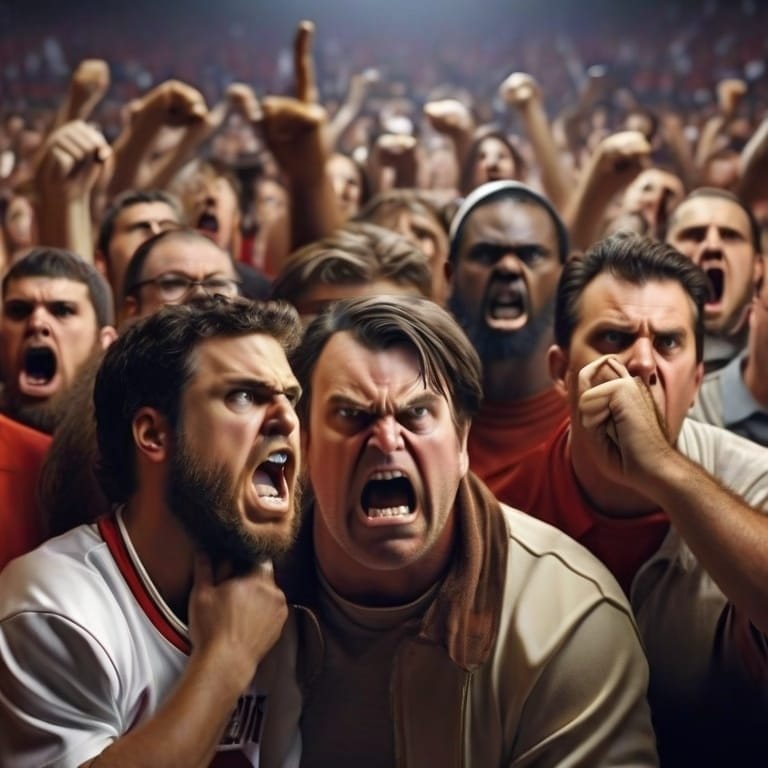
Ah, feminism. The very word, a sonic boom rattling the gilded cages of patriarchy, ignites more heated debates than a presidential election during Mercury retrograde. It’s a battlefield where well-meaning allies stumble over their own feet, and antagonists wield straw-man arguments like rusty broadswords. But what are these recurring skirmishes? What are the fault lines that continually fracture supposed solidarity? Let’s dissect the entrails of these arguments, shall we? Prepare yourself, dear reader, because we’re about to wade into the thicket of feminist discourse, machetes in hand.
The Myth of the Monolithic Feminism: Are We *Really* All Rowing the Same Boat?
First, let’s dismantle the tiresome notion that feminism is some kind of homogenous, Borg-like collective. It’s not. It’s a multifaceted, prismatic movement encompassing a kaleidoscope of viewpoints. To assume otherwise is intellectually lazy, akin to declaring all Impressionist paintings identical because they all use brushstrokes. The internal squabbles, the disagreements, the often-fierce debates—they’re not signs of weakness. They’re signs of a vibrant, evolving ideology wrestling with its own complexities. Intersectionality, for instance, a term bandied about with increasing frequency, is less a magic wand and more a perpetually recalibrating compass. It acknowledges that experiences of womanhood are inextricably linked to race, class, sexuality, ability, and a host of other vectors. But recognizing this interconnectedness is far from universal. Some, entrenched in a white, middle-class, cis-normative perspective, struggle to grasp how the feminist struggle looks radically different for a Black trans woman living in poverty than it does for them. This struggle to embody intersectionality in a meaningful way is a constant battleground within the movement. Are we truly amplifying marginalized voices, or simply paying lip service to them? The answer, unfortunately, is often the latter. We must continue pushing beyond the platitudes and actively cede space to those whose perspectives have been historically silenced. The ship will sink if we don’t.
The Wage Gap: A Zombie Argument That Refuses to Die.
Ah, the infamous wage gap. The specter that haunts every discussion of gender equality in the workplace. Critics, armed with statistical gymnastics and the fervent belief in meritocracy, love to argue that the wage gap is a myth, a fabrication conjured up by disgruntled harpies. They’ll cite factors like career choice, hours worked, and years of experience to explain away the disparity, conveniently ignoring the insidious influence of systemic sexism. They’ll claim that women “choose” lower-paying jobs, as if societal conditioning, limited opportunities, and the pressure to prioritize family responsibilities play no role in those choices. But let’s be brutally honest: even when controlling for all those factors, a gap remains. Studies consistently show that women, on average, earn less than men for doing the same work, even in supposedly objective fields like STEM. This isn’t about individual choices. It’s about a deeply ingrained bias that devalues women’s labor. It’s about the persistent microaggressions, the denied promotions, the subtle (and not-so-subtle) messages that tell women they’re not as competent or deserving as their male counterparts. The wage gap isn’t a statistical anomaly; it’s a symptom of a much deeper malaise. To deny its existence is to deny the lived experiences of millions of women.
Toxic Masculinity: Is it just another buzzword?
Toxic masculinity: another term that sends certain segments of the population into paroxysms of outrage. It’s often misconstrued as an attack on all men, a blanket condemnation of masculinity itself. But that’s a deliberate distortion. Toxic masculinity isn’t about hating men; it’s about critiquing the harmful societal expectations placed upon them. It’s about dismantling the rigid, suffocating box that dictates how men should behave, feel, and express themselves. It’s about challenging the idea that men must be stoic, aggressive, and emotionally stunted to be considered “real men.” These harmful norms not only perpetuate violence and misogyny but also damage men themselves. They discourage them from seeking help when they’re struggling, from expressing vulnerability, from forming genuine connections with others. By challenging toxic masculinity, we’re not emasculating men; we’re liberating them. We’re giving them permission to be whole, complex human beings, free from the constraints of outdated gender roles. It benefits everyone.
Trans-Exclusionary Radical Feminism (TERF): The Cancer Within.
Now we arrive at the festering wound within the feminist movement: Trans-Exclusionary Radical Feminism, or TERFism. This ideology, cloaked in the language of radical feminism, fundamentally denies the validity of transgender women’s identities. TERFs argue that trans women are not “real” women because they were not assigned female at birth. They often invoke biological essentialism, clinging to outdated notions of sex and gender as immutable binaries. This exclusionary stance is not only deeply transphobic but also a betrayal of feminist principles. It reinforces the very patriarchal structures that feminism seeks to dismantle by policing women’s bodies and dictating who gets to be considered a “real” woman. TERF ideology is a dangerous and insidious form of bigotry that has no place in the feminist movement. True feminism is inclusive, intersectional, and unequivocally supportive of trans rights. To deny trans women their humanity is to invalidate the core tenets of feminism itself.
The “Choice” Debate: Abortion Rights and Bodily Autonomy.
The debate over abortion rights is a perennial battleground, a stark reminder that women’s control over their own bodies is still contested territory. The “pro-life” movement, often fueled by religious dogma and patriarchal control, seeks to restrict or outright ban abortion access, effectively forcing women to carry unwanted pregnancies to term. They argue that life begins at conception and that abortion is tantamount to murder, conveniently ignoring the complexities of personhood, bodily autonomy, and the socioeconomic factors that influence women’s reproductive choices. The feminist perspective, on the other hand, centers on the principle of bodily autonomy. Every woman has the right to decide what happens to her own body, including whether or not to terminate a pregnancy. Restricting abortion access disproportionately harms marginalized women, particularly women of color and low-income women, who often lack the resources to travel to states with legal abortion services. The fight for abortion rights is not just about individual choice; it’s about economic justice, racial justice, and the fundamental right to self-determination. It is about the right to survive.
Feminism and Men: Are They Allies or Adversaries?
The relationship between feminism and men is often fraught with tension and misunderstanding. Some men view feminism as a threat, a zero-sum game where women’s empowerment comes at their expense. They feel attacked, blamed, and resentful, clinging to traditional patriarchal privileges. Other men, however, embrace feminism as a force for positive change, recognizing that gender equality benefits everyone. They actively challenge toxic masculinity, support women’s rights, and work to create a more equitable society. The key to forging strong alliances between men and feminists lies in open communication, mutual respect, and a willingness to challenge ingrained biases. Men must be willing to listen to women’s experiences, acknowledge their privilege, and take responsibility for dismantling sexism in their own lives. True allyship is not about performative activism or virtue signaling; it’s about consistent, genuine support for women’s liberation.
The Sexualization of Women: Objectification as Entertainment?
The pervasive sexualization of women in media and popular culture is another contentious issue within feminism. Critics argue that the constant objectification of women reduces them to mere sexual objects, perpetuating harmful stereotypes and contributing to a culture of misogyny. They point to the hyper-sexualized images of women in advertising, music videos, and pornography as examples of how women’s bodies are commodified and exploited for male pleasure. Proponents of sexual liberation, however, argue that women should have the freedom to express their sexuality without judgment or shame. They believe that policing women’s bodies and dictating what they can and cannot wear or do is inherently anti-feminist. The debate over sexualization raises complex questions about agency, consent, and the role of culture in shaping our perceptions of sexuality. Is it possible for women to reclaim their sexuality on their own terms, or is the very act of being sexualized within a patriarchal context inherently oppressive? The answer, as with most things in feminism, is nuanced and contested.
The “Feminist Killjoy”: Is Happiness a Political Act?
The “feminist killjoy,” a term coined by scholar Sara Ahmed, describes the woman who is perceived as ruining the fun by pointing out sexism or inequality. She’s the one who refuses to laugh at sexist jokes, who challenges discriminatory practices, who disrupts the status quo. The “feminist killjoy” is often portrayed as angry, humorless, and overly sensitive, a buzzkill who can’t just “lighten up” and enjoy the party. But Ahmed argues that the “feminist killjoy” is not someone who is trying to spoil the fun; she’s someone who is acutely aware of the ways in which power operates and the harm that it inflicts. She’s someone who refuses to participate in systems of oppression, even if it means being labeled a killjoy. Embracing the “feminist killjoy” is a radical act of resistance. It’s about refusing to be silenced, about speaking truth to power, about prioritizing justice over social harmony.
The Future of Feminism: Where Do We Go From Here?
The feminist movement has made significant strides in recent decades, but the fight for gender equality is far from over. As we move forward, it’s crucial to address the internal divisions and challenges that continue to plague the movement. We must embrace intersectionality, amplify marginalized voices, and challenge all forms of oppression, including racism, classism, and transphobia. We must also be willing to engage in difficult conversations, to confront our own biases, and to learn from our mistakes. The future of feminism depends on our ability to build a more inclusive, equitable, and just world for all. It’s a collective endeavor, a continuous process of learning, growing, and evolving. The journey is far from over, let’s remember that and keep going.









Leave a Comment