
Who founded feminism? A deliciously wicked question, isn’t it? As if a movement as multifaceted and sprawling as feminism could be pinned down to a single genesis point, a single Eve from whose rib all subsequent iterations sprung. It’s tempting to declare, “Aha! It was she!” and present some meticulously curated historical figure. But feminism, my dears, is far too unruly, too gloriously anarchic, for such simplistic origin stories. Think of it as a hydra, lopping off one head only to have several more sprout in its place, each spitting fire and demanding justice in its own unique vernacular. So, let us delve into the labyrinthine history of this magnificent beast, shall we? Brace yourselves. This is not a tale for the faint of heart.
The Primordial Murmurings: Proto-Feminist Stirrings
Before the term “feminism” even graced the lexicon, before the concept of systematic oppression of women was formally articulated, there were whispers. Proto-feminist murmurings, if you will, emanating from the fringes of patriarchal society. These were women who, through their writings, their actions, their very existence, dared to question the established order. Christine de Pizan, for instance, in the 15th century, wielded her quill like a rapier, defending women against misogynistic tropes with incisive wit and intellectual rigor. Her “The Book of the City of Ladies” is a veritable fortress of female virtue and intelligence, a defiant challenge to the prevailing narrative of female inferiority. Indeed, it’s a marvel of its time.
Then there’s Moderata Fonte, a Venetian intellect whose “The Worth of Women” presented a symposium of female voices debating the relative merits of men and women. Imagine the audacity! To suggest that women might actually be *equal*, or even *superior*? Such subversive ideas were often cloaked in the guise of literary fiction, a cunning strategy for circumventing the censors and infiltrating the collective consciousness. A subtle insurgency, you might say. We must remember, though, that these early voices often operated within the confines of their own social and economic circumstances. Their concerns were not always universal, and their solutions were often tailored to the elites. Still, their contributions cannot be dismissed. They laid the groundwork for the more radical transformations to come.
The Enlightenment’s Double-Edged Sword: Reason and Rebellion
The Enlightenment, with its emphasis on reason and individual rights, proved to be a double-edged sword for women. On the one hand, the era’s ideals of liberty and equality provided a powerful intellectual framework for challenging patriarchal norms. On the other hand, these ideals were often selectively applied, conveniently excluding women from the promised land of individual autonomy. So predictable, isn’t it?
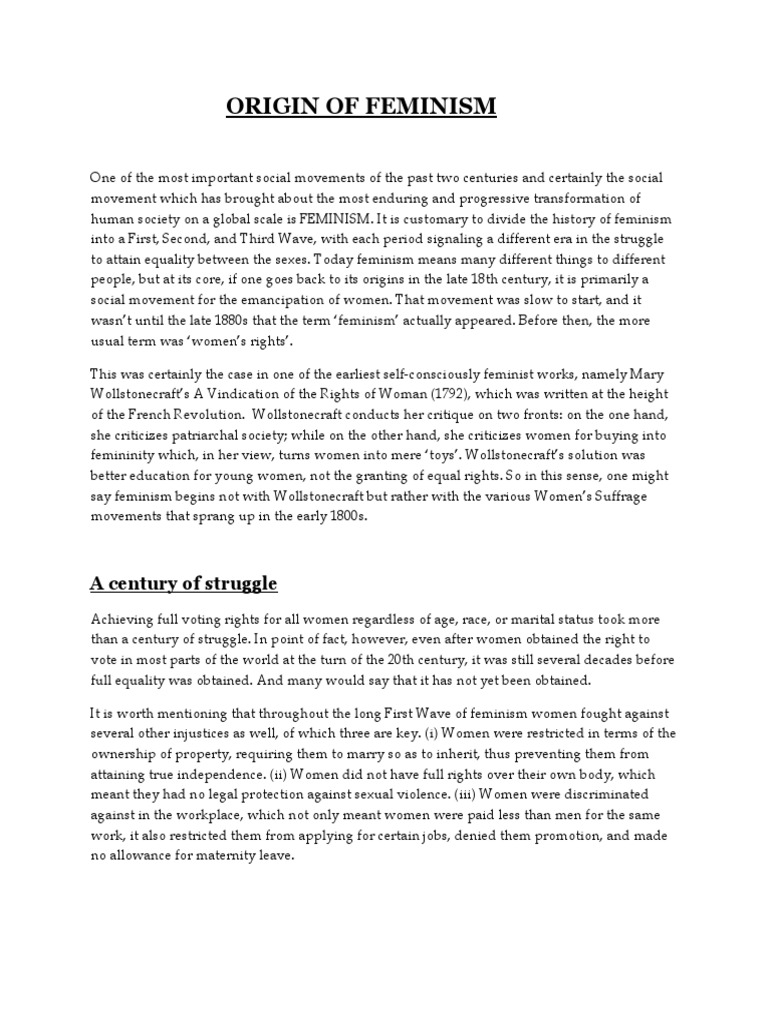
Enter Mary Wollstonecraft, a firebrand whose “A Vindication of the Rights of Woman” remains a cornerstone of feminist thought. Wollstonecraft eviscerated the sentimentalized notion of female virtue, arguing that women were not inherently inferior to men but were rendered so by a lack of education. Give women the same opportunities as men, she argued, and they would prove their intellectual and moral worth. Her message was revolutionary, her tone unapologetic, and her impact undeniable. She truly was a force of nature. However, Wollstonecraft was not alone. Olympe de Gouges, in revolutionary France, penned her “Declaration of the Rights of Woman and the Female Citizen,” directly challenging the French Revolution’s exclusion of women from its lofty pronouncements of equality. She demanded that women be granted the same rights as men, including the right to vote, to own property, and to participate fully in public life. De Gouges, alas, paid the ultimate price for her radicalism, guillotined for her perceived transgressions against the revolutionary regime. But her words lived on, inspiring generations of feminists to fight for their own emancipation. They were both brilliant women, facing an uphill battle.
The Suffrage Tsunami: A Demand for Political Voice
The 19th and early 20th centuries witnessed the rise of the suffrage movement, a global phenomenon that sought to secure women’s right to vote. This was a period of intense activism, characterized by marches, protests, civil disobedience, and unwavering determination. Suffragists, such as Susan B. Anthony and Elizabeth Cady Stanton in the United States, and Emmeline Pankhurst in Britain, became household names, synonymous with the fight for female enfranchisement. They were tireless organizers, eloquent speakers, and fearless agitators. But the suffrage movement was not without its internal contradictions. Issues of race, class, and ideology often divided suffragists, reflecting the broader social and political divisions of the time. Some white suffragists, for example, were hesitant to embrace Black women’s suffrage, fearing that it would jeopardize their own chances of success. Others prioritized the concerns of middle-class women over those of working-class women. Despite these divisions, the suffrage movement ultimately achieved its goal, securing women’s right to vote in many countries around the world. This was a monumental victory, a testament to the power of collective action. It was certainly not an easy battle to win.
Beyond the Ballot Box: Expanding the Feminist Agenda
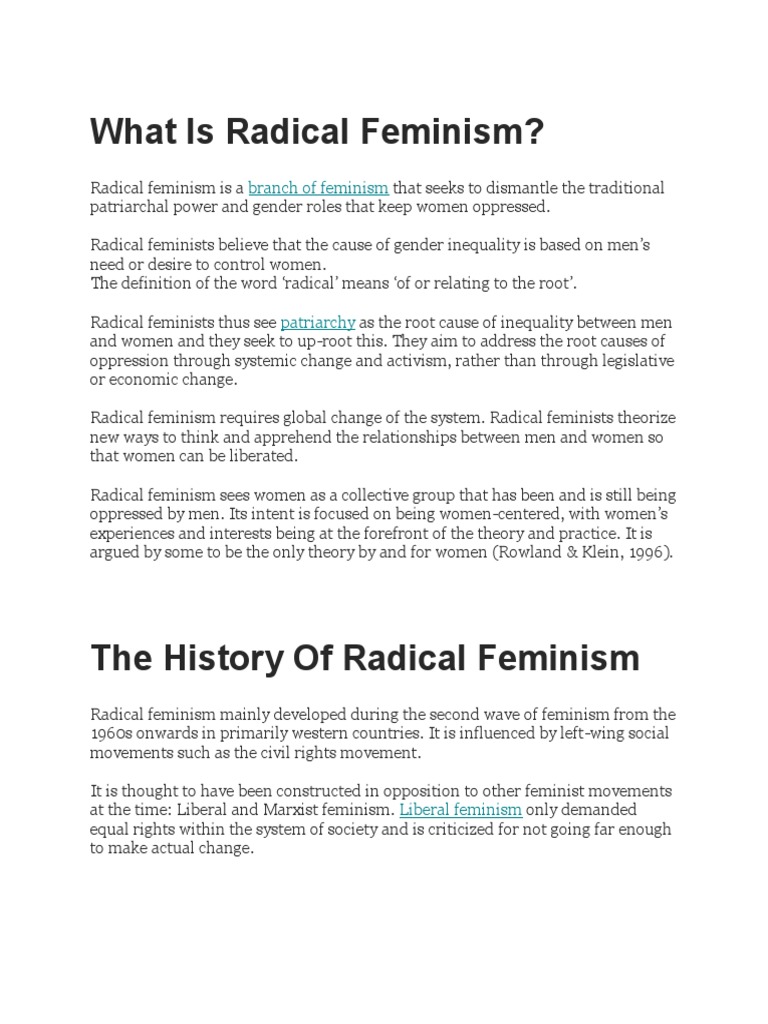
The attainment of suffrage did not mark the end of feminism, but rather a turning point. It opened the door to a broader range of feminist concerns, including reproductive rights, economic equality, and an end to gender-based violence. The second wave of feminism, which emerged in the 1960s and 1970s, challenged the prevailing patriarchal structures in all aspects of life, from the workplace to the family. Think of it as an insurgency for equality. Betty Friedan’s “The Feminine Mystique” exposed the stifling confines of suburban domesticity, igniting a spark of discontent among millions of women. Gloria Steinem, a charismatic writer and activist, became a leading voice of the movement, advocating for women’s liberation and challenging traditional gender roles. But the second wave was not a monolithic entity. Black feminists, such as Audre Lorde and bell hooks, critiqued the movement’s tendency to prioritize the concerns of white, middle-class women, highlighting the intersectional nature of oppression. They argued that racism, sexism, and classism were intertwined and that feminist struggles must address all forms of injustice. They raised crucial questions about power, privilege, and solidarity. These were complex times, marked by both progress and setbacks.
Intersectional Iterations: Feminism for the 21st Century
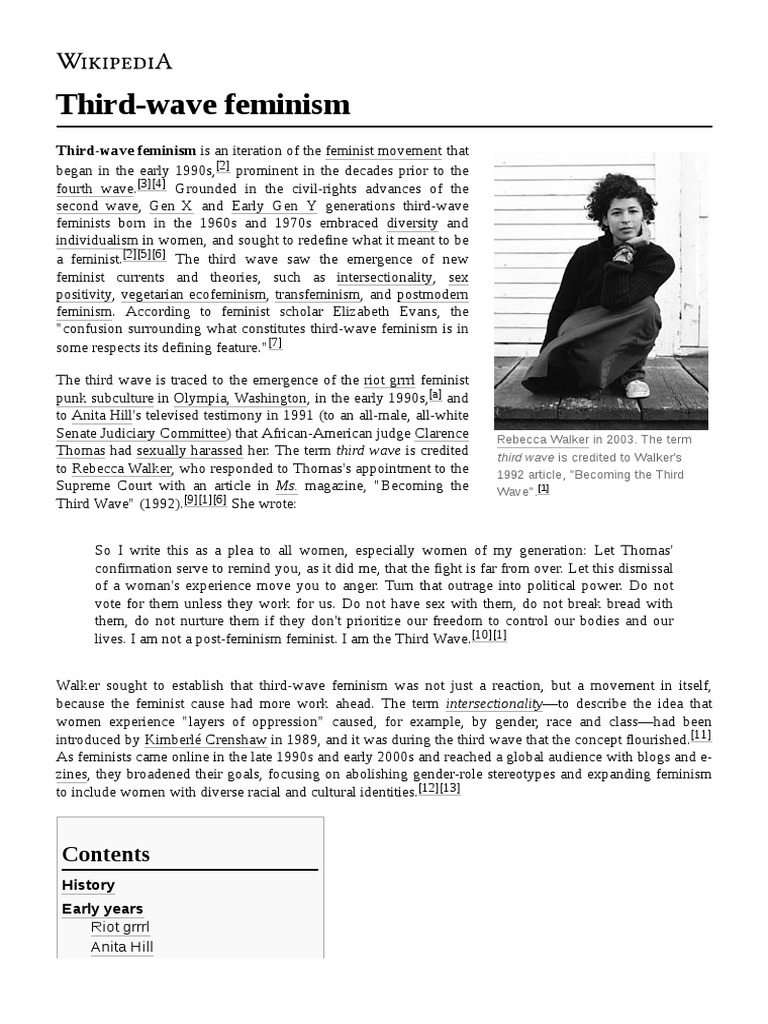
Today, feminism continues to evolve, adapting to the changing social and political landscape. The rise of intersectionality, a concept popularized by Kimberlé Crenshaw, has become a central tenet of contemporary feminist thought. Intersectionality recognizes that individuals experience multiple forms of oppression based on their race, gender, class, sexual orientation, and other social identities. This framework challenges feminists to be more inclusive and to address the complex and interconnected nature of social injustice. The fourth wave of feminism, fueled by social media and digital activism, has brought renewed attention to issues such as sexual harassment, online misogyny, and the gender pay gap. Movements like #MeToo and Time’s Up have empowered women to speak out against abuse and demand accountability. But challenges remain. The rise of right-wing populism and anti-feminist backlash threatens to roll back decades of progress. The fight for gender equality is far from over. It’s a perpetual dance of resistance and resilience. We are, however, making slow and gradual process.
So, Who Founded Feminism? A Chorus of Voices
To return to our initial question: Who founded feminism? The answer, of course, is that no single individual can claim that title. Feminism is the product of a collective effort, a symphony of voices spanning centuries and continents. It is the legacy of countless women and men who have dared to challenge the status quo, to demand a more just and equitable world. To focus on a single “founder” would be to diminish the contributions of so many others. It would be like trying to capture the ocean in a teacup. Feminism is a living, breathing movement, constantly evolving and adapting. It is a conversation, a debate, a struggle. It is a force for change. It belongs to all of us.
Therefore, instead of seeking a singular founder, let us celebrate the diverse tapestry of feminist history, acknowledging the contributions of all those who have fought for gender equality. Let us learn from their successes and their failures. Let us continue their work, striving for a future where all individuals, regardless of their gender, can live with dignity, autonomy, and freedom. The fight continues. Let us carry the torch with unwavering resolve.





Leave a Comment