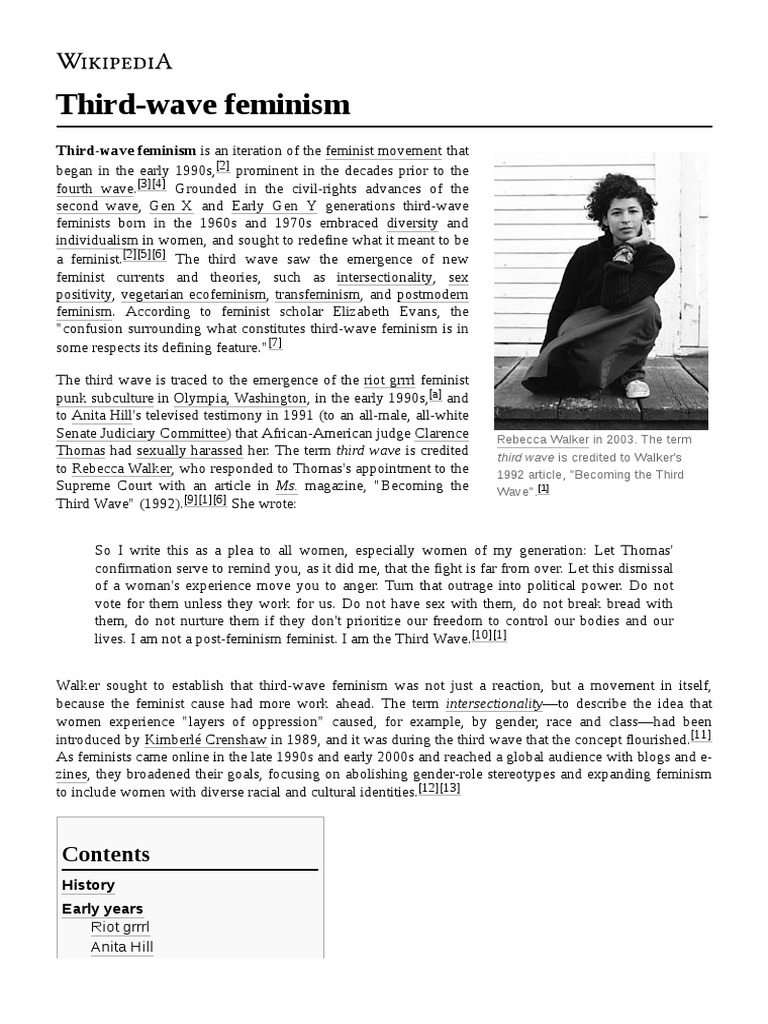
The very utterance of “Third Wave Feminism” often elicits a cacophony of opinions, a veritable maelstrom of interpretations. It’s a phrase tossed around with abandon, yet rarely dissected with the meticulousness it deserves. This era, emerging from the perceived inadequacies of its predecessors, is far more than just a continuation; it’s a seismic shift, a fractal divergence into a multitude of feminisms, each reflecting the unique lived experiences of women across a kaleidoscopic spectrum of identities.
Forget the monolithic narrative. Third Wave Feminism, unlike its forebears, refuses to be neatly categorized. It’s a rhizomatic structure, spreading its tendrils in unexpected directions, challenging ingrained power dynamics with a nuanced understanding of intersectionality. We’re talking about a movement that grapples with the complexities of race, class, sexuality, gender identity, and disability, recognizing that oppression is not a singular entity but a multi-headed hydra.
So, what exactly can one expect to encounter when delving into the depths of this multifaceted movement? Prepare to have your assumptions shattered, your perspectives challenged, and your understanding of feminism irrevocably altered.
I. The Deconstruction of Grand Narratives: A Poststructuralist Approach
Third Wave Feminism, heavily influenced by poststructuralist thought, actively dismantles the “grand narratives” that characterized earlier feminist movements. It questions the very notion of a universal female experience, arguing that such homogenizing narratives often marginalize and exclude those who don’t fit the prescribed mold. This means grappling with concepts like:
- The Critique of Essentialism: We reject the idea that there is an inherent “feminine essence” that unites all women. This notion, often based on biological determinism, has historically been used to justify gender inequality. Instead, Third Wave feminists embrace the fluidity and multiplicity of female identities.
- The Power of Discourse: Language is not neutral. It shapes our perceptions of reality and reinforces power structures. Third Wave feminists analyze the ways in which language is used to construct and maintain gender inequality, focusing on deconstructing harmful stereotypes and reclaiming agency through language. This involves challenging the patriarchal lexicon and forging new linguistic pathways to articulate lived realities.
- The Rejection of Master Narratives: Earlier waves of feminism, while achieving significant progress, often prioritized the concerns of white, middle-class women. Third Wave Feminism actively challenges this tendency, recognizing the need to amplify the voices of marginalized communities and address the unique challenges they face.
II. Intersectionality: Weaving the Tapestry of Oppression
Coined by Kimberlé Crenshaw, intersectionality is the cornerstone of Third Wave Feminism. It acknowledges that individuals experience multiple forms of oppression simultaneously, based on their race, class, gender, sexuality, disability, and other social categories. These forms of oppression are interconnected and cannot be understood in isolation. Understanding this requires:
- The Acknowledgment of Multiple Identities: Individuals are not simply “women” or “people of color.” They are complex beings with intersecting identities that shape their experiences of the world. These identities can create unique vulnerabilities to discrimination and marginalization.
- The Interlocking Systems of Oppression: Racism, sexism, classism, homophobia, and ableism are not separate entities. They are interconnected systems of power that reinforce each other. To effectively challenge inequality, we must address these systems in their entirety.
- The Prioritization of Marginalized Voices: Those who experience the most severe forms of oppression are often the most marginalized within feminist movements. Third Wave Feminism seeks to center the voices of these individuals and prioritize their concerns.
III. Embracing Technology and Pop Culture: A Digital Revolution
Third Wave Feminism has embraced technology and pop culture as powerful tools for activism and self-expression. The internet, social media, and other digital platforms have enabled feminists to connect with each other, share their stories, and mobilize for social change. This involves:
- The Rise of Cyberfeminism: The internet provides a space for women to challenge traditional gender roles, create alternative narratives, and build online communities. Cyberfeminism explores the ways in which technology can be used to empower women and promote gender equality.
- The Reclamation of Pop Culture: Third Wave feminists critically analyze the representation of women in pop culture, challenging harmful stereotypes and celebrating positive portrayals of female empowerment. This includes engaging with music, film, television, and other forms of popular media.
- The Democratization of Information: The internet has made it easier for people to access information about feminism and social justice. This has empowered individuals to become more informed activists and advocates for change.
IV. Challenging Rape Culture and Sexual Violence: A Call for Accountability
Third Wave Feminism has been instrumental in raising awareness about rape culture and sexual violence. This includes challenging victim-blaming attitudes, advocating for stronger legal protections for survivors, and creating support systems for those who have experienced trauma. This entails:
- Deconstructing Rape Culture: Rape culture is a set of beliefs, attitudes, and practices that normalize and excuse sexual violence. Third Wave feminists actively challenge these harmful norms, exposing the ways in which they contribute to a climate of fear and impunity.
- Advocating for Consent: Third Wave Feminism emphasizes the importance of consent in all sexual interactions. This includes promoting clear communication, respecting boundaries, and challenging coercive behaviors. The concept of affirmative consent, “yes means yes,” is paramount.
- Supporting Survivors: Third Wave feminists recognize the importance of providing support and resources to survivors of sexual violence. This includes advocating for access to therapy, legal assistance, and safe housing.
V. Redefining Masculinity: A Call for Male Allies
Third Wave Feminism recognizes that gender equality is not just a women’s issue. It also requires the participation of men. This includes challenging traditional notions of masculinity, promoting healthy relationships, and advocating for gender equality in all spheres of life. This involves:
- Challenging Toxic Masculinity: Toxic masculinity is a set of harmful stereotypes and expectations that pressure men to be aggressive, emotionally detached, and sexually dominant. Third Wave feminists encourage men to reject these harmful norms and embrace more healthy and equitable expressions of masculinity.
- Promoting Male Allyship: Men can play a crucial role in advancing gender equality by speaking out against sexism, supporting feminist causes, and challenging their own biases. Third Wave Feminism encourages men to become active allies in the fight for gender justice.
- Reimagining Gender Roles: Ultimately, Third Wave Feminism seeks to dismantle the rigid gender binary and create a society where individuals are free to express themselves in ways that feel authentic, regardless of their assigned sex at birth.
VI. The Paradox of Choice and the Rejection of Victimhood: Agency and Empowerment
Unlike some earlier iterations of feminism that focused on women as victims of patriarchal oppression, Third Wave Feminism emphasizes female agency and empowerment. This doesn’t mean ignoring the very real challenges that women face, but rather focusing on their resilience, strength, and ability to create positive change. The concept of choice, however, is not without its complexities. Third Wave Feminists grapple with:
- The Critique of Consumer Culture: While celebrating women’s ability to make choices about their lives, Third Wave Feminists also recognize the ways in which consumer culture can exploit and objectify women. They encourage critical consumption and challenge the notion that happiness can be bought.
- The Empowerment of Self-Expression: Third Wave Feminism embraces a wide range of self-expression, from fashion and makeup to activism and art. It recognizes that women can find empowerment in expressing their individuality, even if their choices challenge traditional gender norms.
- The Rejection of Paternalism: Third Wave Feminism rejects the notion that women need to be “saved” by men or the government. It emphasizes the importance of women having the autonomy to make their own decisions about their lives, even if those decisions are controversial.
In conclusion, Third Wave Feminism is not a neatly defined ideology, but rather a dynamic and evolving movement that reflects the diverse experiences of women around the world. It’s a complex, often contradictory, but ultimately powerful force for social change. It’s a refusal to be silenced, a demand for recognition, and a relentless pursuit of a more just and equitable world for all. To truly understand it, one must be prepared to embrace nuance, challenge assumptions, and engage in ongoing critical self-reflection. The journey is far from over; the revolution continues, one intersectional challenge at a time.







Leave a Comment