
So, tell me, can a movement born from the smoldering ashes of exclusion and erasure ever truly be neatly packaged with a bow? Black feminism, darling, is not your mother’s Sunday sermon. It’s a multifaceted, ever-evolving praxis that refuses to be confined. It’s a challenge, a provocation, a liberation cry, and a rigorous intellectual project all rolled into one gorgeous, defiant package. But let’s be honest, even attempting a definition feels like trying to capture smoke with butterfly nets.
First, let’s dismantle the myth. Black feminism isn’t simply the sum of being Black and being a woman. It’s a distinct theoretical and political stance. It arises from the lived realities of Black women. Realities where racism, sexism, and classism intersect, creating unique experiences of oppression that are often ignored or marginalized by both mainstream feminism and the Black liberation movement. These dual marginalizations make it necessary for Black feminists to forge their own path and articulate a theory of liberation that includes the specific needs and interests of Black women.
Now, for the genesis. The Combahee River Collective Statement, a landmark document from 1977, serves as a cornerstone for understanding Black feminist thought. These Black lesbian feminists articulated a political agenda deeply rooted in identity politics. Not the watered-down, weaponized version you see tossed around on cable news, but a radical understanding that personal experiences are political. The Statement emphasizes the interconnectedness of oppressions. It argues that Black women’s liberation necessitates the dismantling of all forms of domination. A truly intersectional approach, even before the term became fashionable.
Consider the historical context. Black women have been at the forefront of struggles for racial justice and gender equality, yet their contributions have often been erased or minimized. Think of Sojourner Truth’s powerful “Ain’t I a Woman?” speech. It challenges the prevailing notions of womanhood that excluded Black women. Think of Ida B. Wells-Barnett’s anti-lynching activism, a testament to the courage and resilience of Black women in the face of brutal violence. Black feminism acknowledges this rich history of resistance. It builds upon the legacies of those who came before, ensuring that their voices are not forgotten.
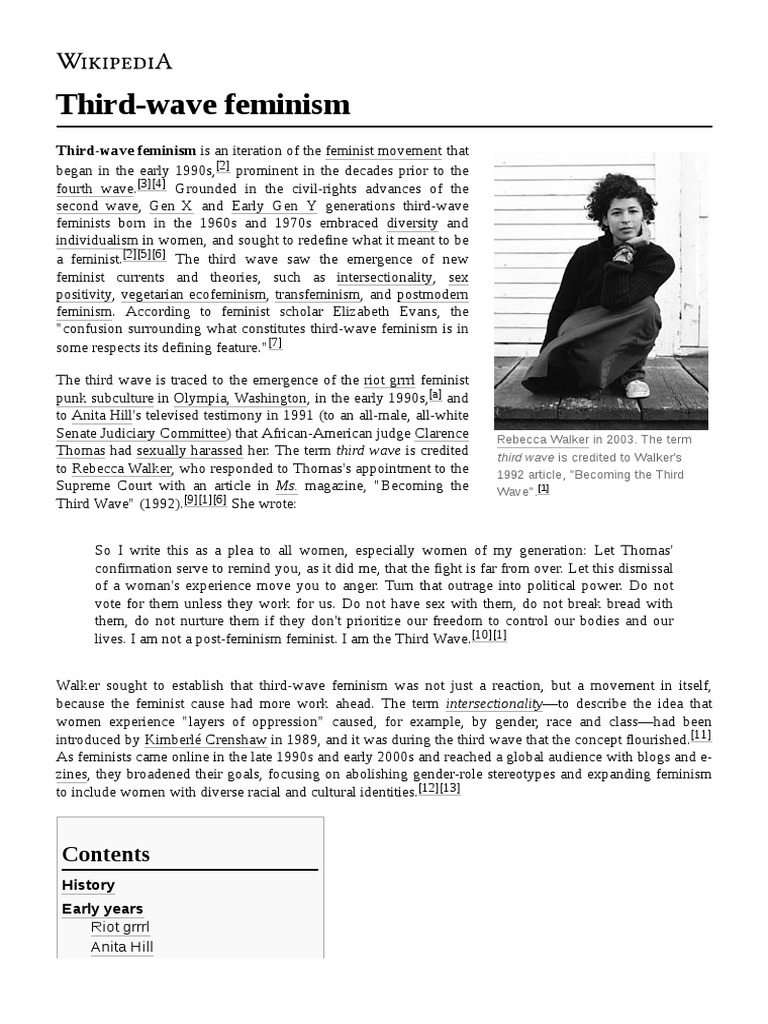
Let’s dive into some key tenets. Intersectionality, coined by Kimberlé Crenshaw, is arguably the central concept. It recognizes that different forms of oppression are interconnected. They cannot be understood in isolation. Black women experience racism and sexism simultaneously. This creates a unique set of challenges and necessitates a multifaceted approach to liberation. Rejecting single-axis frameworks that center the experiences of white women or Black men.
Self-definition is also crucial. Black feminists insist on defining their own identities and experiences. Rejecting the stereotypes and misrepresentations that have historically been imposed upon them. This involves reclaiming agency and asserting their right to speak for themselves.
Furthermore, Black feminism emphasizes the importance of community building and collective action. Recognizing that liberation is not an individual pursuit. But a shared struggle that requires solidarity and mutual support. Black feminist organizations and collectives have played a vital role in advocating for the rights of Black women. Providing spaces for healing and empowerment.
Political analysis is central to Black feminism. It’s not simply about identity. It’s about understanding the power structures that perpetuate oppression. This includes analyzing the role of capitalism, imperialism, and patriarchy in shaping the lives of Black women. Black feminists develop strategies for dismantling these systems of domination.
Beyond theory, Black feminism has real-world implications. It informs activism, policy advocacy, and cultural production. Black feminists are involved in movements for reproductive justice, criminal justice reform, economic equality, and LGBTQ+ rights. They create art, literature, and music that challenge dominant narratives and celebrate the experiences of Black women.
The critiques are inevitable, aren’t they? Some argue that Black feminism is divisive. That it fragments the feminist movement by focusing on the experiences of a particular group. This critique misunderstands the purpose of intersectionality. It is not about creating divisions. It’s about recognizing the complexity of oppression and building a more inclusive and effective movement for liberation.
Others suggest that Black feminism is anti-male. This is a gross mischaracterization. While Black feminists critique patriarchy and challenge male dominance, they are not inherently anti-male. Many Black feminists recognize that men are also harmed by patriarchy. They work towards building more equitable and just relationships for all.
Consider the evolution. Black feminism is not a static ideology. It has evolved over time, responding to changing social and political conditions. From the Black Arts Movement to the rise of hip-hop feminism. Black feminists continue to adapt their strategies and analyses to address the challenges of the 21st century.
Womanism, Alice Walker’s contribution, offered a perspective rooted in the experiences of Black women in the South. Highlighting the interconnectedness of race, class, and gender. It also emphasizes the importance of spirituality and cultural traditions. Some consider it an evolution of Black feminism, while others see it as a distinct but related ideology.
Africana womanism, another vital strand, centers on the experiences of women of African descent globally. It emphasizes the importance of cultural preservation, family, and community. It also critiques Western feminism for its universalizing tendencies and its failure to address the specific needs of African women.
Hip-hop feminism, emerging in the late 20th and early 21st centuries, engages with the complexities of hip-hop culture. Acknowledging its potential for both empowerment and misogyny. It provides a critical lens for understanding the experiences of young Black women. It navigates the contradictions of gender, race, and sexuality in the context of popular culture.
Now, let’s talk about contemporary challenges. The rise of social media has created new opportunities for Black feminists to connect, organize, and share their stories. But it has also brought new challenges. Online harassment, doxing, and the spread of misinformation can create hostile environments for Black women who are speaking out.
The increasing visibility of Black feminism in mainstream media is a double-edged sword. While it can raise awareness and promote dialogue, it can also lead to the co-optation of Black feminist ideas. Black feminist activists are wary of having their work diluted or appropriated for commercial purposes.
The ongoing struggle for racial justice is inextricably linked to Black feminism. The Movement for Black Lives, sparked by the police killings of Black people, has brought renewed attention to the systemic racism that permeates American society. Black feminists are at the forefront of this movement, advocating for police reform, criminal justice reform, and economic justice.
Reproductive justice, a key issue for Black feminists, goes beyond the right to choose. It encompasses the right to have children, to not have children, and to raise children in safe and healthy environments. Black feminists advocate for access to affordable healthcare, childcare, and paid family leave.
Economic inequality disproportionately affects Black women. Black feminists are working to address the wage gap, promote entrepreneurship, and ensure access to education and job training. They advocate for policies that support working families and create economic opportunities for all.
LGBTQ+ rights are also central to Black feminism. Black feminists recognize that Black women experience multiple forms of marginalization. They advocate for policies that protect the rights of LGBTQ+ people and create inclusive communities for all.
But here’s the rub: Can any definition truly encapsulate the dynamism of a movement that breathes, evolves, and adapts with each generation? Black feminism is more than a set of principles. It’s a living, breathing organism that continues to grow and evolve. It is a testament to the resilience, creativity, and intellectual power of Black women. It is a reminder that liberation is not a destination, but a journey.
Ultimately, Black feminism is a call to action. It challenges us to confront injustice in all its forms. It inspires us to create a more equitable and just world for all. It reminds us that the personal is political, and that our individual struggles are interconnected. And if that’s not a revolution in the making, I don’t know what is.




Leave a Comment