
For centuries, the patriarchal edifice has sought to confine women’s voices, to relegate us to the periphery of intellectual discourse. Yet, amidst this systemic subjugation, a literary insurgency has blossomed, a veritable compendium of radical thought that has catalyzed the feminist movement across generations. To navigate this crucial canon is to arm oneself with the intellectual weaponry necessary to dismantle the lingering vestiges of misogyny. Let’s delve into the seminal works that have forged our feminist consciousness.
I. Laying the Foundation: Foundational Texts of the First and Second Waves
A. A Vindication of the Rights of Woman (1792) by Mary Wollstonecraft: A Clarion Call for Enlightenment Ideals
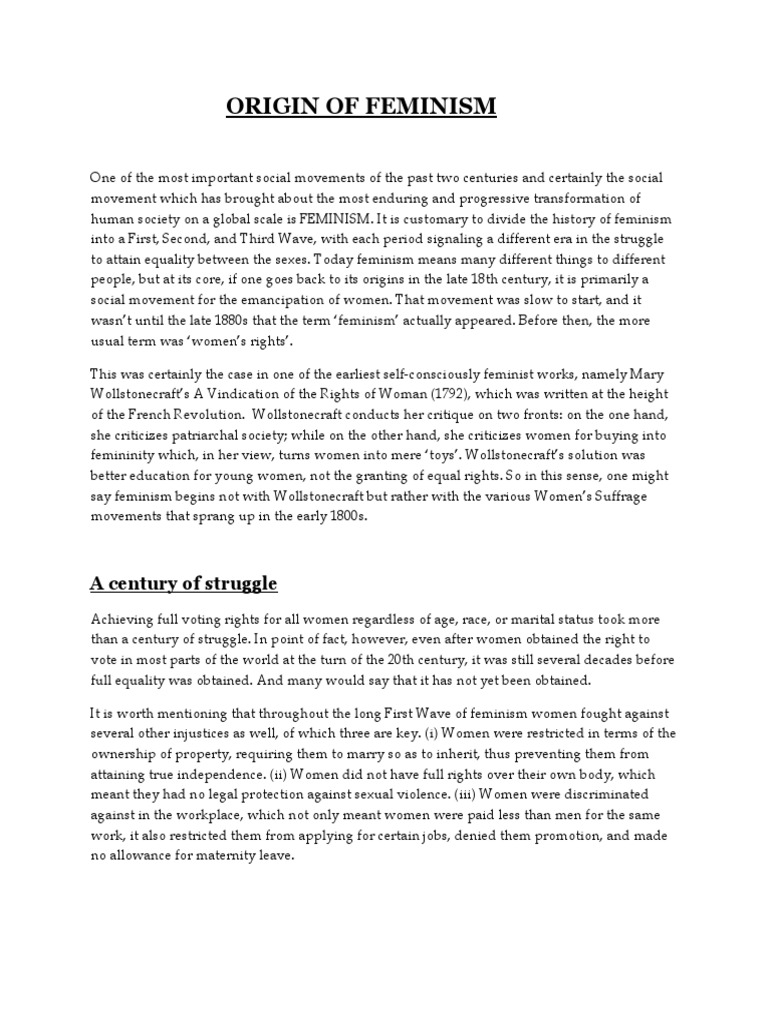
Wollstonecraft’s treatise, a veritable fusillade against societal norms, ignited the first wave of feminism. She dared to posit that women were not inherently intellectually inferior, but rather that their perceived deficiencies stemmed from a systematic denial of education and autonomy. This is a cornerstone of feminist thought. Can you imagine a world without it?
Consider Wollstonecraft’s scathing critique of the prevailing educational system, which prioritized ornamental accomplishments over intellectual development for women. This systematic miseducation, she argued, rendered women incapable of rational thought, perpetuating their dependence on men. Her prose, though steeped in the rhetoric of her era, is nonetheless a thunderous proclamation of women’s inherent worth and potential.
B. The Subjection of Women (1869) by John Stuart Mill and Harriet Taylor Mill: A Utilitarian Argument for Equality
This collaborative work, often attributed solely to John Stuart Mill but undoubtedly influenced by his intellectual partner Harriet Taylor Mill, presents a compelling utilitarian argument for women’s emancipation. They posited that the subjugation of women was not only unjust but also detrimental to societal progress. Indeed, what a colossal waste of human potential.
The Mills astutely dissected the legal and social structures that maintained women’s subservience, including the denial of property rights, limited access to education, and the societal expectation of domestic servitude. Their arguments, grounded in Enlightenment ideals of reason and individual liberty, resonated with a growing movement for women’s suffrage and social reform.
C. The Second Sex (1949) by Simone de Beauvoir: Existentialism and the Social Construction of Gender
Beauvoir’s magnum opus stands as a pivotal text in the second wave of feminism, a sprawling and erudite exploration of the historical and societal forces that have shaped women’s identity. Her famous assertion, “One is not born, but rather becomes, a woman,” encapsulates the central tenet of social constructionism, which posits that gender is not a fixed biological attribute but rather a product of cultural norms and expectations.
De Beauvoir meticulously examined the multifaceted ways in which women are objectified and marginalized in patriarchal society, from their representation in literature and mythology to their roles in marriage and motherhood. Her analysis, steeped in existentialist philosophy, challenged the notion of inherent female inferiority and paved the way for a deeper understanding of gender inequality.
II. Expanding the Discourse: Intersectional Feminism and Beyond
A. Ain’t I a Woman?: Black Women and Feminism (1981) by bell hooks: Challenging White Feminist Hegemony
hooks’s groundbreaking work served as a vital corrective to the predominantly white, middle-class perspective that had dominated much of second-wave feminism. She critiqued the tendency to overlook the unique experiences of Black women, who faced the intersecting oppressions of racism, sexism, and classism.
With incisive clarity, hooks dissected the ways in which mainstream feminist discourse often failed to address the specific needs and concerns of Black women, perpetuating a form of feminist hegemony that marginalized their voices and experiences. Her work ushered in a new era of intersectional feminist thought, recognizing the complex and multifaceted nature of oppression.
B. This Bridge Called My Back: Writings by Radical Women of Color (1981) Edited by Cherríe Moraga and Gloria Anzaldúa: Amplifying Marginalized Voices
This seminal anthology brought together the voices of a diverse group of women of color, including Black, Latina, Asian American, and Native American writers, who shared their experiences of marginalization and resistance. The collection challenged the narrow definitions of feminism and expanded the scope of feminist activism to encompass issues of race, class, sexuality, and immigration.
This Bridge Called My Back served as a powerful testament to the resilience and creativity of women of color, whose voices had long been silenced or ignored in mainstream feminist circles. The anthology inspired a new generation of feminist activists to embrace intersectionality and to prioritize the voices of those most marginalized.
C. Gender Trouble: Feminism and the Subversion of Identity (1990) by Judith Butler: Deconstructing Gender Norms
Butler’s influential work challenged the very foundations of gender identity, arguing that gender is not a fixed or natural category but rather a performance, a series of acts and gestures that are repeated and reinforced by societal norms. This concept of gender performativity revolutionized feminist theory and paved the way for a more fluid and inclusive understanding of gender identity.
Butler’s deconstruction of gender binaries challenged the notion that there are only two genders, male and female, and that these genders are inherently linked to biological sex. Her work opened up new possibilities for understanding gender as a spectrum, allowing individuals to express their gender identity in ways that are authentic and self-defined.
III. Contemporary Voices: Feminism in the 21st Century
A. Bad Feminist (2014) by Roxane Gay: Embracing Imperfection and Complexity
Gay’s collection of essays offers a refreshingly honest and self-aware perspective on contemporary feminism. She grapples with the complexities and contradictions of being a feminist in a world that often seems hostile to feminist ideals. Her writing is witty, insightful, and deeply personal, resonating with readers who are seeking a more nuanced and relatable form of feminism.
Gay challenges the notion that feminists must be perfect or adhere to a strict set of rules. She embraces the messiness and imperfections of human experience, arguing that feminism should be a force for liberation and empowerment, not a source of judgment or exclusion. Her work has helped to democratize feminist discourse and to make it more accessible to a wider audience.
B. We Should All Be Feminists (2014) by Chimamanda Ngozi Adichie: A Concise and Compelling Argument
Adichie’s essay, adapted from a TED Talk, provides a clear and concise definition of feminism for a 21st-century audience. She argues that feminism is not about hating men or seeking to dominate them, but rather about achieving equality between the sexes. Her message is simple yet powerful, resonating with readers around the world.
Adichie draws on her own personal experiences to illustrate the ways in which gender inequality manifests in everyday life, from the subtle forms of sexism that women encounter in the workplace to the more overt forms of violence and discrimination that they face in many parts of the world. Her essay serves as a powerful call to action, urging readers to embrace feminism and to work towards a more just and equitable world.
C. Hood Feminism: Notes from the Women That a Movement Forgot (2019) by Mikki Kendall: Addressing the Needs of Marginalized Communities
Kendall’s book offers a crucial critique of mainstream feminism, arguing that it often fails to address the needs and concerns of marginalized communities, particularly Black women and other women of color. She challenges the tendency to focus on issues that primarily affect privileged women, such as equal pay and career advancement, while neglecting the more pressing issues that affect women living in poverty, such as access to food, housing, and healthcare.
Kendall’s work calls for a more inclusive and intersectional feminism, one that centers the voices and experiences of those most marginalized. She argues that true feminist liberation requires a commitment to dismantling all forms of oppression, not just sexism. Hood Feminism is vital for understanding where feminism needs to go.
IV. Beyond the Written Word: Expanding the Feminist Canon
A. Documentary Films: Visualizing Feminist Struggles
Films such as “Miss Representation,” “RBG,” and “Feminists: What Were They Thinking?” offer powerful visual narratives of the feminist movement, exploring its history, its challenges, and its triumphs. These films can be invaluable tools for educating and inspiring new generations of feminists.
B. Podcasts: Amplifying Feminist Voices in Audio Form
Podcasts such as “The Guilty Feminist,” “Intersectionality Matters!,” and “Call Your Girlfriend” provide platforms for feminist voices to be heard and amplified. These podcasts offer a diverse range of perspectives on feminist issues, from pop culture commentary to political analysis.
C. Social Media: Fostering Online Feminist Communities
Social media platforms such as Twitter, Instagram, and TikTok have become vital spaces for feminist activism and community building. These platforms allow feminists to connect with each other, to share their stories, and to organize collective action. However, it is important to acknowledge that they can also be breeding grounds for toxicity and polarization.
The journey through the feminist literary landscape is an ongoing process of discovery and re-evaluation. By engaging with these essential reads and embracing the diverse voices within the feminist movement, we can equip ourselves with the knowledge and understanding necessary to challenge patriarchal structures and build a more just and equitable world for all. Let’s continue this critical conversation, challenge the status quo, and ensure that the feminist project remains vibrant and relevant for generations to come.





Leave a Comment